Kendall Thomas – författare
Visar alla böcker från författaren Kendall Thomas. Handla med fri frakt och snabb leverans.
5 produkter
5 produkter
Inbunden, Engelska, 2000
2 510 kr
Skickas inom 10-15 vardagar
For several years, write the editors of What's Left of Theory , a debate on the politics of theory has been conducted energetically within literary studies. The terms of the debate, however, are far from clear. What is meant by politics? What is meant by theory? What's Left of Theory is a vigorous engagement with that thorniest of critical questions: how today are theory and progressive thought connected? Michael Warner, activist and critic, examines 'zones of privacy and zones of theory' while law professor Janet Halley considers theory and its applicability to sex harassment. Jeff Nunokawa examines Oscar Wilde, Marjorie Levinson reads Elizabeth Bishop alongside National Geographic ; John Brenkman considers 'extreme criticism', Michael Berube the 'future of contingency'; William Connolly addresses the matter of secularism, Gayatri Spivak explores what she calls 'theory-remains', and Jonathan Culler demonstrates once again his gift for explaining the complex in an essay that identifies 'the literary in theory'. Editors Butler, Guillory, and Thomas have brought together not only outstanding questioners, but outstanding questions. As their introduction puts it, Are there ways of pursuing a politically reflective literary analysis that have definitively left theory behind, and must 'theory' be left behind for left literary analysis to emerge? Has the study of literature passed beyond its encounter with theory? If so, in passing beyond theory, has it remained unchanged? Does the recent cry for a 'return to literature' signal the surpassing of theory, the fact that literature remains after theory? Does literature remain (the same) after theory? For students of literature and the humanities in general, these questions are not only left: they endure.
Häftad, Engelska, 2000
670 kr
Skickas inom 10-15 vardagar
For several years, write the editors of What's Left of Theory , a debate on the politics of theory has been conducted energetically within literary studies. The terms of the debate, however, are far from clear. What is meant by politics? What is meant by theory? What's Left of Theory is a vigorous engagement with that thorniest of critical questions: how today are theory and progressive thought connected? Michael Warner, activist and critic, examines 'zones of privacy and zones of theory' while law professor Janet Halley considers theory and its applicability to sex harassment. Jeff Nunokawa examines Oscar Wilde, Marjorie Levinson reads Elizabeth Bishop alongside National Geographic ; John Brenkman considers 'extreme criticism', Michael Berube the 'future of contingency'; William Connolly addresses the matter of secularism, Gayatri Spivak explores what she calls 'theory-remains', and Jonathan Culler demonstrates once again his gift for explaining the complex in an essay that identifies 'the literary in theory'. Editors Butler, Guillory, and Thomas have brought together not only outstanding questioners, but outstanding questions. As their introduction puts it, Are there ways of pursuing a politically reflective literary analysis that have definitively left theory behind, and must 'theory' be left behind for left literary analysis to emerge? Has the study of literature passed beyond its encounter with theory? If so, in passing beyond theory, has it remained unchanged? Does the recent cry for a 'return to literature' signal the surpassing of theory, the fact that literature remains after theory? Does literature remain (the same) after theory? For students of literature and the humanities in general, these questions are not only left: they endure.
E-bok
Engelska, 2002765 kr
Läs direkt efter köp
For several years, write the editors of What''s Left of Theory , a debate on the politics of theory has been conducted energetically within literary studies. The terms of the debate, however, are far from clear. What is meant by politics? What is meant by theory? What''s Left of Theory is a vigorous engagement with that thorniest of critical questions: how today are theory and progressive thought connected? Michael Warner, activist and critic, examines ''zones of privacy and zones of theory'' while law professor Janet Halley considers theory and its applicability to sex harassment. Jeff Nunokawa examines Oscar Wilde, Marjorie Levinson reads Elizabeth Bishop alongside National Geographic ; John Brenkman considers ''extreme criticism'', Michael Berube the ''future of contingency''; William Connolly addresses the matter of secularism, Gayatri Spivak explores what she calls ''theory-remains'', and Jonathan Culler demonstrates once again his gift for explaining the complex in an essay that identifies ''the literary in theory''. Editors Butler, Guillory, and Thomas have brought together not only outstanding questioners, but outstanding questions. As their introduction puts it, Are there ways of pursuing a politically reflective literary analysis that have definitively left theory behind, and must ''theory'' be left behind for left literary analysis to emerge? Has the study of literature passed beyond its encounter with theory? If so, in passing beyond theory, has it remained unchanged? Does the recent cry for a ''return to literature'' signal the surpassing of theory, the fact that literature remains after theory? Does literature remain (the same) after theory? For students of literature and the humanities in general, these questions are not only left: they endure.
E-bok
PDF, Engelska, 2002793 kr
Läs direkt efter köp
For several years, write the editors of What''s Left of Theory , a debate on the politics of theory has been conducted energetically within literary studies. The terms of the debate, however, are far from clear. What is meant by politics? What is meant by theory? What''s Left of Theory is a vigorous engagement with that thorniest of critical questions: how today are theory and progressive thought connected? Michael Warner, activist and critic, examines ''zones of privacy and zones of theory'' while law professor Janet Halley considers theory and its applicability to sex harassment. Jeff Nunokawa examines Oscar Wilde, Marjorie Levinson reads Elizabeth Bishop alongside National Geographic ; John Brenkman considers ''extreme criticism'', Michael Berube the ''future of contingency''; William Connolly addresses the matter of secularism, Gayatri Spivak explores what she calls ''theory-remains'', and Jonathan Culler demonstrates once again his gift for explaining the complex in an essay that identifies ''the literary in theory''. Editors Butler, Guillory, and Thomas have brought together not only outstanding questioners, but outstanding questions. As their introduction puts it, Are there ways of pursuing a politically reflective literary analysis that have definitively left theory behind, and must ''theory'' be left behind for left literary analysis to emerge? Has the study of literature passed beyond its encounter with theory? If so, in passing beyond theory, has it remained unchanged? Does the recent cry for a ''return to literature'' signal the surpassing of theory, the fact that literature remains after theory? Does literature remain (the same) after theory? For students of literature and the humanities in general, these questions are not only left: they endure.
Häftad, Engelska, 1996
401 kr
Skickas inom 3-6 vardagar
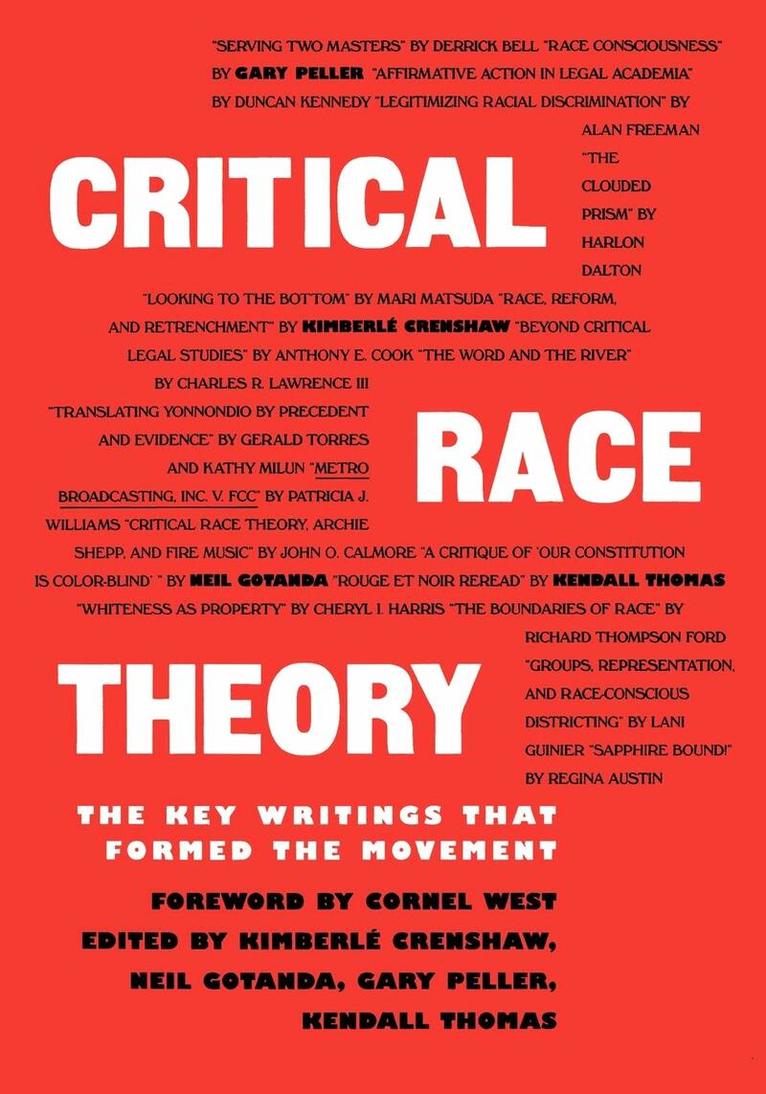
In the past few years, a new generation of progressive intellectuals has dramatically transformed how law, race, and racial power are understood and discussed in America. Questioning the old assumptions of both liberals and conservatives with respect to the goals and the means of traditional civil rights reform, critical race theorists have presented new paradigms for understanding racial injustice and new ways of seeing the links between race, gender, sexual orientation, and class. This reader, edited by the principal founders and leading theoreticians of the critical race theory movement, gathers together for the first time the movement's most important essays.