Kevin J. Middlebrook - Böcker
Visar alla böcker från författaren Kevin J. Middlebrook. Handla med fri frakt och snabb leverans.
9 produkter
9 produkter
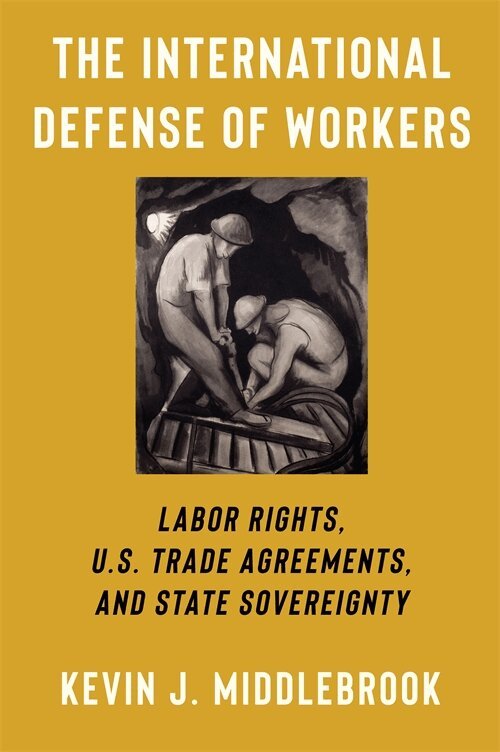
The International Defense of Workers
Labor Rights, U.S. Trade Agreements, and State Sovereignty
Inbunden, Engelska, 2024
1 325 kr
Skickas inom 7-10 vardagar
International trade agreements have often been criticized for limited attention to the rights of workers. The North American Agreement on Labor Cooperation (NAALC), a side agreement to the North American Free Trade Agreement (NAFTA), stands out for linking labor rights provisions to a U.S. trade agreement. Kevin J. Middlebrook provides a comprehensive and systematic examination of the NAALC, assessing its efficacy in protecting workers’ rights over the entire period it was in effect and demonstrating its broader significance for the role of trade and labor standards in U.S. foreign policy.Placing the NAALC in comparative context, Middlebrook considers various ways of promoting workers’ rights and how other U.S. international trade agreements have influenced labor rights abroad. He investigates the origins of the agreement; the political controversies among Canada, Mexico, and the United States over its scope; how the agreement operated in practice; and its longer-term policy legacies. Middlebrook emphasizes the tension between state sovereignty and the international promotion of labor rights in the negotiation and implementation of trade agreements, as well as how labor movements in one partner country can galvanize action in others.Drawing on interviews with high-level officials involved in the trade negotiations and previously unexamined primary sources, The International Defense of Workers is a groundbreaking analysis of the effects of U.S. trade agreements on labor rights.
The International Defense of Workers
Labor Rights, U.S. Trade Agreements, and State Sovereignty
Häftad, Engelska, 2024
337 kr
Skickas inom 7-10 vardagar
International trade agreements have often been criticized for limited attention to the rights of workers. The North American Agreement on Labor Cooperation (NAALC), a side agreement to the North American Free Trade Agreement (NAFTA), stands out for linking labor rights provisions to a U.S. trade agreement. Kevin J. Middlebrook provides a comprehensive and systematic examination of the NAALC, assessing its efficacy in protecting workers’ rights over the entire period it was in effect and demonstrating its broader significance for the role of trade and labor standards in U.S. foreign policy.Placing the NAALC in comparative context, Middlebrook considers various ways of promoting workers’ rights and how other U.S. international trade agreements have influenced labor rights abroad. He investigates the origins of the agreement; the political controversies among Canada, Mexico, and the United States over its scope; how the agreement operated in practice; and its longer-term policy legacies. Middlebrook emphasizes the tension between state sovereignty and the international promotion of labor rights in the negotiation and implementation of trade agreements, as well as how labor movements in one partner country can galvanize action in others.Drawing on interviews with high-level officials involved in the trade negotiations and previously unexamined primary sources, The International Defense of Workers is a groundbreaking analysis of the effects of U.S. trade agreements on labor rights.
334 kr
Skickas inom 7-10 vardagar
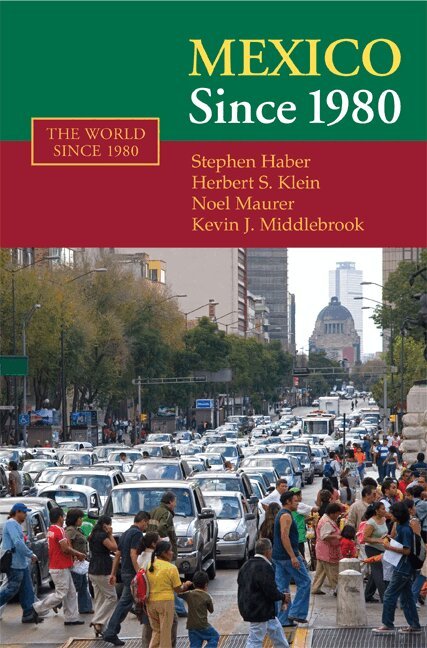
This book addresses two questions that are crucial to understanding Mexico's current economic and political challenges. Why did the opening up of the economy to foreign trade and investment not result in sustained economic growth? Why has electoral democracy not produced rule of law? The answer to those questions lies in the ways in which Mexico's long history with authoritarian government shaped its judicial, taxation, and property rights institutions. These institutions, the authors argue, cannot be reformed with the stroke of a pen. Moreover, they represent powerful constraints on the ability of the Mexican government to fund welfare-enhancing reforms, on the ability of firms and households to write contracts, and on the ability of citizens to enforce their basic rights.
481 kr
Skickas inom 7-10 vardagar
This book addresses two questions that are crucial to understanding Mexico's current economic and political challenges. Why did the opening up of the economy to foreign trade and investment not result in sustained economic growth? Why has electoral democracy not produced rule of law? The answer to those questions lies in the ways in which Mexico's long history with authoritarian government shaped its judicial, taxation, and property rights institutions. These institutions, the authors argue, cannot be reformed with the stroke of a pen. Moreover, they represent powerful constraints on the ability of the Mexican government to fund welfare-enhancing reforms, on the ability of firms and households to write contracts, and on the ability of citizens to enforce their basic rights.
412 kr
Skickas inom 7-10 vardagar
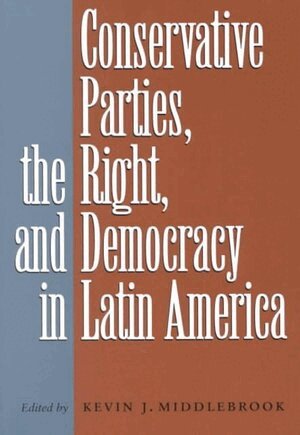
Under what conditions do political institutions develop that are capable of promoting economic and social elites' accommodation to democracy? The importance of this question for research on regime change and democracy in Latin America lies in two established political facts: alliances between upper-class groups and the armed forces have historically been a major cause of military intervention in the region, and countries with electorally viable national conservative parties have experienced significantly longer periods of democratic governance since the 1920s and 1930s than have countries with weak conservative parties. The contributors to this book examine the relationship between the Right and democracy in Argentina, Brazil, Chile, Colombia, El Salvador, Peru, and Venezuela during the 1980s and 1990s.The authors focus particularly on the challenges that democratization may pose to upper-class groups; the political role of conservative parties and their electoral performance during these two crucial decades; and the relationships among conservative party strength or weakness, different modes of elite interest representation, and economic and social elites' support for political democracy. The volume includes a statistical appendix with data on conservative parties' electoral performance in national elections during the 1980s and 1990s in these seven countries. Contributors: Atilio A. Boron, Universidad de Buenos Aires * Catherine M. Conaghan, Queen's University * Michael Coppedge, University of Notre Dame * John C. Dugas, Kalamazoo College * Manuel Antonio Garreton, Universidad de Chile * Scott Mainwaring, University of Notre Dame * Rachel Meneguello, Universidade de Campinas * Kevin J. Middlebrook, University of California, San Diego * Timothy J. Power, Florida International University * Elisabeth J. Wood, New York University.
Confronting Development
Assessing Mexico's Economic and Social Policy Challenges
Inbunden, Engelska, 2000
1 686 kr
Skickas inom 10-15 vardagar
Since the 1980s, Mexico has alternately served as a model of structural economic reform and as a cautionary example of the limitations associated with market-led development. Because of the importance of the Mexican experience in continuing debates about options available to developing countries, the twenty-three contributors to this book provide a comprehensive, interdisciplinary assessment of the principal economic and social policies adopted by Mexico during the 1980s and 1990s. Mexico was a pioneer in the shift away from state-led industrialization and the adoption of market-oriented policies. As a consequence, Mexico emerged as Latin America's largest exporter of manufactured goods, which provided the country's most dynamic source of economic growth. Yet trade and investment expansion also significantly increased the Mexican economy's vulnerability to external shocks. A profound financial crisis in 1994-95 deeply affected Mexico's economic stability and rate of growth, and raised persistent questions about whether the country's new economic model is capable of achieving sustained growth and equitable socioeconomic development. The topics covered in the book are (1) macroeconomic and financial policies, including the impact of the adjustment process on growth, inflation, foreign and domestic debt burdens, the Mexican banking system, and foreign investment; (2) trade, export-led growth, and industrial policies, with attention to key actors and strategies behind the rapid expansion of Mexican manufactured exports and the limitations of this export-led growth model for national development; (3) social policies and rural development issues, focusing on education, health care, pensions, and problems affecting rural Mexico; and (4) poverty, inequality, and employment problems, notably income distribution and poverty trends, the efficacy of poverty-alleviation policies, urban and regional disparities, and the effects of economic liberalization on employment and wage levels. A final overview section analyzes the Mexican development experience of the 1980s and 1990s in historical and comparative context.
Confronting Development
Assessing Mexico's Economic and Social Policy Challenges
Häftad, Engelska, 2003
418 kr
Skickas inom 7-10 vardagar
Since the 1980s, Mexico has alternately served as a model of structural economic reform and as a cautionary example of the limitations associated with market-led development. Because of the importance of the Mexican experience in continuing debates about options available to developing countries, the twenty-three contributors to this book provide a comprehensive, interdisciplinary assessment of the principal economic and social policies adopted by Mexico during the 1980s and 1990s. Mexico was a pioneer in the shift away from state-led industrialization and the adoption of market-oriented policies. As a consequence, Mexico emerged as Latin America's largest exporter of manufactured goods, which provided the country's most dynamic source of economic growth. Yet trade and investment expansion also significantly increased the Mexican economy's vulnerability to external shocks. A profound financial crisis in 1994-95 deeply affected Mexico's economic stability and rate of growth, and raised persistent questions about whether the country's new economic model is capable of achieving sustained growth and equitable socioeconomic development. The topics covered in the book are (1) macroeconomic and financial policies, including the impact of the adjustment process on growth, inflation, foreign and domestic debt burdens, the Mexican banking system, and foreign investment; (2) trade, export-led growth, and industrial policies, with attention to key actors and strategies behind the rapid expansion of Mexican manufactured exports and the limitations of this export-led growth model for national development; (3) social policies and rural development issues, focusing on education, health care, pensions, and problems affecting rural Mexico; and (4) poverty, inequality, and employment problems, notably income distribution and poverty trends, the efficacy of poverty-alleviation policies, urban and regional disparities, and the effects of economic liberalization on employment and wage levels. A final overview section analyzes the Mexican development experience of the 1980s and 1990s in historical and comparative context.
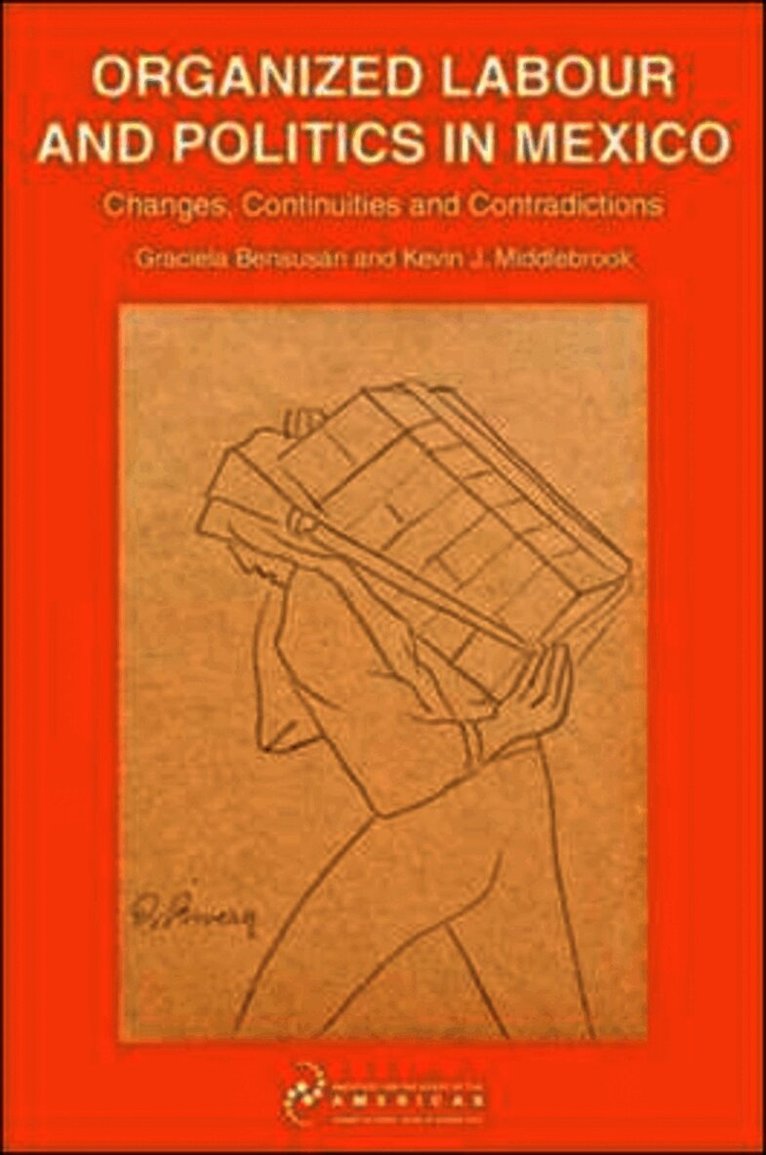
Organized Labour and Politics in Mexico
Changes, Continuities and Contradictions
Häftad, Engelska, 2012
433 kr
Skickas inom 5-8 vardagar
433 kr
Skickas inom 5-8 vardagar