Keya Maitra - Böcker
Visar alla böcker från författaren Keya Maitra. Handla med fri frakt och snabb leverans.
9 produkter
9 produkter
1 146 kr
Skickas inom 7-10 vardagar
This is the first collection of essays to focus on feminist philosophy of mind. It brings the theoretical insights from feminist philosophy to issues in philosophy of mind and vice versa. Feminist Philosophy of Mind thus promises to challenge and inform dominant theories in both of its parent fields, thereby enlarging their rigor, scope, and implications. In addition to engaging analytic and feminist philosophical traditions, essays draw upon resources in phenomenology, cross-cultural philosophy, philosophy of race, disability studies, embodied cognition theory, neuroscience, and psychology.The book's methods center on the collective consideration of three questions: What is the mind? Whose mind is the model for the theory? To whom is mind attributed? Topics considered with this lens include mental content, artificial intelligence, the first-person perspective, personal identity, other minds, mental illness, perception, memory, attention, desire, trauma, agency, empathy, grief, love, gender, race, sexual orientation, materialism, panpsychism, enactivism, and others.Each of the book's twenty chapters are organized according to five core themes: Mind and Gender&Race&; Self and Selves; Naturalism and Normativity; Body and Mind; and Memory and Emotion. The introduction traces the development of these themes with reference to the respective literatures in feminist philosophy and philosophy of mind. This context not only helps the reader see how the essays fit into existing disciplinary landscapes, but also facilitates their use in teaching. Feminist Philosophy of Mind is designed to be used as a core text for courses in contemporary disciplines, and as a supplemental text that facilitates the ready integration of diverse perspectives and women's voices.
475 kr
Skickas inom 5-8 vardagar
This is the first collection of essays to focus on feminist philosophy of mind. It brings the theoretical insights from feminist philosophy to issues in philosophy of mind and vice versa. Feminist Philosophy of Mind thus promises to challenge and inform dominant theories in both of its parent fields, thereby enlarging their rigor, scope, and implications. In addition to engaging analytic and feminist philosophical traditions, essays draw upon resources in phenomenology, cross-cultural philosophy, philosophy of race, disability studies, embodied cognition theory, neuroscience, and psychology.The book's methods center on the collective consideration of three questions: What is the mind? Whose mind is the model for the theory? To whom is mind attributed? Topics considered with this lens include mental content, artificial intelligence, the first-person perspective, personal identity, other minds, mental illness, perception, memory, attention, desire, trauma, agency, empathy, grief, love, gender, race, sexual orientation, materialism, panpsychism, enactivism, and others.Each of the book's twenty chapters are organized according to five core themes: Mind and Gender&Race&; Self and Selves; Naturalism and Normativity; Body and Mind; and Memory and Emotion. The introduction traces the development of these themes with reference to the respective literatures in feminist philosophy and philosophy of mind. This context not only helps the reader see how the essays fit into existing disciplinary landscapes, but also facilitates their use in teaching. Feminist Philosophy of Mind is designed to be used as a core text for courses in contemporary disciplines, and as a supplemental text that facilitates the ready integration of diverse perspectives and women's voices.
328 kr
Skickas inom 10-15 vardagar
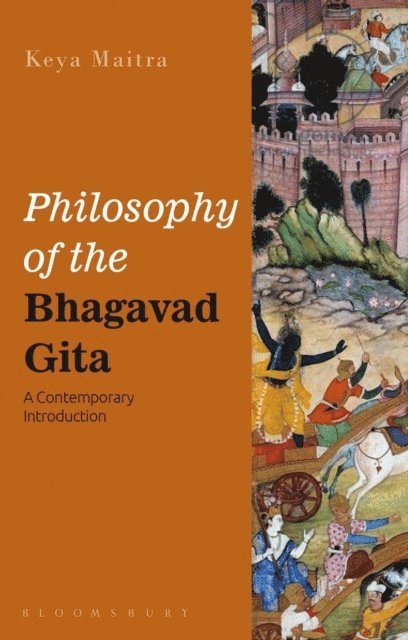
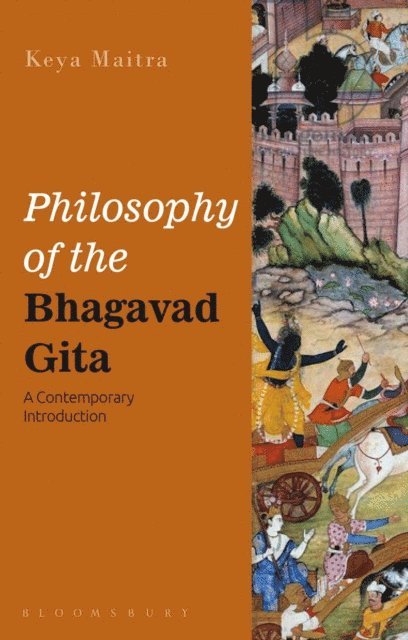
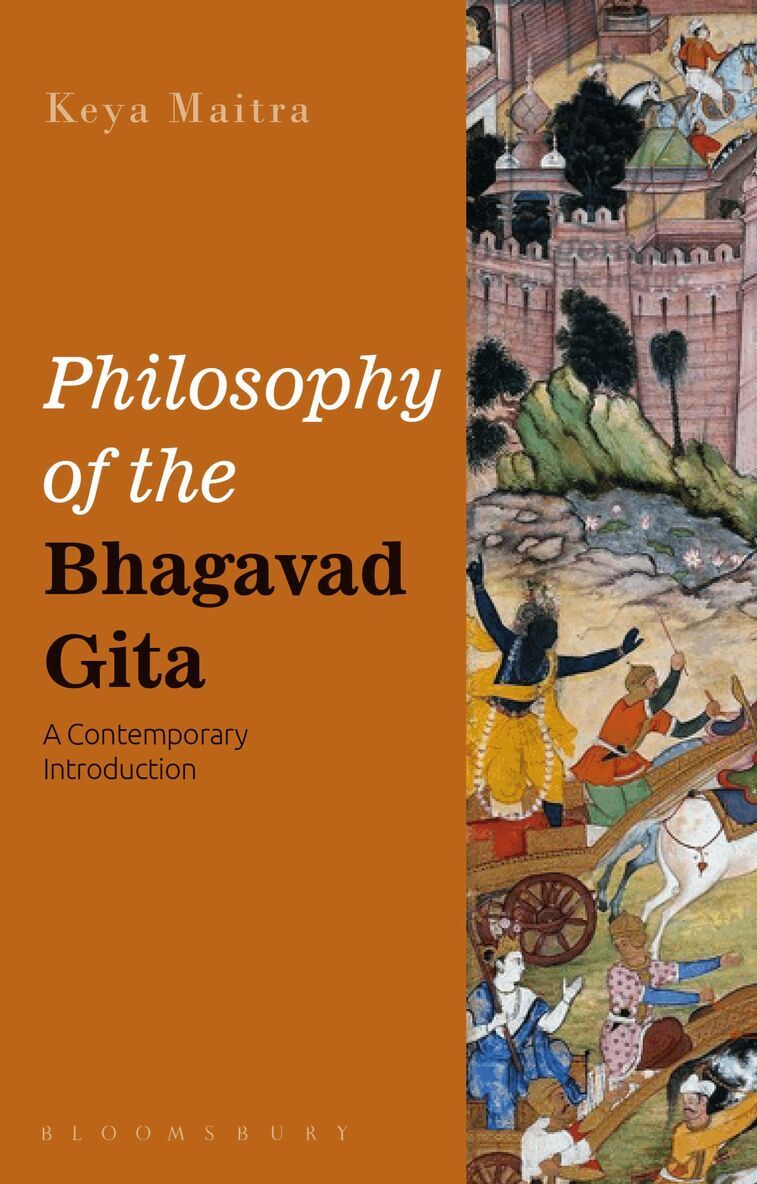
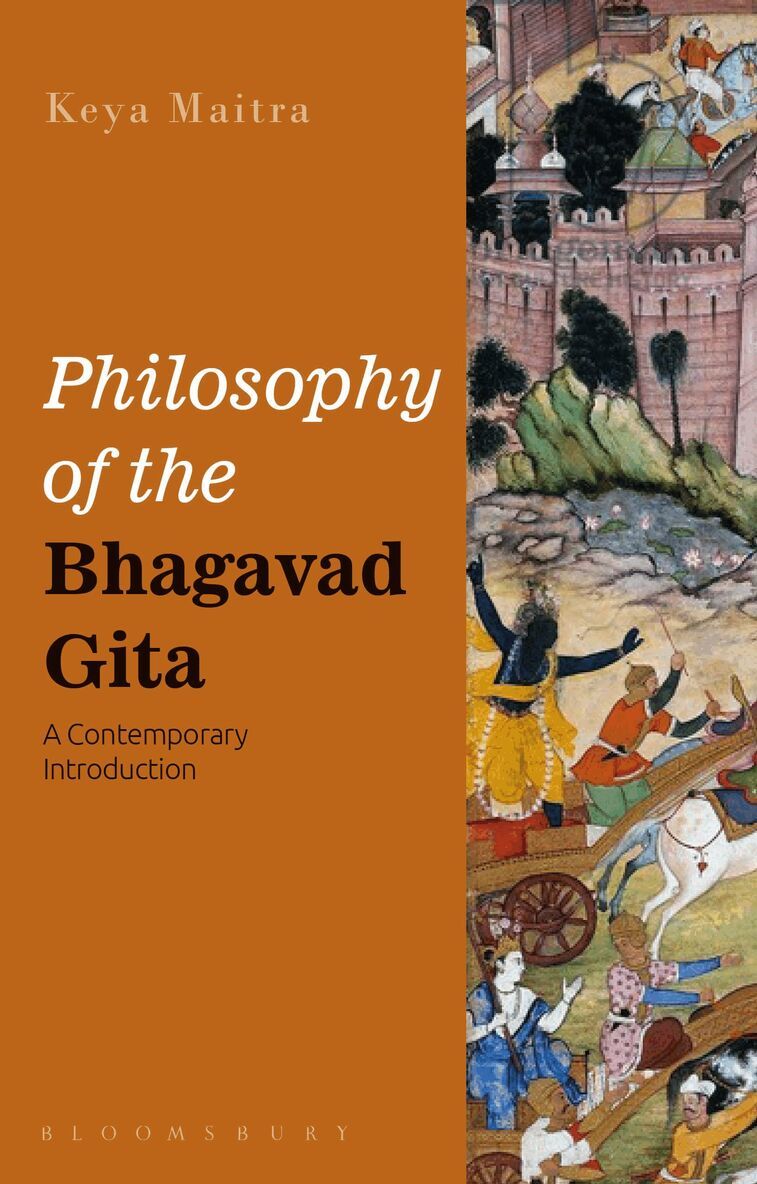
Philosophy of The Bhagavad Gita: A Contemporary Introduction presents a complete philosophical guide and new translation of the most celebrated text of Hinduism. While usually treated as mystical and religious poetry, this new translation focuses on the philosophy underpinning the story of a battle between two sets of cousins of the Aryan clan. Designed for use in the classroom, this lively and readable translation: - Situates the text in its philosophical and cultural contexts - Features summaries and chapter analyses and questions at the opening and end of each of the eighteen chapters encouraging further study- Highlights points of comparison and overlap between Indian and Western philosophical concepts and themes such as just war, care ethics, integrity and authenticity - Includes a glossary allowing the reader to determine the meaning of central concepts Written with clarity and without presupposing any prior knowledge of Hinduism, Philosophy of the Bhagavad Gita: A Contemporary Introduction reveals the importance and value of reading the Gita philosophically.
1 076 kr
Skickas inom 10-15 vardagar
Philosophy of The Bhagavad Gita: A Contemporary Introduction presents a complete philosophical guide and new translation of the most celebrated text of Hinduism. While usually treated as mystical and religious poetry, this new translation focuses on the philosophy underpinning the story of a battle between two sets of cousins of the Aryan clan. Designed for use in the classroom, this lively and readable translation: - Situates the text in its philosophical and cultural contexts - Features summaries and chapter analyses and questions at the opening and end of each of the eighteen chapters encouraging further study- Highlights points of comparison and overlap between Indian and Western philosophical concepts and themes such as just war, care ethics, integrity and authenticity - Includes a glossary allowing the reader to determine the meaning of central concepts Written with clarity and without presupposing any prior knowledge of Hinduism, Philosophy of the Bhagavad Gita: A Contemporary Introduction reveals the importance and value of reading the Gita philosophically.
447 kr
Skickas inom 10-15 vardagar
The Global Humanities Reader is a collaboratively edited collection of primary sources with student-centered support features. It serves as the core curriculum of the University of North Carolina Asheville's almost-sixty-year-old interdisciplinary Humanities Program. Its three volumes--Engaging Ancient Worlds and Perspectives (Volume 1), Engaging Premodern Worlds and Perspectives (Volume 2), and Engaging Modern Worlds and Perspectives (Volume 3)--offer accessible ways to explore facets of human subjectivity and interconnectedness across cultures, times, and places. In highlighting the struggles and resilient strategies for surviving and thriving from multiple perspectives and positionalities, and through diverse voices, these volumes course correct from humanities textbooks that remain Western-centric.One of the main features of the The Global Humanities Reader is a sustained and nuanced focus on cultivating the ability to ask questions--to inquire--while enhancing culturally aware, reflective, and interdisciplinary engagements with the materials. The editorial team created a thoroughly interactive text with the following unique features that work together to actualize student success:* Cross-cultural historical introductions to each volume* Comprehensive and source-specific timelines highlighting periods, events, and people around the world* An introduction for each source with bolded key terms and questions to facilitate active engagement * Primed and Ready questions (PARs)--questions just before and after a reading that activate students' own knowledge and skills * Inquiry Corner--questions consisting of four types: Content, Comparative, Critical, and Connection * Beyond the Classroom--explore how ideas discussed in sources can apply to broader social contexts, such as job, career, project teams or professional communities * Glossary of Tags--topical 'hubs' that point to exciting new connections across multiple sourcesThese volumes reflect the central role of Humanities in deepening an empathic understanding of human experience and cultivating culturally appropriate and community-centered problem-solving skills that help us flourish as global and local citizens.
379 kr
Skickas inom 10-15 vardagar
The Global Humanities Reader is a collaboratively edited collection of primary sources with student-centered support features. It serves as the core curriculum of the University of North Carolina Asheville's almost-sixty-year-old interdisciplinary Humanities Program. Its three volumes--Engaging Ancient Worlds and Perspectives (Volume 1), Engaging Premodern Worlds and Perspectives (Volume 2), and Engaging Modern Worlds and Perspectives (Volume 3)--offer accessible ways to explore facets of human subjectivity and interconnectedness across cultures, times, and places. In highlighting the struggles and resilient strategies for surviving and thriving from multiple perspectives and positionalities, and through diverse voices, these volumes course correct from humanities textbooks that remain Western-centric.One of the main features of the The Global Humanities Reader is a sustained and nuanced focus on cultivating the ability to ask questions--to inquire--while enhancing culturally aware, reflective, and interdisciplinary engagements with the materials. The editorial team created a thoroughly interactive text with the following unique features that work together to actualize student success:* Cross-cultural historical introductions to each volume* Comprehensive and source-specific timelines highlighting periods, events, and people around the world* An introduction for each source with bolded key terms and questions to facilitate active engagement * Primed and Ready questions (PARs)--questions just before and after a reading that activate students' own knowledge and skills * Inquiry Corner--questions consisting of four types: Content, Comparative, Critical, and Connection * Beyond the Classroom--explore how ideas discussed in sources can apply to broader social contexts, such as job, career, project teams or professional communities * Glossary of Tags--topical 'hubs' that point to exciting new connections across multiple sourcesThese volumes reflect the central role of Humanities in deepening an empathic understanding of human experience and cultivating culturally appropriate and community-centered problem-solving skills that help us flourish as global and local citizens.
337 kr
Skickas inom 10-15 vardagar
The Global Humanities Reader is a collaboratively edited collection of primary sources with student-centered support features. It serves as the core curriculum of the University of North Carolina Asheville's almost-sixty-year-old interdisciplinary Humanities Program. Its three volumes--Engaging Ancient Worlds and Perspectives (Volume 1), Engaging Premodern Worlds and Perspectives (Volume 2), and Engaging Modern Worlds and Perspectives (Volume 3)--offer accessible ways to explore facets of human subjectivity and interconnectedness across cultures, times, and places. In highlighting the struggles and resilient strategies for surviving and thriving from multiple perspectives and positionalities, and through diverse voices, these volumes course correct from humanities textbooks that remain Western-centric.One of the main features of the The Global Humanities Reader is a sustained and nuanced focus on cultivating the ability to ask questions--to inquire--while enhancing culturally aware, reflective, and interdisciplinary engagements with the materials. The editorial team created a thoroughly interactive text with the following unique features that work together to actualize student success:* Cross-cultural historical introductions to each volume* Comprehensive and source-specific timelines highlighting periods, events, and people around the world* An introduction for each source with bolded key terms and questions to facilitate active engagement * Primed and Ready questions (PARs)--questions just before and after a reading that activate students' own knowledge and skills * Inquiry Corner--questions consisting of four types: Content, Comparative, Critical, and Connection * Beyond the Classroom--explore how ideas discussed in sources can apply to broader social contexts, such as job, career, project teams or professional communities * Glossary of Tags--topical 'hubs' that point to exciting new connections across multiple sourcesThese volumes reflect the central role of Humanities in deepening an empathic understanding of human experience and cultivating culturally appropriate and community-centered problem-solving skills that help us flourish as global and local citizens.
965 kr
Skickas
The Ethics of Governance: Moral Limits of Policy Decisions offers a toolbox drawn from normative ethics which finds applications in public governance, primarily focusing on policy making and executive action.
966 kr
Skickas inom 10-15 vardagar
The Ethics of Governance: Moral Limits of Policy Decisions offers a toolbox drawn from normative ethics which finds applications in public governance, primarily focusing on policy making and executive action.