Kim Bowes - Böcker
Visar alla böcker från författaren Kim Bowes. Handla med fri frakt och snabb leverans.
5 produkter
5 produkter
1 469 kr
Skickas inom 7-10 vardagar
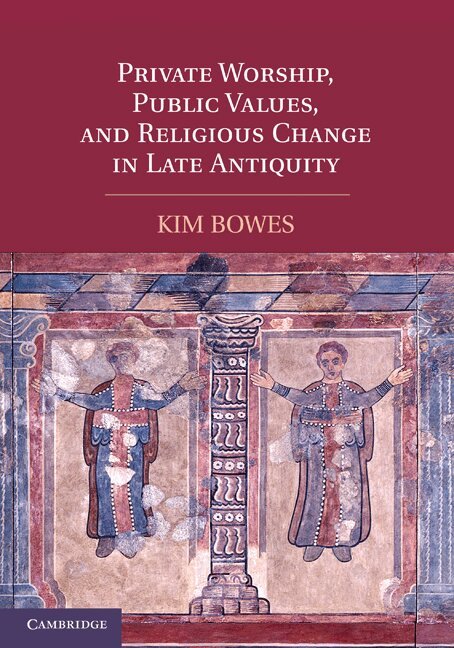
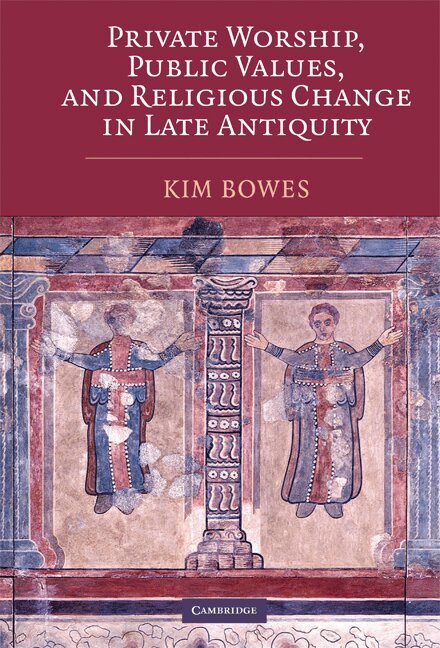
Conventional histories of late antique Christianity tell the story of a public institution - the Christian Church. In this book, Kim Bowes relates another history, that of the Christian private. Using textual and archaeological evidence, she examines the Christian rituals of home and rural estate, which took place outside the supervision of bishops and their agents. These domestic rituals and the spaces in which they were performed were rooted in age-old religious habits. They formed a major, heretofore unrecognised force in late ancient Christian practice. The religion of home and family, however, was not easily reconciled with that of the bishop's Church. Domestic Christian practices presented challenges to episcopal authority and posed thorny questions about the relationship between individuals and the Christian collective. As Bowes suggests, the story of private Christianity reveals a watershed in changing conceptions of 'public' and 'private', one whose repercussions echo through contemporary political and religious debate.
331 kr
Skickas inom 7-10 vardagar
A radical revision—and worker’s-eye view—of everything we thought we knew about the ancient Roman economyThe story of ancient Rome is predominantly one of great men with great fortunes. Surviving Rome unearths another history, one of ordinary Romans, who worked with their hands and survived through a combination of grit and grinding labor.Focusing on the working majority, Kim Bowes tells the stories of people like the tenant farmer Epimachus, Faustilla the moneylender, and the pimp Philokles. She reveals how the economic changes of the period created a set of bitter challenges and opportunistic hustles for everyone from farmers and craftspeople to day laborers and slaves. She finds working people producing a consumer revolution, making and buying all manner of goods from fine pottery to children’s toys. Many of the poorest working people probably pieced together a living from multiple sources of income, including wages. And she suggests that Romans’ most daunting challenge was the struggle to save. Like many modern people, saving enough to buy land or start a business was a slow, precarious slog. Bowes shows how these economies of survival were shared by a wide swath of the populace, blurring the lines between genders, ages, and legal status.Drawing on new archaeological and textual evidence, Surviving Rome presents a radical new perspective on the economy of ancient Rome while speaking to the challenges of today’s laborers and gig workers surviving in an unforgiving global world.
446 kr
Skickas inom 5-8 vardagar
Houses are often assumed to be reliable mirrors of society, fossils of family structures, social hierarchies and mental maps of worlds now vanished. This is particularly true of the elite houses of the third to sixth centuries AD, which have been read as material symptoms of Rome's decline. The great dining and reception halls of urban houses sound the death-knell of participatory government and the rise of patronage politics, while in their sheer size and splendour later Roman houses seem to encapsulate a fin-de-siecle world of have and have-nots, separated by unbridgeable social chasms. Kim Bowes debates this image of later Roman houses as reflections of decadence and despotism, suggesting that the principal interpretive model, which reads such houses as reflective of a newly hierarchical, ritualized society, finds little support either from the archaeological evidence or from new readings of historical sources. Drawing on the most recent archaeological data and new theoretical models, she offers instead a less sharply periodized view of later houses, stressing their continuity with houses of the early empire.
744 kr
Skickas inom 7-10 vardagar
Conventional histories of late antique Christianity tell the story of a public institution - the Christian Church. In this book, Kim Bowes relates another history, that of the Christian private. Using textual and archaeological evidence, she examines the Christian rituals of home and rural estate, which took place outside the supervision of bishops and their agents. These domestic rituals and the spaces in which they were performed were rooted in age-old religious habits. They formed a major, heretofore unrecognised force in late ancient Christian practice. The religion of home and family, however, was not easily reconciled with that of the bishop's Church. Domestic Christian practices presented challenges to episcopal authority and posed thorny questions about the relationship between individuals and the Christian collective. As Bowes suggests, the story of private Christianity reveals a watershed in changing conceptions of 'public' and 'private', one whose repercussions echo through contemporary political and religious debate.
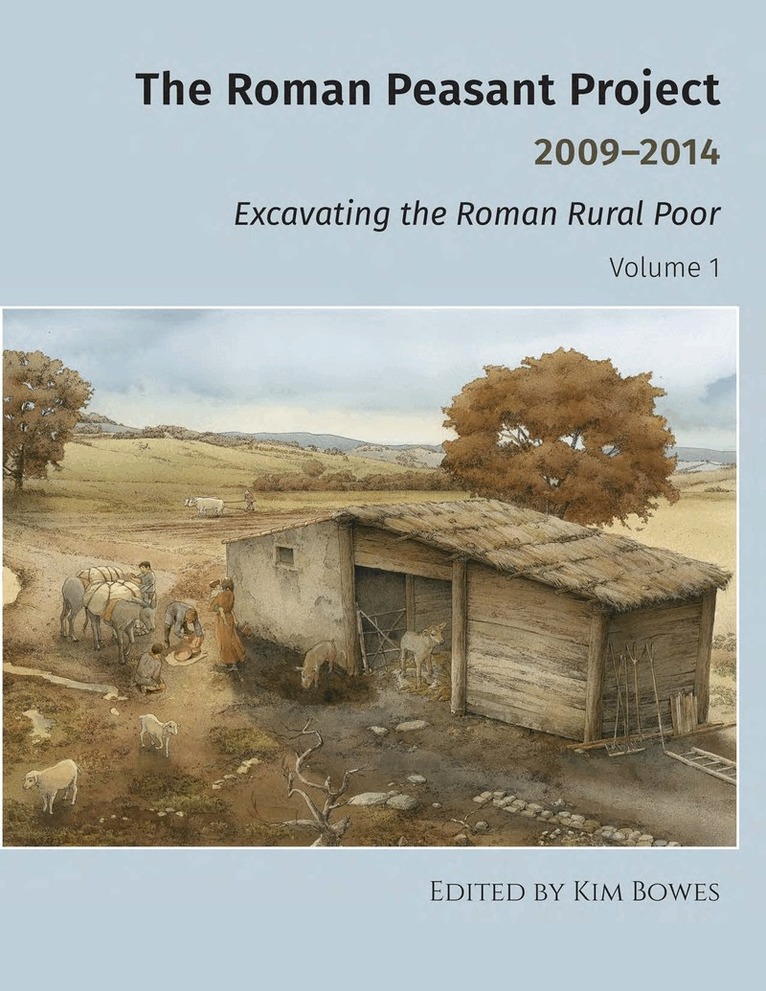
Roman Peasant Project 2009–2014 – Excavating the Roman Rural Poor
Excavating the Roman Rural Poor
Inbunden, Engelska, 2021
1 701 kr
Skickas inom 5-8 vardagar
This book presents the results of the first systematic archaeological study of Roman peasants. It examines the spaces, architecture, diet, agriculture, market interactions, and movement habitus of non-elite rural dwellers in a region of southern Tuscany, Italy, during the Roman period. Volume 1 presents the excavation data from eight non-elite rural sites including a farm, a peasant house, animal stall/work huts, a ceramics factory, field drains, and a site of uncertain function, here framed as individual chapters complete with finds analysis. Volume 2 examines this data synthetically in thematic chapters addressing land use, agriculture, diet, markets, and movement. The results suggest a different, more sophisticated Roman peasant than heretofore assumed. The data suggests that Roman peasants particularly in the first century BC/AD built specialized sites distributed throughout the landscape to maximize use of diverse land parcels. This has important implications for the interpretation of field survey data, the estimate of rural demographics from that survey, and assumptions about the long-term changes to human settlement. It also points to an important moment of agricultural intensification in this period, a contention beginning to be supported by other studies. The project also identified sophisticated systems of land use, including crop rotation and an important investment in animal agriculture. This work presents the first systematic data from Roman Italy for rural consumption, tracking the fine wares made at a production site to local sites nearby. This supports the largely theoretical problematizing of the so-called consumer city model and suggests the potential importance of rural aggregate demand. Movement studies, based on finds from the sites themselves, describe a more mobile population than anticipated, engaged in quotidian and long-distance movement patterns, supported by the small but steady stream of imports and exports into and out of this seemingly liminal region. The book concludes by addressing the implications of this new data for major questions in Roman social and economic history.