Kirk A. Denton - Böcker
Visar alla böcker från författaren Kirk A. Denton. Handla med fri frakt och snabb leverans.
8 produkter
8 produkter
453 kr
Skickas inom 10-15 vardagar
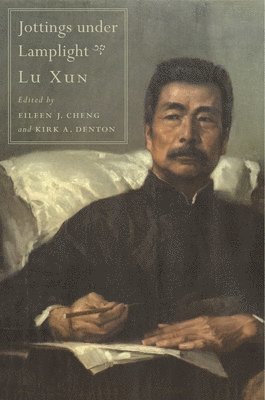
Lu Xun (1881–1936) is widely considered the greatest writer of twentieth-century China. Although primarily known for his two slim volumes of short fiction, he was a prolific and inventive essayist. Jottings under Lamplight showcases Lu Xun’s versatility as a master of prose forms and his brilliance as a cultural critic with translations of sixty-two of his essays, twenty of which are translated here for the first time.While a medical student in Tokyo, Lu Xun viewed a photographic slide that purportedly inspired his literary calling: it showed the decapitation of a Chinese man by a Japanese soldier, as Chinese bystanders watched apathetically. He felt that what his countrymen needed was a cure not for their physical ailments but for their souls. Autobiographical accounts describing this and other formative life experiences are included in Jottings, along with a wide variety of cultural commentaries, from letters, speeches, and memorials to parodies and treatises.Lu Xun was remarkably well versed in Chinese tradition and playfully manipulated its ancient forms. But he also turned away from historical convention, experimenting with new literary techniques and excoriating the “slave mentality” of a population paralyzed by Confucian hierarchies. Tinged at times with notes of despair, yet also with pathos, humor, and an unparalleled caustic wit, Lu Xun’s essays chronicle the tumultuous transformations of his own life and times, providing penetrating insights into Chinese culture and society.
2 258 kr
Skickas inom 10-15 vardagar
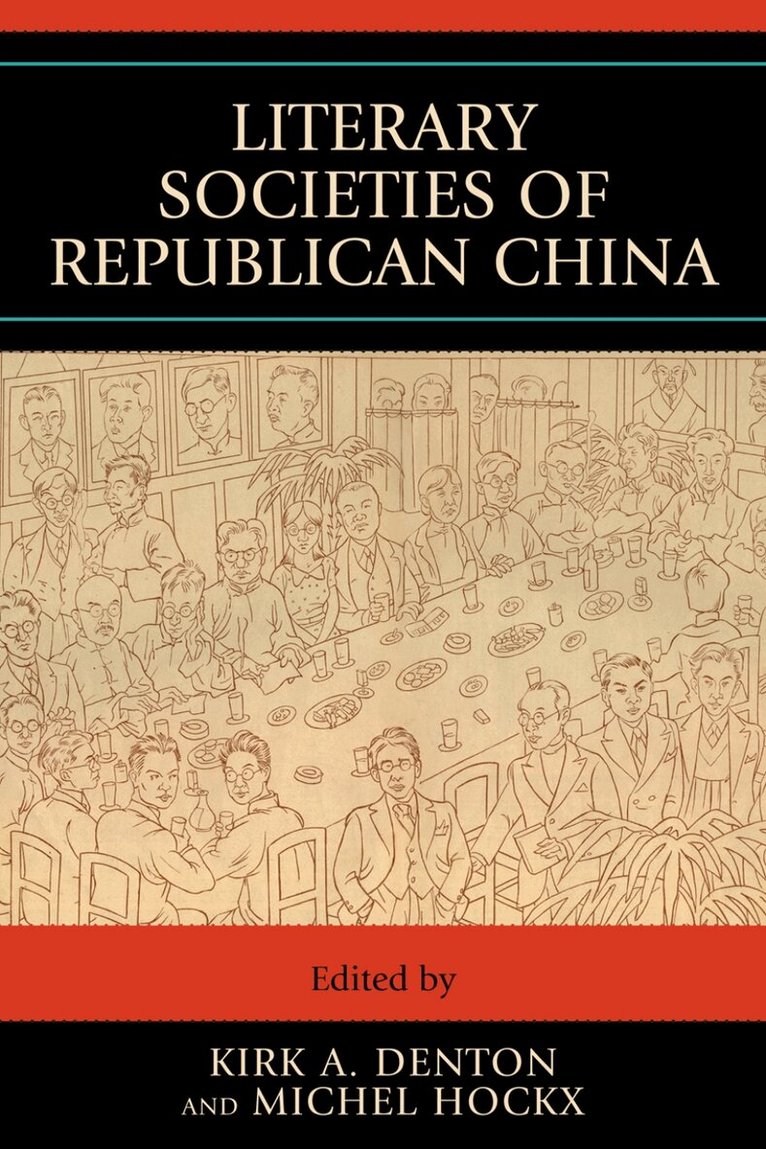
Literary Societies in Republican China provides a new and comprehensive perspective on the fascinating literary world of the most turbulent period in recent Chinese history: the Republican era of 1911-1949. Wedged between the fall of the Empire and the founding of the Communist state, the Republican period witnessed enormous social, political, and cultural changes. Traditionally the period is seen as one of transition: from the country being partially colonized and occupied to being an independent nation-state, from Confucianism to socialism, from writing in classical Chinese to writing in the everyday vernacular. Modern scholarship, however, has become suspicious of such attempts to analyze history, including cultural history, as a journey from A to B via C. Instead, attention has turned to the "thick description" of complex historical phenomena without worrying about whether or not they fit into some neat linear scheme. Inevitably, such scholarship benefits from collaboration and teamwork, from the juxtaposition of different insights and different materials in order to gain in overall breadth. Literary Societies in Republican China represents such teamwork and such breadth. The thirteen essays by eleven scholars from North America, Europe, and Asia present detailed discussions of particular literary groups active on the Republican-era literary scene. Some of these groups are familiar representatives of what used to be considered the "mainstream," while others represent literary styles that have hitherto been considered "marginal" or that have been ignored altogether. Each of the essays in this volume looks in detail at literary societies both as producers of literary views and texts and as organizations with sometimes very complex social structures. The result is a unique blend of literary, cultural, and social history, unrivalled in any English-language scholarship on China to date.
1 006 kr
Skickas inom 10-15 vardagar
Literary Societies in Republican China provides a new and comprehensive perspective on the fascinating literary world of the most turbulent period in recent Chinese history: the Republican era of 1911-1949. Wedged between the fall of the Empire and the founding of the Communist state, the Republican period witnessed enormous social, political, and cultural changes. Traditionally the period is seen as one of transition: from the country being partially colonized and occupied to being an independent nation-state, from Confucianism to socialism, from writing in classical Chinese to writing in the everyday vernacular. Modern scholarship, however, has become suspicious of such attempts to analyze history, including cultural history, as a journey from A to B via C. Instead, attention has turned to the "thick description" of complex historical phenomena without worrying about whether or not they fit into some neat linear scheme. Inevitably, such scholarship benefits from collaboration and teamwork, from the juxtaposition of different insights and different materials in order to gain in overall breadth. Literary Societies in Republican China represents such teamwork and such breadth. The thirteen essays by eleven scholars from North America, Europe, and Asia present detailed discussions of particular literary groups active on the Republican-era literary scene. Some of these groups are familiar representatives of what used to be considered the "mainstream," while others represent literary styles that have hitherto been considered "marginal" or that have been ignored altogether. Each of the essays in this volume looks in detail at literary societies both as producers of literary views and texts and as organizations with sometimes very complex social structures. The result is a unique blend of literary, cultural, and social history, unrivalled in any English-language scholarship on China to date.
2 644 kr
Skickas inom 10-15 vardagar
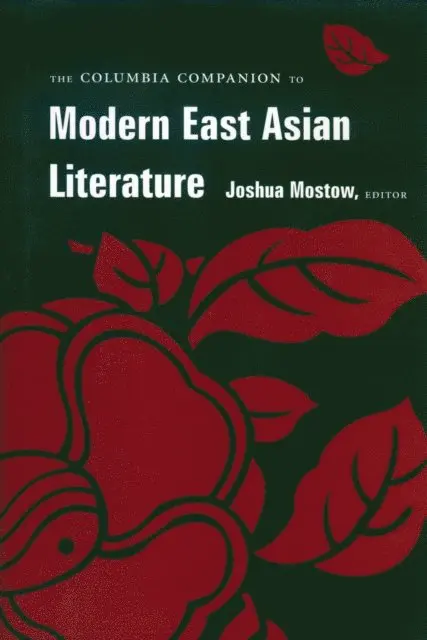
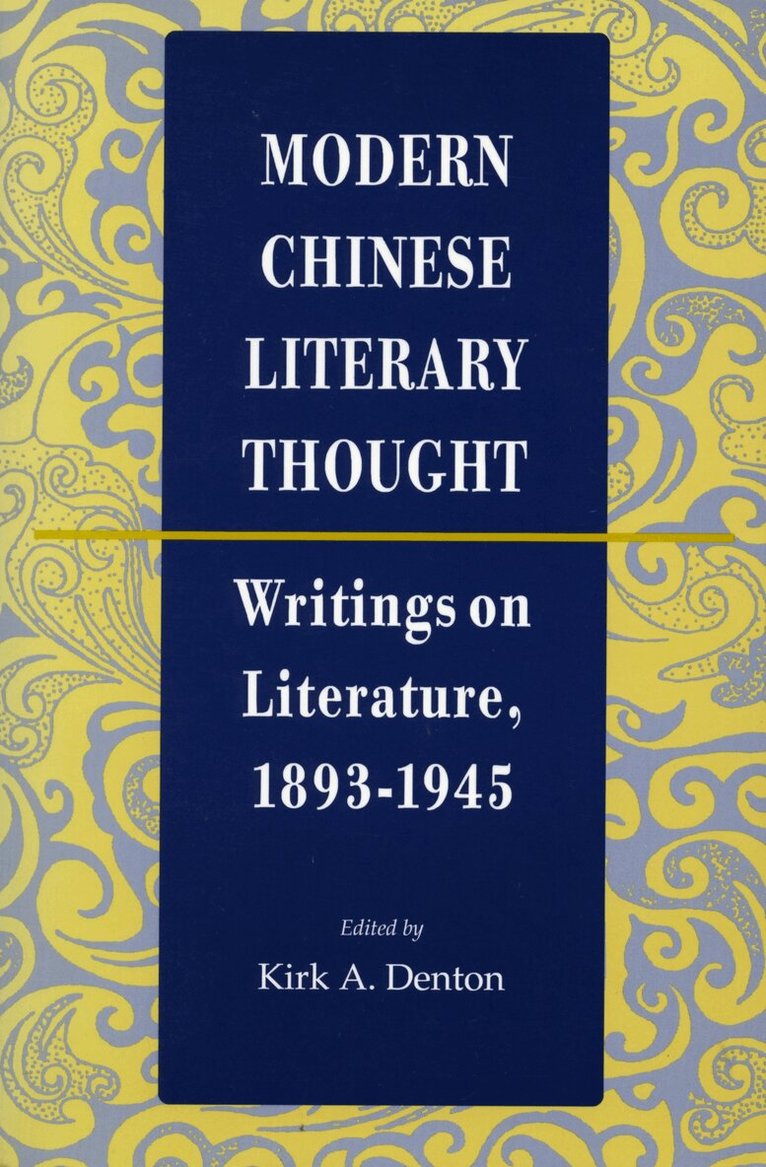
This volume presents a broad range of writings on literature from the period of the inception of literary modernity in China. Of the 55 essays included, 47 are translated here for the first time, including two essays by Lu Xun.In addition to the selections themselves, the author has provided, in an extensive General Introduction and shorter introductions to the five parts of the book, historical background, a synthesis of current scholarship on modern views of Chinese literature, and an original thesis on the complex formation of Chinese literary modernity. In the author's view, literary discourses were actively reshaped by Chinese writes and critics as responses to deep-set cultural problematics and the socio-historical imperative of the times.The selection of the essays reflects both the mainstream Marxists interpretation of the literary values of modern China and the marginalized views proscribed, at one time or another, by the leftist canon. With both the canonical and the marginal, this collection offers a full spectrum of modern Chinese perceptions of fundamental literary issues: the nature of the creative act; the relationship between the literary text and reality; the moral, social, and political role of literature; and the filiation of language, literary form, and content.In presenting the Western reading with a Chinese discourse (in the more traditional sense of the term) about literature, the editor attempts to construct a cultural context for the production of texts in modern Chinese literature. Why did modern Chinese writers write? What goals did they have? How did they think about literature and its relation to its audience and the world? To read the response to these questions is to deepen our understanding of the experience of modernity that lies at the root of works of modern Chinese literature.The selections were translated by 33 leading scholars in the field of modern Chinese literature.
643 kr
Skickas inom 7-10 vardagar
This volume presents a broad range of writings on literature from the period of the inception of literary modernity in China. Of the 55 essays included, 47 are translated here for the first time, including two essays by Lu Xun.In addition to the selections themselves, the author has provided, in an extensive General Introduction and shorter introductions to the five parts of the book, historical background, a synthesis of current scholarship on modern views of Chinese literature, and an original thesis on the complex formation of Chinese literary modernity. In the author's view, literary discourses were actively reshaped by Chinese writes and critics as responses to deep-set cultural problematics and the socio-historical imperative of the times.The selection of the essays reflects both the mainstream Marxists interpretation of the literary values of modern China and the marginalized views proscribed, at one time or another, by the leftist canon. With both the canonical and the marginal, this collection offers a full spectrum of modern Chinese perceptions of fundamental literary issues: the nature of the creative act; the relationship between the literary text and reality; the moral, social, and political role of literature; and the filiation of language, literary form, and content.In presenting the Western reading with a Chinese discourse (in the more traditional sense of the term) about literature, the editor attempts to construct a cultural context for the production of texts in modern Chinese literature. Why did modern Chinese writers write? What goals did they have? How did they think about literature and its relation to its audience and the world? To read the response to these questions is to deepen our understanding of the experience of modernity that lies at the root of works of modern Chinese literature.The selections were translated by 33 leading scholars in the field of modern Chinese literature.
1 112 kr
Skickas inom 10-15 vardagar
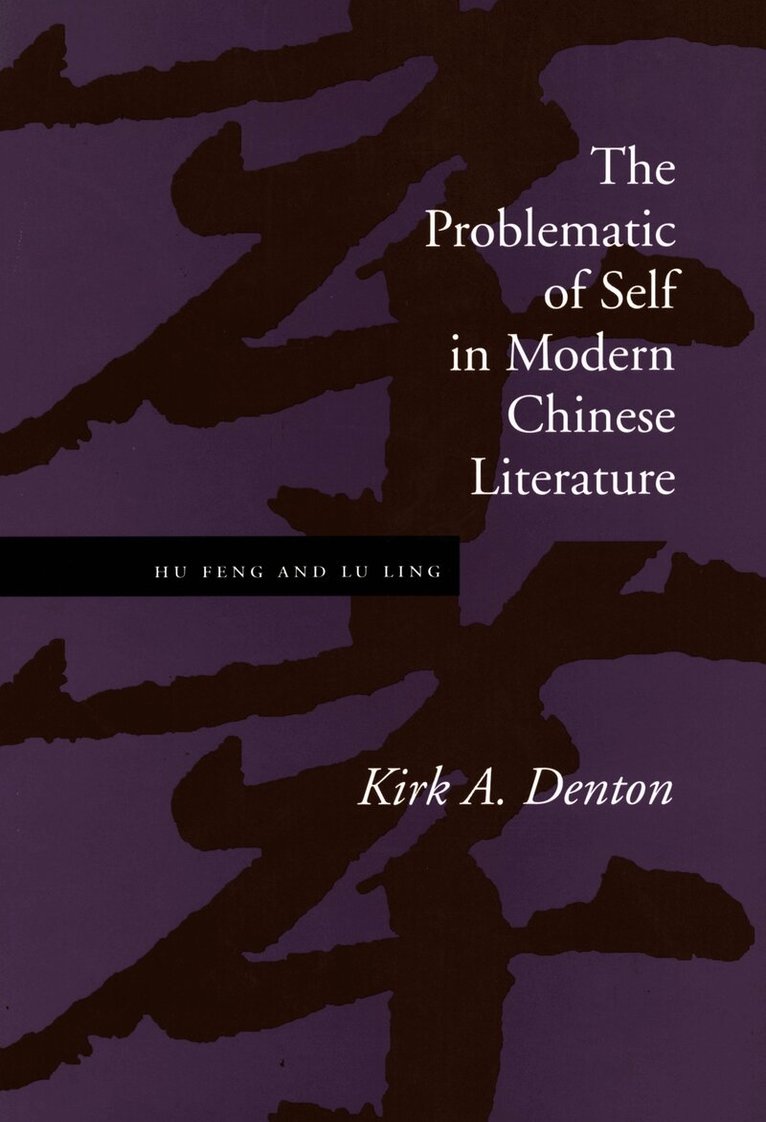
Lu Ling (1921-94) was one of modern China's most intensely psychological writers, foregrounding in his many novels and short stories the narrative representation of consciousness and the individual psyche. His mentor Hu Feng (1902-85), a leftist literary theorist, was a leading proponent of the subjective view of literature, who asserted an active and dynamic role for the self in the creative process. In the 1930's and 1940's, when they were most productive, Lu Ling and Hu Feng stood for a position in the leftist literary field that was opposed to the political, utilitarian view of literature held by Mao Zedong and the cultural bureaucrats of the Chinese Communist Party (CCP). The tension that existed between these two positions before the revolution exploded after the CCP came to power. In 1955, Hu Feng, Lu Ling, and a group of other writers associated with Hu Feng became the objects of a national media assault that led to their arrest and imprisonment.Centered on these two key figures, this study explores in theoretical and fictional representations of the subject a problematic at the heart of the experience of modernity in China. Chinese scholarship in the recent post-Mao liberalization has tended to represent Hu Feng and Lu Ling as heroic promoters of May Fourth Enlightenment in the face of the oppressive and authoritarian legacy of Yan'an and the Maoist discourses of revolutionary collectivism. Rather than a confrontation between the values of personal enlightenment and rational salvation, the author sees Chinese modernity as the interaction and interdependence of the two.Subjectivism and psychological fiction constitute an assertion of an empowered subject against the CCP's efforts to inscribe the subject into the ideology of collective self-sacrifice. But the writings of Hu Feng and Lu Ling are also discursive responses to the deeper epistemological problem of the self and its relation to the outer world engendered by the reception of Western discourses of modernity. Hu Feng's response was to merge the social-historical orientation of the realist mode with the subjectivism of romanticism, thus allowing for a potential unity of self with the outer world through the creative process. Lu Ling's intellectual characters are emblematic of this modern problematic of self: minds caught in a schizophrenic attraction/revulsion with romantic individualism and the relinquishing of self to the revolutionary power of the masses.The author also shows that beneath Hu Feng's and Lu Ling's modern theoretical and fictional attention to the subject are ties to the neo-Confucian self and its relation to tian, the divine. By looking at modernity in terms of discursive responses shaped by traditional cultural desires, he aims to contribute to a breakdown of the strict division between modernity and tradition that continues to define modern Chinese literature.
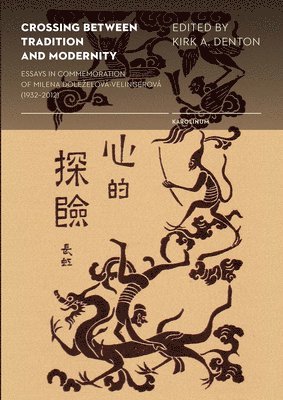
Crossing between Tradition and Modernity
Essays in Commemoriation of Milena Dolealová-Velingerová (1932-2012)
Häftad, Engelska, 2017
229 kr
Skickas inom 7-10 vardagar
Crossing Between Tradition and Modernity presents thirteen essays written in honor of Milena Dolezelova-Velingerova (1932-2012), a member of the Prague School of Sinology and an important scholar of Chinese literature who was at the forefront in introducing literary theory into sinology. Dolezelova-Velingerova was that rare scholar who wrote with equal knowledge and skill about both modern and premodern Chinese literature. The essays emulate Dolezelova-Velingerova's scholarship in terms of treating a broad range of historical periods, literary genres, and topics from Tang travel essays to cultural identity in postcolonial Hong Kong. Organized into two parts, "Language, Structure, and Genre," and "Identities and Self-Representations," the essays are motivated by an abiding concern with issues of language, narrative structure, and the complex nature of literary meaning that were at the heart of Dolezelova-Velingerova's work.
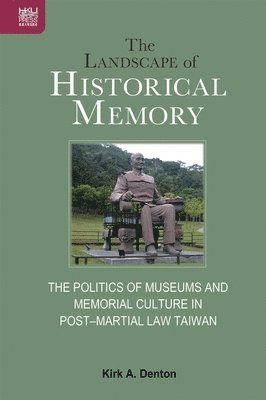
The Landscape of Historical Memory
The Politics of Museums and Memorial Culture in Post-Martial Law Taiwan
Inbunden, Engelska, 2021
1 100 kr
Skickas inom 5-8 vardagar