Klavs Randsborg - Böcker
Visar alla böcker från författaren Klavs Randsborg. Handla med fri frakt och snabb leverans.
8 produkter
8 produkter
441 kr
Skickas inom 7-10 vardagar
Evidence for the disposal of the dead is one of the most common classes of archaeological data; in both prehistoric and historic contexts, archaeologists have long used the remains of death and burial as a source for interpretations of society, culture and ethnic identity. This volume, bringing together studies on the disposal of the dead, explores the frontiers and potential of research and presents critical appraisals of theory about social organisation and culture change. It contains case studies from both North America and Europe and themes include the complex social factors behind burial in monuments and cemeteries, the relationship between status, diet, disease and mortality, the use of differential burial practices to define rank and the underlying reasons for major changes in burial patterns.
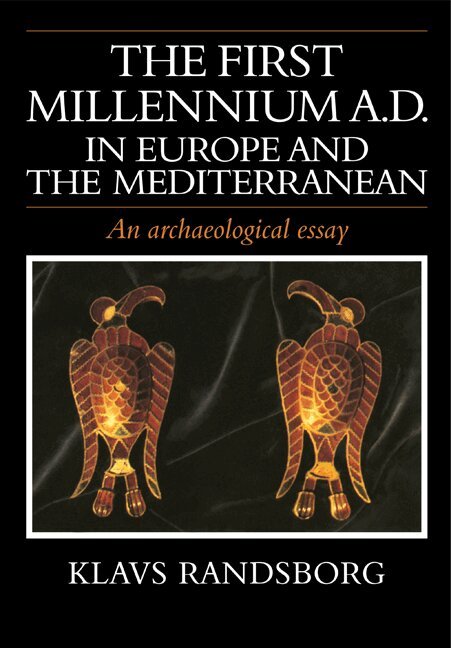
The First Millennium AD in Europe and the Mediterranean
An Archaeological Essay
Häftad, Engelska, 1991
589 kr
Modern archaeology, with its huge methodological repertoire, its interdisciplinary orientation and its rapidly expanding basis in excavations, is beginning to rewrite history, and to reshape our views of the development of Europe prior to the present millennium. Archaeological evidence draws attention to processes on which the written record is silent, or which were not fully appreciated by contemporaries in the literate centres. This book deals with the rise of medieval western Europe as the Roman Empire crumbled, and the integration of hitherto barbarian societies into the new mainstream of European society. Archaeological material is the main focus, but information derived from written sources, especially those illuminating the economic and the associated social circumstances, is also taken into account.
446 kr
Skickas inom 5-8 vardagar
"The Anatomy of Denmark" is a concise, well illustrated history of the accomplishments and cultural heritage of the people living on what is now Danish territory since the Ice Age. The archeology and history of the earlier period (before AD 1200) is given as much weight as is the more recent past, unlike standard history books which emphasize written texts and more modern times. The book demonstrates the deep roots of a successful, well protected region through the ages. Strategically situated between two seas, as well as between larger Scandinavia and Central Europe, this populous beautiful country has always been both close to the centers of development and somewhat protected from foreign excesses. A particular talent for social organization, education, management and production has taken small Denmark out into the world ever since the Ice Age. "The Anatomy of Denmark" is clearly written and lavishly furnished with illustrations and tables. It provides an brief, fact-packed introduction for anyone interested in this small thriving country - archaeologist, historian, tourist and business visitor alike.
639 kr
Skickas inom 3-6 vardagar
In the ancient civilizations of the EasternMediterranean, textiles were generally much more costly than foodstuffs,animals or bronzes; it is very likely that the same was the case throughoutprehistoric Europe. In this study, the firstfor over seventy years, Klavs Randsborg examines completely preserved woollendresses, both female and male, from Danish oak coffin graves of the earlysecond millennium BC. These garments, matched in age and superb preservationonly by finds from Ancient Egypt, along with related artefacts such as imagesand figurines, are used to build up a rich picture of Bronze Age society andculture in the context of archaeological, ethnographical and historicalinformation from Europe and beyond.
530 kr
Skickas inom 10-15 vardagar
Roman Reflections uses a series of detailed and deeply researched case studies to explore how Roman society connected with and influenced Northern Europe during the Iron and Viking Ages. In an original way, the book brings late prehistoric Denmark – best known for its so-called ‘bog bodies’ – into a world dominated by textual histories, principally that of Tacitus.The studies include a new examination of the bog-bodies of the late first millennium BC, a classical archaeological puzzle: men, women and children murdered yet respected in death and adorned with items of fine clothing. A second essay challenges traditionally held ideas about the Cimbri by exploring the textual and archaeological evidence, including the startling and famous European artefact, the Gundestrup silver cauldron. The other studies comprise an archaeologically founded modernist discussion of the ethnography of Tacitus’ Germania, in particular considering the character of ancient Germanic Bronze and Iron Age societies; a linguistic exploration of the Latin inheritance in northern European names and places, much of which seems to have been invented by the Romans; and an analysis of the origins of the Danes.Throughout, traditional sources and history are presented in conjunction with new archaeological observations and interpretations. In an accessible way, Roman Reflections assesses Denmark's part on a larger stage, showing how foundations were laid for its zenith in Viking times.
359 kr
Skickas inom 7-10 vardagar
An important contribution to the European Mesolithic and Neolithic literature. Focusses on Northern Europe including Novel methods and studies, and very important finds.Includes major new developments on Ezero-Kale in Bulgaria (a sequel to Acta Archaeologica Supplementa VI, 2005 on the Lîga Copper Age settlement).Provides a superb explanation of the collapse of Balkan Copper Age societies and the long transition to the Bronze Age.Includes the re-orientation towards the new centres of the Mediterranean and the Near East: indeed, the dawn of civilization.
386 kr
Skickas inom 7-10 vardagar
An insightful collection of studies into the Viking, Neolithic and Bronze Ages of the Nordic world: exploring both the domestic and the regal in the rise to civilization. · Investigates the prominent Migration Period building at Alby, Sweden· Contributors include Wolf Meyer-Christian, Anne Carlie and Palle Eriksen· Features case study on ‘Neolithic & Bronze Ages in the North’· Researches the orientation of Danish Passage Graves
1 314 kr
Skickas inom 10-15 vardagar
Roman Reflections uses a series of detailed and deeply researched case studies to explore how Roman society connected with and influenced Northern Europe during the Iron and Viking Ages. In an original way, the book brings late prehistoric Denmark – best known for its so-called ‘bog bodies’ – into a world dominated by textual histories, principally that of Tacitus.The studies include a new examination of the bog-bodies of the late first millennium BC, a classical archaeological puzzle: men, women and children murdered yet respected in death and adorned with items of fine clothing. A second essay challenges traditionally held ideas about the Cimbri by exploring the textual and archaeological evidence, including the startling and famous European artefact, the Gundestrup silver cauldron. The other studies comprise an archaeologically founded modernist discussion of the ethnography of Tacitus’ Germania, in particular considering the character of ancient Germanic Bronze and Iron Age societies; a linguistic exploration of the Latin inheritance in northern European names and places, much of which seems to have been invented by the Romans; and an analysis of the origins of the Danes.Throughout, traditional sources and history are presented in conjunction with new archaeological observations and interpretations. In an accessible way, Roman Reflections assesses Denmark's part on a larger stage, showing how foundations were laid for its zenith in Viking times.