Kristopher Woofter – författare
Visar alla böcker från författaren Kristopher Woofter. Handla med fri frakt och snabb leverans.
9 produkter
9 produkter
4 076 kr
Kommande
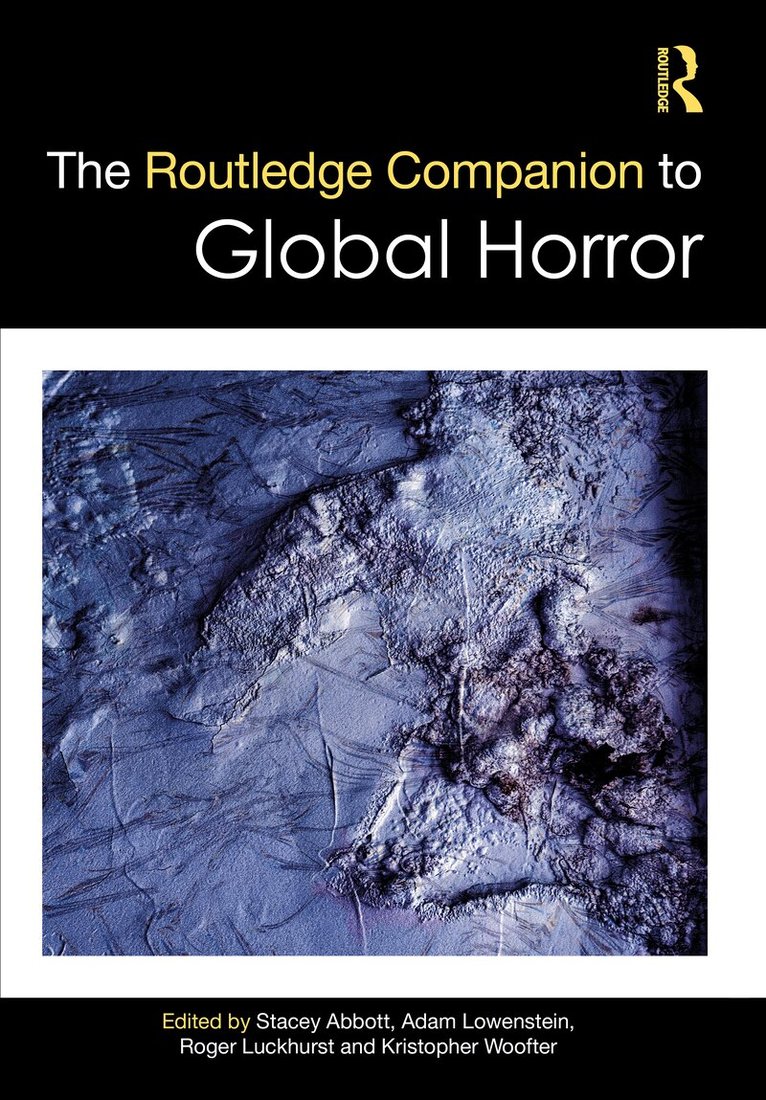
The Routledge Companion to Global Horror is a mapping of an emergent Global Horror Studies that are developing across media forms of literature, film, TV, radio, podcasting, video gaming and other forms of culture. In 53 chapters and 25 ‘snapshot’ mini-essays, the Companion has commissioned leading scholars from Sweden to New Zealand, from China, North and South America, the UK and Europe, to cover what is now a global network of horror. The book offers specialist sections on literature, film, TV and transmedia horror as well as sections with chapters on established and emergent theoretical frames and the cultural and intersectional politics of horror. Uniquely, it builds both a history of the rise of ‘horror’ in distinct forms and a new mapping of a constantly evolving global genre, now produced across a network of transnational sources, each with their own distinct version of horror. . This volume will allow readers to think in an inherently transnational, comparative mode of critical apprehension of the genre, decentering narrow national formulations of horror for a wider, interdisciplinary conception of horror.
626 kr
Skickas inom 5-8 vardagar
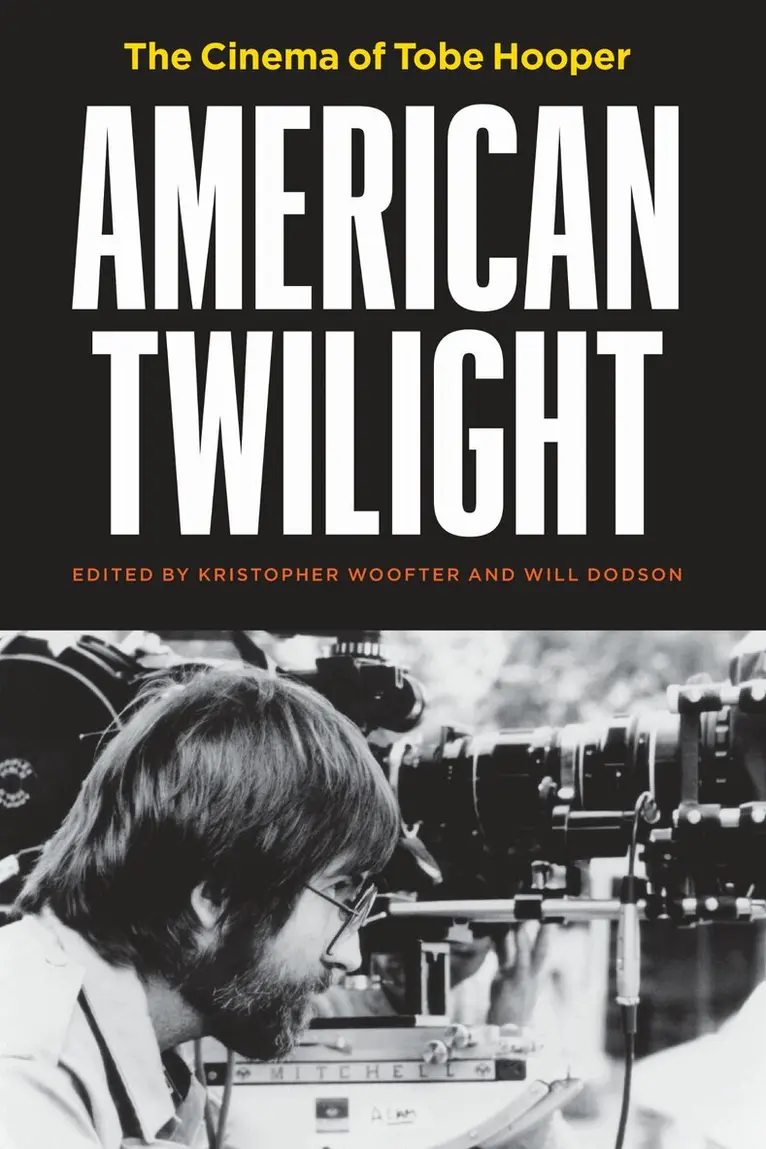
A master of gritty horror, Tobe Hooper captured on-screen an America in constant crisis and upended myths of prosperity to reveal the country’s internal decay.Tobe Hooper's productions, which often trespassed upon the safety of the family unit, cast a critical eye toward an America in crisis. Often dismissed by scholars and critics as a one-hit wonder thanks to his 1974 horror classic The Texas Chain Saw Massacre, Hooper nevertheless was instrumental in the development of a robust and deeply political horror genre from the 1960s until his death in 2017. In American Twilight, the authors assert that the director was an auteur whose works featured complex monsters and disrupted America’s sacrosanct perceptions of prosperity and domestic security. American Twilight focuses on the skepticism toward American institutions and media and the articulation of uncanny spaces so integral to Hooper’s vast array of feature and documentary films, made-for-television movies, television episodes, and music videos. From Egg Shells (1969) to Poltergeist (1982), Djinn (2013), and even Billy Idol’s music video for “Dancing with Myself” (1985), Tobe Hooper provided a singular directorial vision that investigated masculine anxiety and subverted the idea of American exceptionalism.
387 kr
Skickas inom 5-8 vardagar
A master of gritty horror, Tobe Hooper captured on-screen an America in constant crisis and upended myths of prosperity to reveal the country’s internal decay.Tobe Hooper's productions, which often trespassed upon the safety of the family unit, cast a critical eye toward an America in crisis. Often dismissed by scholars and critics as a one-hit wonder thanks to his 1974 horror classic The Texas Chain Saw Massacre, Hooper nevertheless was instrumental in the development of a robust and deeply political horror genre from the 1960s until his death in 2017. In American Twilight, the authors assert that the director was an auteur whose works featured complex monsters and disrupted America’s sacrosanct perceptions of prosperity and domestic security. American Twilight focuses on the skepticism toward American institutions and media and the articulation of uncanny spaces so integral to Hooper’s vast array of feature and documentary films, made-for-television movies, television episodes, and music videos. From Egg Shells (1969) to Poltergeist (1982), Djinn (2013), and even Billy Idol’s music video for “Dancing with Myself” (1985), Tobe Hooper provided a singular directorial vision that investigated masculine anxiety and subverted the idea of American exceptionalism.
1 863 kr
Skickas inom 10-15 vardagar
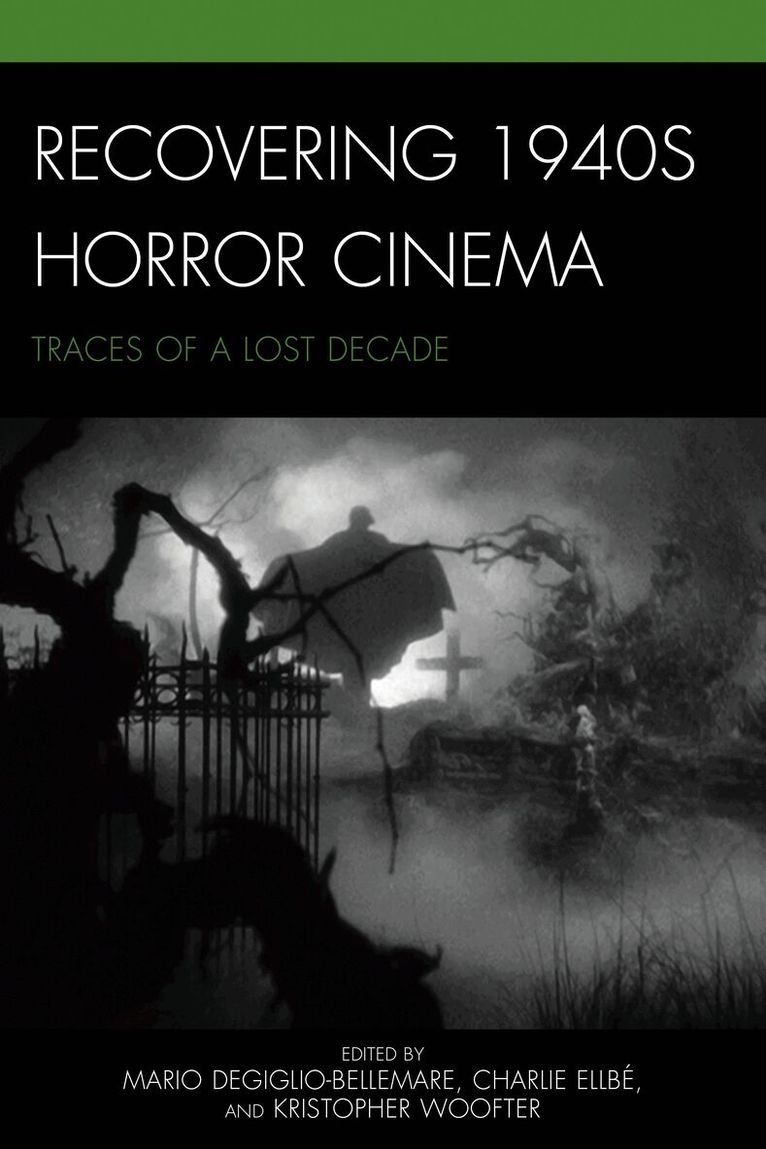
The 1940s is a lost decade in horror cinema, undervalued and written out of most horror scholarship. This collection revises, reframes, and deconstructs persistent critical binaries that have been put in place by scholarly discourse to label 1940s horror as somehow inferior to a “classical” period or “canonical” mode of horror in the 1930s, especially as represented by the monster films of Universal Studios. The book's four sections re-evaluate the historical, political, economic, and cultural factors informing 1940s horror cinema to introduce new theoretical frameworks and to open up space for scholarly discussion of 1940s horror genre hybridity, periodization, and aesthetics. Chapters focused on Gothic and Grand Guignol traditions operating in forties horror cinema, 1940s proto-slasher films, the independent horrors of the Poverty Row studios, and critical reevaluations of neglected hybrid films such as The Vampire’s Ghost (1945) and “slippery” auteurs such as Robert Siodmak and Sam Neufield, work to recover a decade of horror that has been framed as having fallen victim to repetition, exhaustion, and decline.
404 kr
Skickas inom 5-8 vardagar
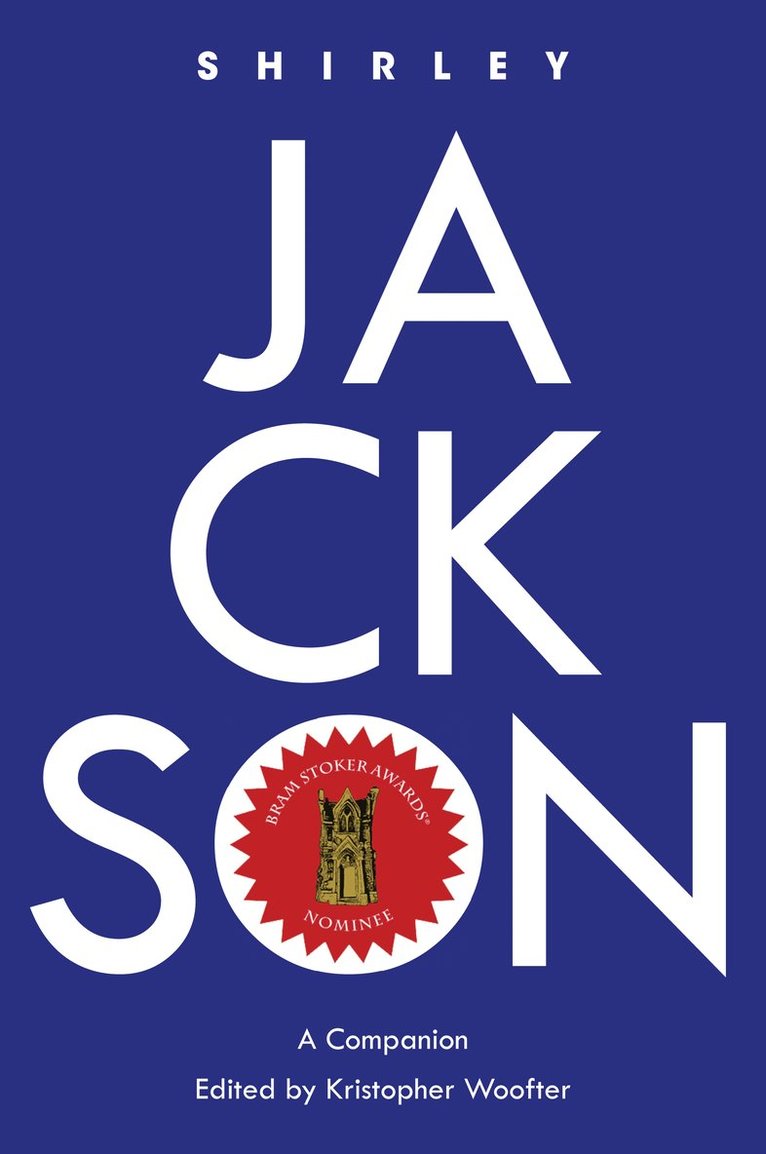
2021 Bram Stoker Awards(R) Nominee for Superior Achievement in Non-FictionFrom the short story «The Lottery» to the masterworks The Haunting of Hill House and We Have Always Lived in the Castle, Shirley Jackson’s popular, often bestselling works experimented with popular generic forms (melodrama, folktale, horror, the Gothic, and the Weird) to create a uniquely apocalyptic vision of America and its contradictions.With a Foreword by award-winning Jackson biographer Ruth Franklin, this collection features comprehensive critical engagement with Jackson’s works, including those that have received less scholarly attention. Among these are the novels The Road Through the Wall, The Bird’s Nest, and Hangsaman, as well as Jackson’s historical study, The Witchcraft of Salem Village. Also included are essays on Jackson’s darkly humorous collections Life Among the Savages and Raising Demons, on Stephen King’s «literary friendship» with Jackson, on the little-known film adaptations Lizzie (1957) and Hosszú Alkony (Long Twilight) (1997), and the first-ever extended analysis devoted to Jackson’s unpublished satirical cartoon sketches.The collection’s five sections focus on Jackson’s style, key themes, and influence; her politics and poetics of space; her treatment of the «monstrous» mother and monstrousness of motherhood; her representations of outsiders and minorities; and moving-image adaptations of her work.
404 kr
Skickas inom 5-8 vardagar
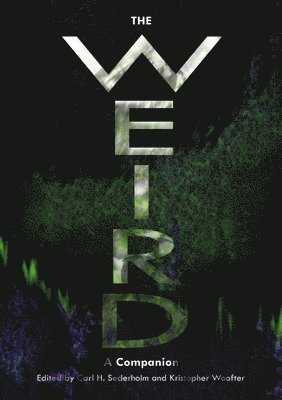
Weird works unsettle, decentering humanity on a cosmic scale and, at other times, breaking down the human barriers erected around race, class, gender, and sexuality. Featuring a comprehensive editors’ introduction to the Weird as a mode engaging with forms of knowledge, transcendence, and resistance, this collection offers a broad-reaching discussion of Weird fiction, film, art, and thought. Its 31 essays explore theoretical and philosophical applications of the Weird, such as Black Metal Theory, and key Weird themes and tropes such as cosmic horror, radical embodiment and sensation, dark ecological speculation, and forms of alterity. Essays are highly varied in period focus and subject matter, ranging from early Weird works by William Hope Hodgson and Conan creator Robert E. Howard, to the surrealist paintings of Leonora Carrington, to more recent works by David Lynch, Octavia Butler, and Yorgos Lanthimos.
Del 1 - Anthem Studies in Gothic Literature
Archival Anxiety in Documentary and Mockumentary Horror
Inbunden, Engelska, 2026
1 324 kr
Skickas inom 5-8 vardagar
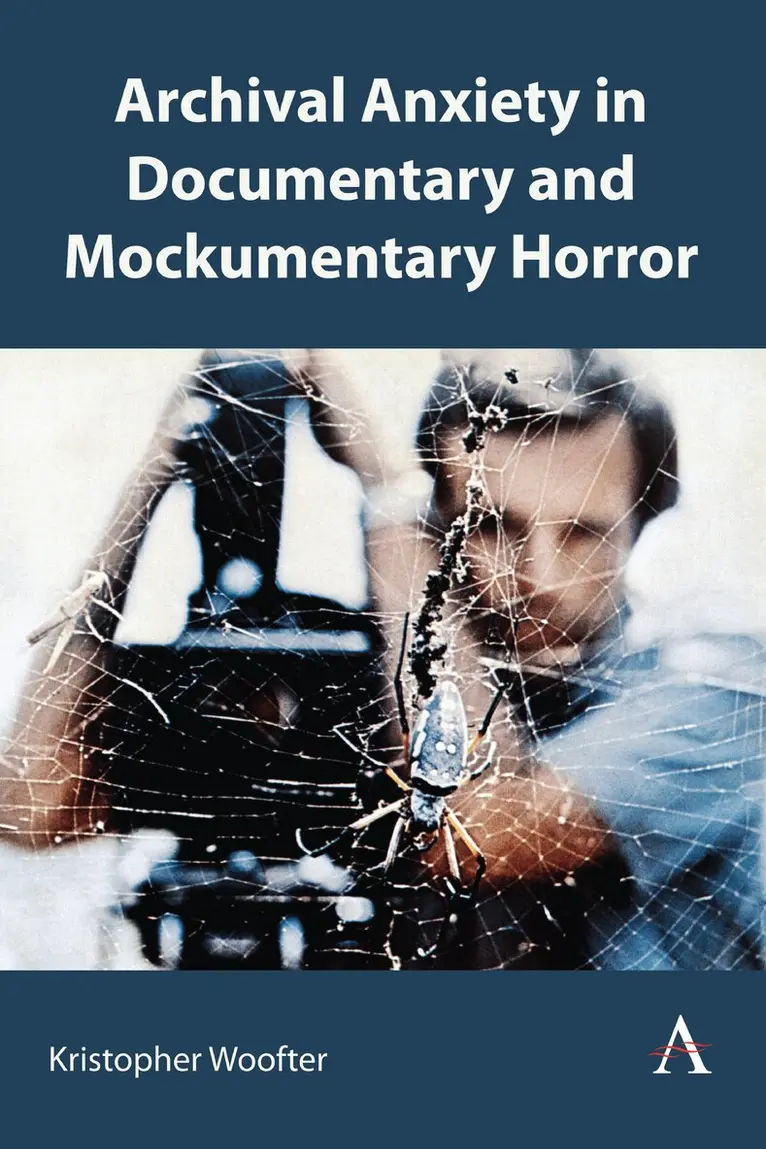
This study concerns a the dark, sensorial epistemologies emerging from intersections of documentary and horror cinema. From the ineffable subjects of horror documentaries and pseudo-documentaries, to the obsessive chroniclers of mockumentary horror cinema, the films examined here express generalized millennial and 21st-century archival anxiety around an unsettled and unsettling hypermediated reality. Part I focuses on gothumentaries, nonfiction works evoking the Gothic’s unreadable subjects and undetected realities. Case studies show key documentary films such as Capturing the Friedmans, Cropsey, and The Hellstrom Chronicle bringing Gothic-horror tropes and conventions to bear upon documentary subject matter to produce skepticism of American environmental, social, and national stability from the 1970s onward. Part II explores mockumentary, fake found-footage, and screen life horror cinema that turns to strategies of documentary and factual discourse to express an archival anxiety around human interaction with recording technologies. Case studies of pivotal films such as The Blair Witch Project, Diary of the Dead, Lake Mungo, Unfriended, Sickhouse, and We Are All Going to the World’s Fair turn to Gothic reflexivity as a way of expressing the subject’s relationship to, and experience of, a modernity that overwhelms in terms of its immensity, speed, and recordability.
466 kr
Tillfälligt slut
470 kr
Tillfälligt slut
This study concerns a the dark, sensorial epistemologies emerging from intersections of documentary and horror cinema. From the ineffable subjects of horror documentaries and pseudo-documentaries, to the obsessive chroniclers of mockumentary horror cinema, the films examined here express generalized millennial and 21st-century archival anxiety around an unsettled and unsettling hypermediated reality. Part I focuses on gothumentaries, nonfiction works evoking the Gothic's unreadable subjects and undetected realities. Case studies show key documentary films such as Capturing the Friedmans, Cropsey, and The Hellstrom Chronicle bringing Gothic-horror tropes and conventions to bear upon documentary subject matter to produce skepticism of American environmental, social, and national stability from the 1970s onward. Part II explores mockumentary, fake found-footage, and screen life horror cinema that turns to strategies of documentary and factual discourse to express an archival anxiety around human interaction with recording technologies. Case studies of pivotal films such as The Blair Witch Project, Diary of the Dead, Lake Mungo, Unfriended, Sickhouse, and We Are All Going to the World's Fair turn to Gothic reflexivity as a way of expressing the subject's relationship to, and experience of, a modernity that overwhelms in terms of its immensity, speed, and recordability.