Kyle Parry - Böcker
Visar alla böcker från författaren Kyle Parry. Handla med fri frakt och snabb leverans.
3 produkter
3 produkter
1 267 kr
Skickas inom 7-10 vardagar
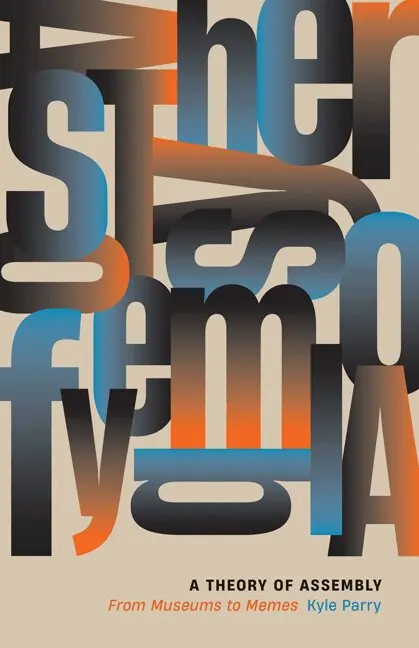
A vital reckoning with how we understand the basic categories of cultural expression in the digital era Digital and social media have transformed how much and how fast we communicate, but they have also altered the palette of expressive strategies: the cultural forms that shape how citizens, activists, and artists speak and interact. Most familiar among these strategies are storytelling and representation. In A Theory of Assembly, Kyle Parry argues that one of the most powerful and pervasive cultural forms in the digital era is assembly.Whether as subtle photographic sequences, satirical Venn diagrams, or networked archives, projects based in assembly do not so much narrate or represent the world as rearrange it. This work of rearranging can take place at any scale, from a simple pairing of images, undertaken by one person, to the entire history of internet memes, undertaken by millions. With examples ranging from GIFs and paintings to museum exhibitions and social movement hashtags, Parry shows how, in the internet age, assembly has come to equal narrative and representation in its reach and influence, particularly as a response to ecological and social violence. He also emphasizes the ambivalence of assembly-the way it can be both emancipatory and antidemocratic.As the world becomes ever hotter, more connected, and more algorithmic, the need to map-and remake-assembly’s powers and perils becomes all the more pressing. Interdisciplinary, engaging, and experimental, A Theory of Assembly serves as a playbook of strategies and critical frameworks for artists, activists, and content creators committed to social and environmental justice, ultimately arguing for a collective reenvisioning of which cultural forms matter.Cover alt text: Letters from the title appear in a jumble, each colored in a blue-orange gradient. Readable title and author sits below the jumble.
309 kr
Skickas inom 7-10 vardagar
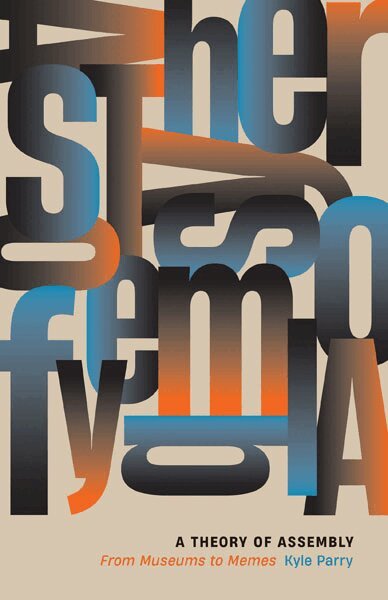
A vital reckoning with how we understand the basic categories of cultural expression in the digital era Digital and social media have transformed how much and how fast we communicate, but they have also altered the palette of expressive strategies: the cultural forms that shape how citizens, activists, and artists speak and interact. Most familiar among these strategies are storytelling and representation. In A Theory of Assembly, Kyle Parry argues that one of the most powerful and pervasive cultural forms in the digital era is assembly.Whether as subtle photographic sequences, satirical Venn diagrams, or networked archives, projects based in assembly do not so much narrate or represent the world as rearrange it. This work of rearranging can take place at any scale, from a simple pairing of images, undertaken by one person, to the entire history of internet memes, undertaken by millions. With examples ranging from GIFs and paintings to museum exhibitions and social movement hashtags, Parry shows how, in the internet age, assembly has come to equal narrative and representation in its reach and influence, particularly as a response to ecological and social violence. He also emphasizes the ambivalence of assembly-the way it can be both emancipatory and antidemocratic.As the world becomes ever hotter, more connected, and more algorithmic, the need to map-and remake-assembly’s powers and perils becomes all the more pressing. Interdisciplinary, engaging, and experimental, A Theory of Assembly serves as a playbook of strategies and critical frameworks for artists, activists, and content creators committed to social and environmental justice, ultimately arguing for a collective reenvisioning of which cultural forms matter.Cover alt text: Letters from the title appear in a jumble, each colored in a blue-orange gradient. Readable title and author sits below the jumble.

325 kr
Skickas inom 5-8 vardagar
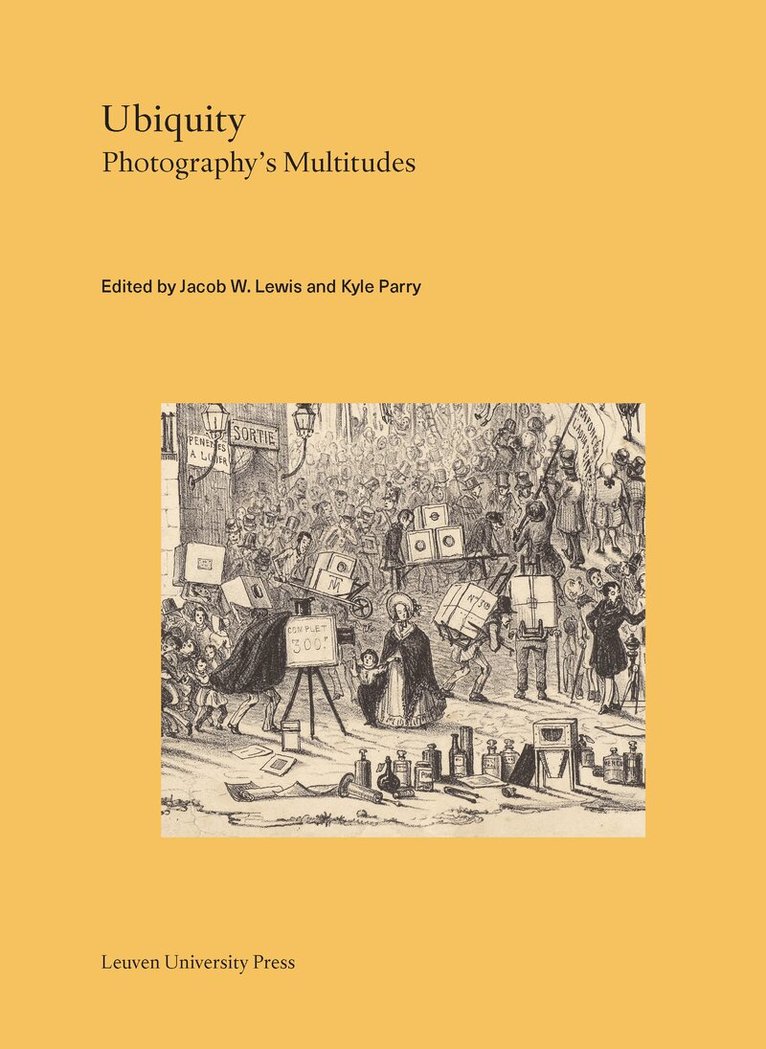
From its invention to the internet age, photography has been considered universal, pervasive, and omnipresent. This anthology of essays posits how the question of when photography came to be everywhere shapes our understanding of all manner of photographic media. Whether looking at a portrait image on the polished silver surface of the daguerreotype, or a viral image on the reflective glass of the smartphone, the experience of looking at photographs and thinking with photography is inseparable from the idea of ubiquity--that is, the apparent ability to be everywhere at once. While photography's distribution across cultures today is undeniable, the insidious logics and pervasive myths that have governed its spread demand our critical attention, now more than ever.Free ebook available at OAPEN Library, JSTOR and Project MuseContributors: Kate Palmer Albers (Whittier College), Ariella Aisha Azoulay (Brown University), Maura Coughlin (Bryant University), Niharika Dinkar (Boise State University), Michelle Henning (University of Liverpool), Jacob W. Lewis (University of Rochester), Mohammadreza Mirzaei (University of California, Santa Barbara), Joseph Moore (independent artist), Derek Conrad Murray (University of California, Santa Cruz), Kyle Parry (University of California, Santa Cruz), Annie Rudd (University of Calgary), Mette Sandbye (University of Copenhagen), Catherine Zuromskis (Rochester Institute of Technology)