L. Rennie – författare
Visar alla böcker från författaren L. Rennie. Handla med fri frakt och snabb leverans.
3 produkter
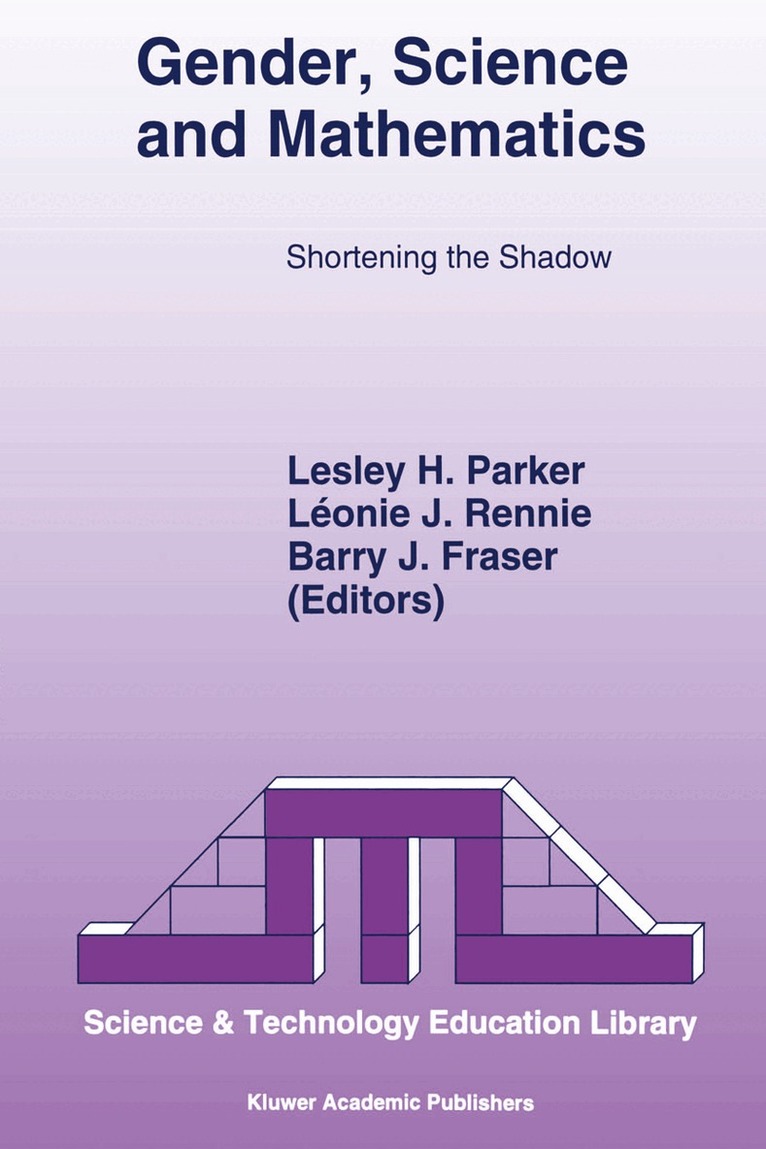
Gender, Science and Mathematics
Shortening the Shadow
Av L. H. Parker, L. Rennie m. fl.
Inbunden, 1995
1642 kr
Lägg i varukorg
The theme of this work is that change agents, such as teachers and curriculum writers, have a key role in the translation of gender equity policy into gender equitable practices in science and mathematics education. The first section emphasizes that a necessary prerequisite for successful action is …
Gender, Science and Mathematics
Shortening the Shadow
Av L. H. Parker, L. Rennie m. fl.
Häftad, 1995
1596 kr
Lägg i varukorg
Throughout the Western world, the relationship between gender, science and math ematics has emerged as critical in a variety of contexts. In tertiary institutions, the study of "gender issues", frequently with reference to science and mathematics, is of central significance to many disciplines. …
Gender, Science and Mathematics
Shortening the Shadow
Av B. Fraser, L. Rennie m. fl.
E-bok, 2012
2111 kr
Lägg i varukorg
Throughout the Western world, the relationship between gender, science and math ematics has emerged as critical in a variety of contexts. In tertiary institutions, the study of "gender issues", frequently with reference to science and mathematics, is of central significance to many disciplines. …