L.A. Sakhnovich – författare
Visar alla böcker från författaren L.A. Sakhnovich. Handla med fri frakt och snabb leverans.
5 produkter
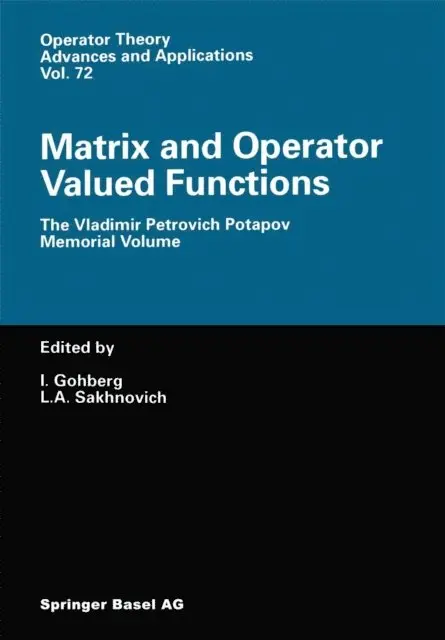
Matrix and Operator Valued Functions
The Vladimir Petrovich Potapov Memorial Volume
Av L.A. Sakhnovich, I. Gohberg
E-bok, 2012
734 kr
Lägg i varukorg
This book is dedicated to the memory of an outstanding mathematician and personality, Vladimir Petrovich Potapov, who made important contributions to and exerted considerable influence in the areas of operator theory, complex analysis and their points of juncture. The book commences with insightful …
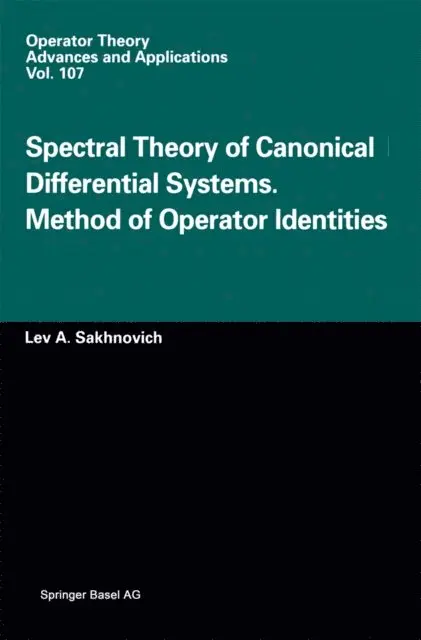
Spectral Theory of Canonical Differential Systems. Method of Operator Identities
E-bok, 2012
1427 kr
Lägg i varukorg
The spectral theory of ordinary differential operators L and of the equations (0.1) Ly= AY connected with such operators plays an important role in a number of problems both in physics and in mathematics. Let us give some examples of differential operators and equations, the spectral theory of …
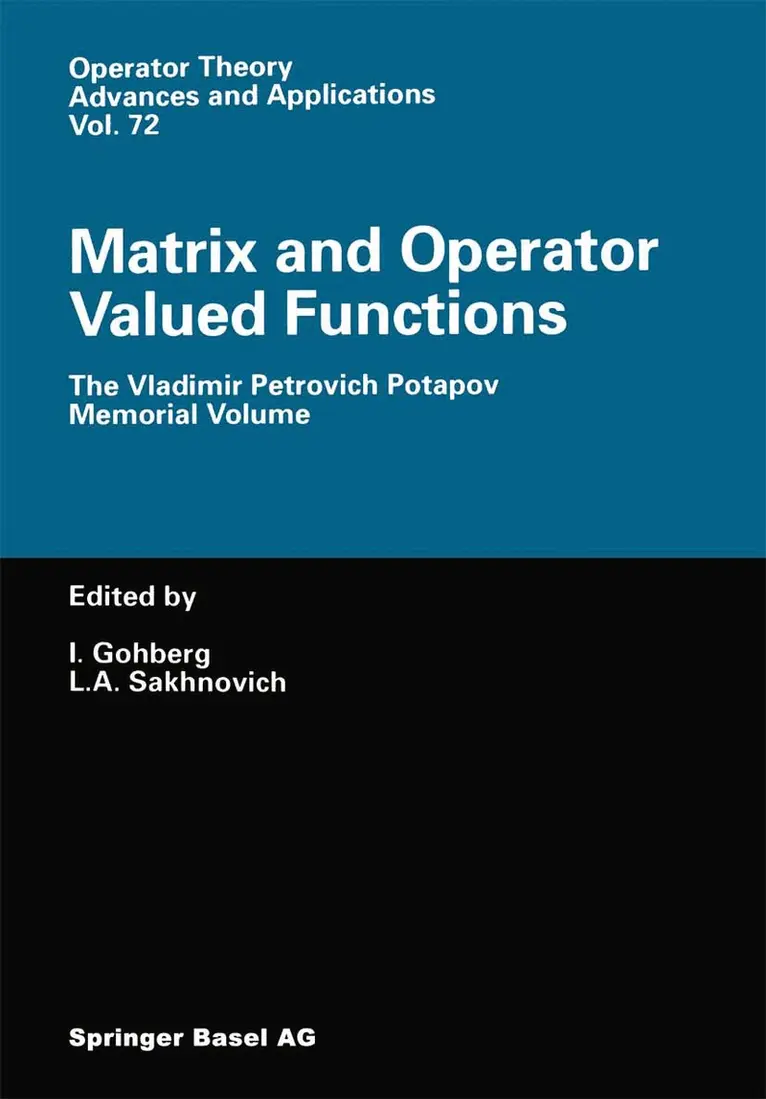
Matrix and Operator Valued Functions
The Vladimir Petrovich Potapov Memorial Volume
Av I. Gohberg, L.A. Sakhnovich
Häftad, 2012
552 kr
Lägg i varukorg
This book is dedicated to the memory of an outstanding mathematician and personality, Vladimir Petrovich Potapov, who made important contributions to and exerted considerable influence in the areas of operator theory, complex analysis and their points of juncture. The book commences with insightful …
Spectral Theory of Canonical Differential Systems. Method of Operator Identities
Häftad, 2012
1096 kr
Lägg i varukorg
The spectral theory of ordinary differential operators L and of the equations (0.1) Ly= AY connected with such operators plays an important role in a number of problems both in physics and in mathematics. Let us give some examples of differential operators and equations, the spectral theory of …
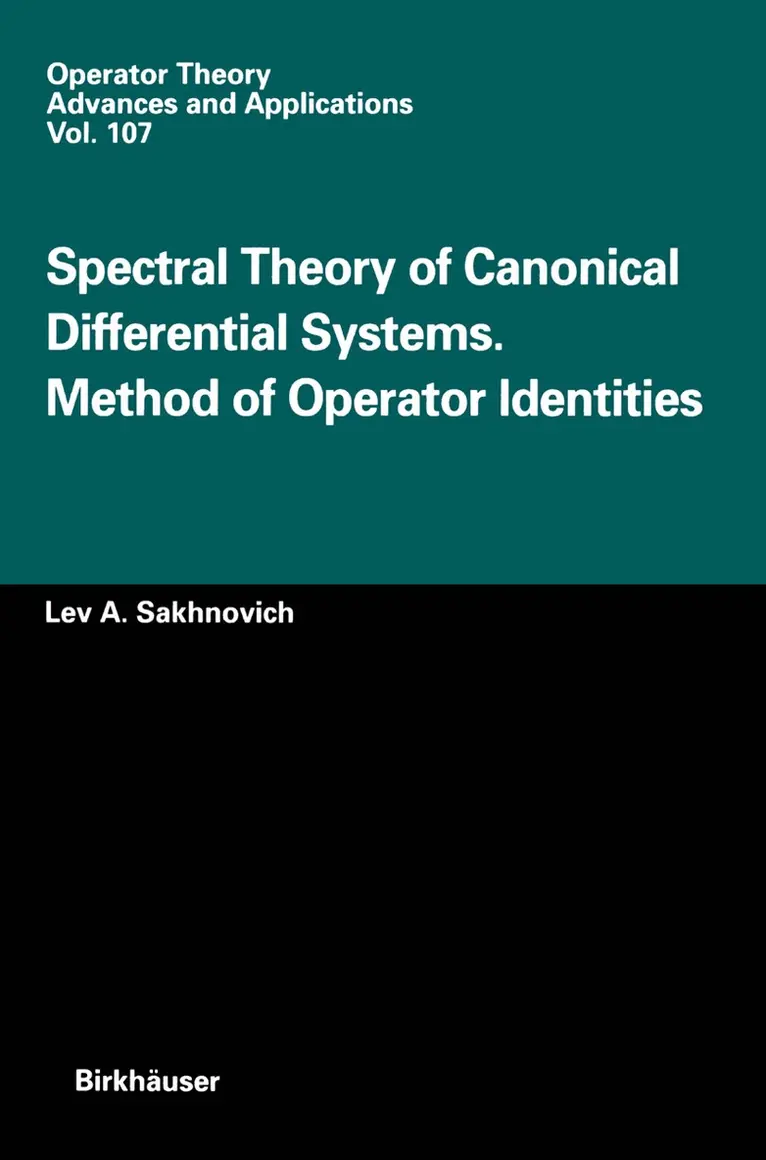
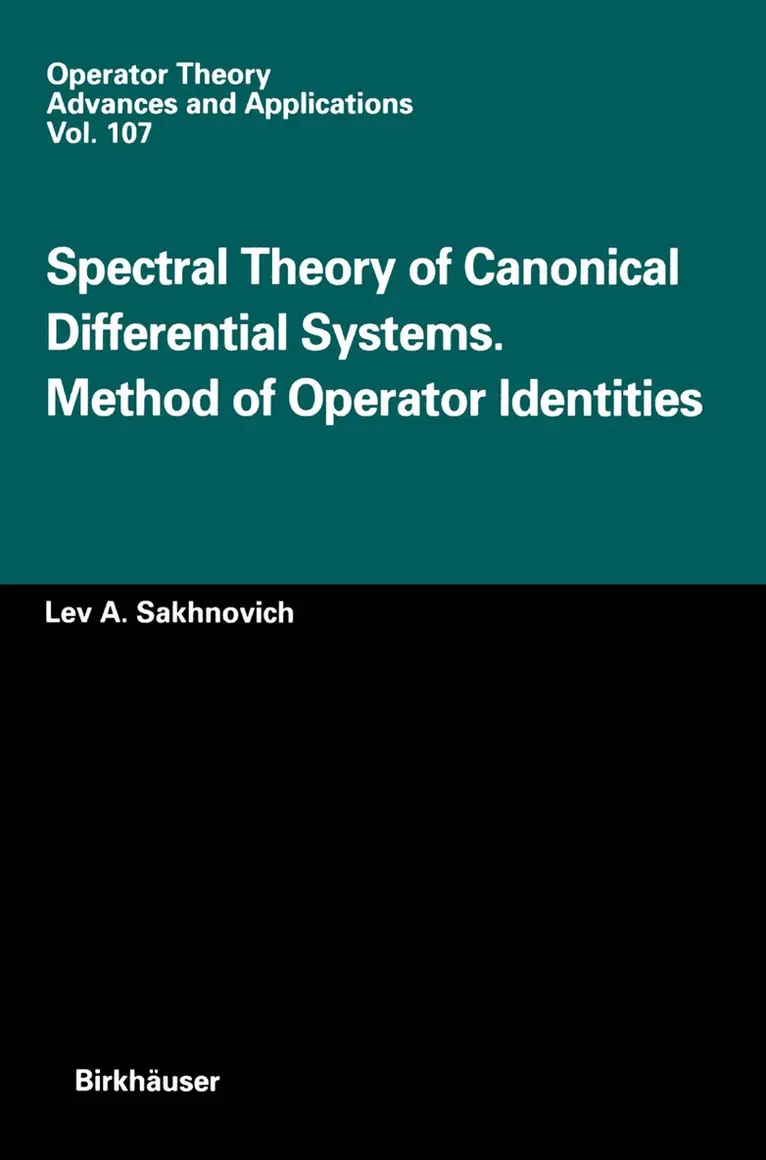
Spectral Theory of Canonical Differential Systems. Method of Operator Identities
Inbunden, 1999
1093 kr
Lägg i varukorg
The spectral theory of ordinary differential operators L and of the equations (0.1) Ly= AY connected with such operators plays an important role in a number of problems both in physics and in mathematics. Let us give some examples of differential operators and equations, the spectral theory of …