
Larry Wright – författare
Visar alla böcker från författaren Larry Wright. Handla med fri frakt och snabb leverans.
5 produkter
5 produkter
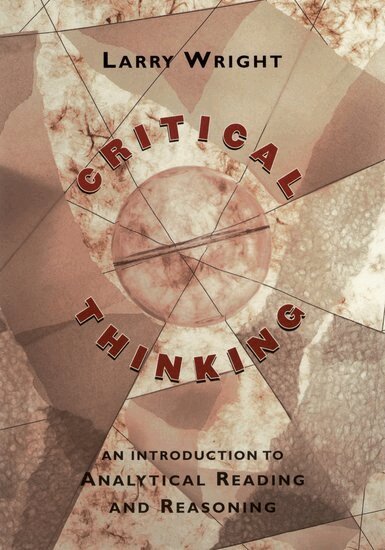
Häftad, Engelska, 2001
805 kr
Skickas inom 5-8 vardagar
Extensively classroom-tested, Critical Thinking: An Introduction to Analytical Reading and Reasoning provides a non-technical vocabulary and analytic apparatus that guide students in identifying and articulating the central patterns found in reasoning and in expository writing more generally. Understanding these patterns of reasoning helps students to better analyze, evaluate, and construct arguments and to more easily comprehend the full range of everyday arguments found in ordinary journalism. Critical Thinking distinguishes itself from other texts in the field by emphasizing analytical reading as an essential skill. It also provides detailed coverage of argument analysis, diagnostic arguments, diagnostic patterns, and fallacies. Opening with two chapters on analytical reading that help students recognize what makes reasoning explicitly different from other expository activities, the text then presents an interrogative model of argument to guide them in the analysis and evaluation of reasoning. This model allows a detailed articulation of "inference to the best explanation" and gives students a view of the pervasiveness of this form of reasoning.The author demonstrates how many common argument types--from correlations to sampling--can be analyzed using this articulated form. He then extends the model to deal with several predictive and normative arguments and to display the value of the fallacy vocabulary. Designed for introductory courses in critical thinking, critical reasoning, informal logic, and inductive reasoning, Critical Thinking features hundreds of exercises throughout and includes worked-out solutions and additional exercises (without solutions) at the end of each chapter. An Instructor's Manual, including solutions to the text's unanswered exercises and featuring other pedagogical aids, is available.
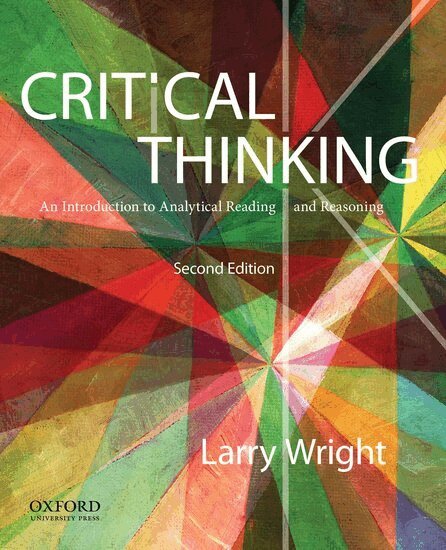
Häftad, Engelska, 2016
1 385 kr
Skickas inom 7-10 vardagar
Critical Thinking: An Introduction to Analytical Reading and Reasoning, Second Edition, provides a nontechnical vocabulary and analytic apparatus that guide students in identifying and articulating the central patterns found in reasoning and in expository writing more generally. Understanding these patterns of reasoning helps students to better analyze, evaluate, and construct arguments and to more easily comprehend the full range of everyday arguments found in ordinary journalism. Critical Thinking, Second Edition, distinguishes itself from other texts in the field by emphasizing analytical reading as an essential skill. It also provides detailed coverage of argument analysis, diagnostic arguments, diagnostic patterns, and fallacies. Opening with two chapters on analytical reading that help students recognize what makes reasoning explicitly different from other expository activities, the text then presents an interrogative model of argument to guide them in the analysis and evaluation of reasoning. This model allows a detailed articulation of "inference to the best explanation" and gives students a view of the pervasiveness of this form of reasoning. The author demonstrates how many common argument types--from correlations to sampling--can be analyzed using this articulated form. He then extends the model to deal with several predictive and normative arguments and to display the value of the fallacy vocabulary. Ideal for introductory courses in critical thinking, critical reasoning, informal logic, and inductive reasoning, Critical Thinking, Second Edition, features hundreds of exercises throughout and includes worked-out solutions and additional exercises (without solutions) at the end of each chapter. An Instructor's Manual--offering solutions to the text's unanswered exercises and featuring other pedagogical aids--is available on the book's Companion Website at www.oup.com/us/wright.
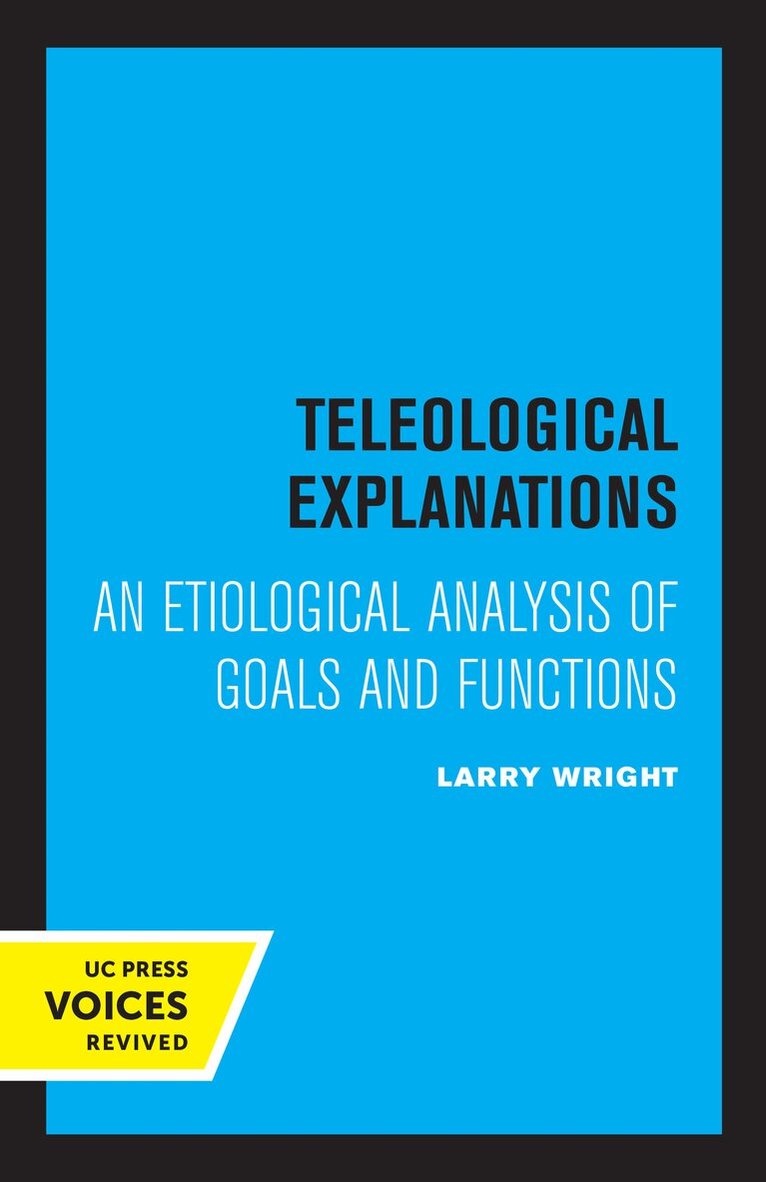
Häftad, Engelska, 2022
469 kr
Skickas inom 5-8 vardagar
A modern classic in the philosophy of science, Larry Wright’s Teleological Explanations reframes purpose-talk in biology, psychology, and the social sciences as genuine, testable explanation rather than pre-Galilean superstition. Moving from the stock “charges against teleology” to a positive account of goal-directed behavior and function, Wright shows how explanations that cite what something is for can be understood etiologically—by the role consequences play in bringing about and sustaining the behaviors and structures that have them. The book’s through-line is crisp and cumulative: a critique of confusions about cause and effect and anthropomorphism, an analysis of directed behavior, a theory of functions that spans natural and conscious cases, and a final integration with action explanation.Wright’s argument has become foundational for work on biological function, mechanism, and design without a designer. Clear examples, programmatic tests, and a careful separation of “merely causal” from consequence-oriented explanation make the book essential reading for philosophers of science and mind, theoretical biologists, cognitive scientists, and anyone who needs a rigorous vocabulary for talking about aims, purposes, and functions in a naturalistic key. It is both a sharp methodological guide and a durable point of entry into debates over normativity, levels of analysis, and the status of teleology across the sciences.This title is part of UC Press's Voices Revived program, which commemorates University of California Press’s mission to seek out and cultivate the brightest minds and give them voice, reach, and impact. Drawing on a backlist dating to 1893, Voices Revived makes high-quality, peer-reviewed scholarship accessible once again using print-on-demand technology. This title was originally published in 1976.

Inbunden, Engelska, 2022
1 083 kr
Skickas inom 5-8 vardagar
A modern classic in the philosophy of science, Larry Wright’s Teleological Explanations reframes purpose-talk in biology, psychology, and the social sciences as genuine, testable explanation rather than pre-Galilean superstition. Moving from the stock “charges against teleology” to a positive account of goal-directed behavior and function, Wright shows how explanations that cite what something is for can be understood etiologically—by the role consequences play in bringing about and sustaining the behaviors and structures that have them. The book’s through-line is crisp and cumulative: a critique of confusions about cause and effect and anthropomorphism, an analysis of directed behavior, a theory of functions that spans natural and conscious cases, and a final integration with action explanation.Wright’s argument has become foundational for work on biological function, mechanism, and design without a designer. Clear examples, programmatic tests, and a careful separation of “merely causal” from consequence-oriented explanation make the book essential reading for philosophers of science and mind, theoretical biologists, cognitive scientists, and anyone who needs a rigorous vocabulary for talking about aims, purposes, and functions in a naturalistic key. It is both a sharp methodological guide and a durable point of entry into debates over normativity, levels of analysis, and the status of teleology across the sciences.This title is part of UC Press's Voices Revived program, which commemorates University of California Press’s mission to seek out and cultivate the brightest minds and give them voice, reach, and impact. Drawing on a backlist dating to 1893, Voices Revived makes high-quality, peer-reviewed scholarship accessible once again using print-on-demand technology. This title was originally published in 1976.

Häftad, Engelska, 2015
167 kr
Skickas inom 5-8 vardagar