Laura Dierksmeier – författare
Visar alla böcker från författaren Laura Dierksmeier. Handla med fri frakt och snabb leverans.
3 produkter
3 produkter
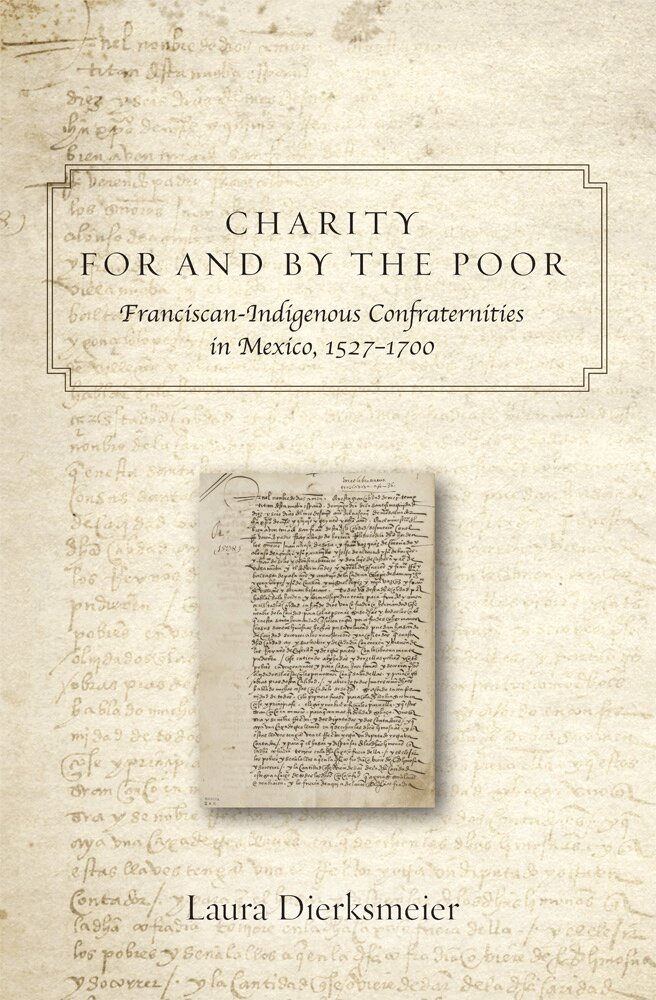
Charity for and by the Poor
Franciscan and Indigenous Confraternities in Mexico, 1527-1700
Inbunden, Engelska, 2020
593 kr
Skickas inom 5-8 vardagar
Spanish colonization of Latin America in the sixteenth century continues to provoke scholarly debate. Spanish missionaries employed various strategies to convert indigenous inhabitants to the Catholic faith, including operating schools, organizing choirs, and establishing charitable brotherhoods known as confraternities.In Charity for and by the Poor, Laura Dierksmeier investigates how the reformed Franciscans' commitment to evangelizing Mexico gave rise to an extensive network of local confraternities and their respective care institutions. She finds that these local groups were the chief welfare providers for the indigenous people during the early colonial period and were precursors of the modern social security system. Dierksmeier shows how the Franciscan missionary imperative to promote the works of mercy and charity inspired the goals, governance, and operations of indigenous confraternities, their hospital and orphan care, and their contributions to the moral economy, including releasing debt prisoners and lending money to the poor.Focusing on the inner logic and daily practices of indigenous confraternities, Charity for and by the Poor highlights their far-reaching effects on Mexican society. Dierksmeier argues that confraternities are best studied within the religious framework that established them, and she does so by analyzing confraternity record books, lawsuits, last wills, missionary correspondence, and parish records from archives in Mexico, Spain, the United States, and Germany.The confraternity became an essential institution for protecting the indigenous population during epidemics, for integrating the various indigenous classes from the former Aztec Empire into the emerging social order, and for safeguarding indigenous self-governance within religious spheres. Most notably, Franciscan-established confraternities built social structures in which the poor were not only recipients of assistance but also, through their voluntary participation, self-empowered agents of community care. In this way, charity was provided for and by the poor.
319 kr
Kommande
Offering a fresh, global approach to the history of knowledge, this book brings together a collection of annotated primary sources, many newly translated and rarely accessible, from across the Early Modern World. Covering the period from roughly 1500 to 1800, this multi-perspective volume reveals how ideas, practices, and beliefs travelled across vast distances—by ship, on foot, in letters, images, and objects—and how they were reshaped in the process.Organised into three thematic sections, A Global History of Knowledge includes case studies ranging from missionary navigation in colonial Chile to portable sundials in European households, the transfer of Indigenous knowledge from Latin America to the European Republic of Letters, and the flow of Jesuit ideas between Asia, Europe, and the Americas. Each chapter centres on a compelling source—many never before available in English—that opens a window into how knowledge was created, shared, and transformed in a world marked by mobility, encounter, and exchange. This book invites readers to explore how knowledge moved, not just across continents, but between cultures, disciplines and worldviews, and why that movement still matters today.
923 kr
Kommande
Offering a fresh, global approach to the history of knowledge, this book brings together a collection of annotated primary sources, many newly translated and rarely accessible, from across the Early Modern World. Covering the period from roughly 1500 to 1800, this multi-perspective volume reveals how ideas, practices, and beliefs travelled across vast distances—by ship, on foot, in letters, images, and objects—and how they were reshaped in the process.Organised into three thematic sections, A Global History of Knowledge includes case studies ranging from missionary navigation in colonial Chile to portable sundials in European households, the transfer of Indigenous knowledge from Latin America to the European Republic of Letters, and the flow of Jesuit ideas between Asia, Europe, and the Americas. Each chapter centres on a compelling source—many never before available in English—that opens a window into how knowledge was created, shared, and transformed in a world marked by mobility, encounter, and exchange. This book invites readers to explore how knowledge moved, not just across continents, but between cultures, disciplines and worldviews, and why that movement still matters today.