Laura K. Harrison – författare
Visar alla böcker från författaren Laura K. Harrison. Handla med fri frakt och snabb leverans.
4 produkter
4 produkter
1 236 kr
Kommande
Documenting and interpreting the intersecting pasts of a historic island before they vanish under rising tidesEgmont Key, a small island at the meeting point of the Gulf of Mexico and Tampa Bay, was a pivotal site in US history. Now a Florida State Park and a National Wildlife Refuge, it attracts visitors for its beaches and wildlife—but is steadily shrinking due to erosion and sea-level rise. This book explores Egmont Key’s historical significance, discusses the complexities of enacting sustainable tourism on the island, and demonstrates the role of technology in preserving its heritage.In this book, contributors uncover Egmont Key’s little-known past as a nineteenth-century Seminole internment site, military outpost, and maritime beacon, tracing its evolution into a tourism destination and wildlife refuge. It highlights how digital heritage tools—such as lidar scanning, 3D modeling, and virtual reality—document at-risk landscapes, engage the public, and inform strategies to combat environmental threats. From the perspective of global sustainability frameworks, the book demonstrates how the UN Sustainable Development Goals and participatory action research can guide collaboration among scholars, Indigenous communities, and local stakeholders. Egmont Key offers a model for how digital innovation and community engagement can preserve vulnerable cultural heritage for future generations.
357 kr
Kommande
Documenting and interpreting the intersecting pasts of a historic island before they vanish under rising tidesEgmont Key, a small island at the meeting point of the Gulf of Mexico and Tampa Bay, was a pivotal site in US history. Now a Florida State Park and a National Wildlife Refuge, it attracts visitors for its beaches and wildlife—but is steadily shrinking due to erosion and sea-level rise. This book explores Egmont Key’s historical significance, discusses the complexities of enacting sustainable tourism on the island, and demonstrates the role of technology in preserving its heritage.In this book, contributors uncover Egmont Key’s little-known past as a nineteenth-century Seminole internment site, military outpost, and maritime beacon, tracing its evolution into a tourism destination and wildlife refuge. It highlights how digital heritage tools—such as lidar scanning, 3D modeling, and virtual reality—document at-risk landscapes, engage the public, and inform strategies to combat environmental threats. From the perspective of global sustainability frameworks, the book demonstrates how the UN Sustainable Development Goals and participatory action research can guide collaboration among scholars, Indigenous communities, and local stakeholders. Egmont Key offers a model for how digital innovation and community engagement can preserve vulnerable cultural heritage for future generations.
1 799 kr
Skickas inom 3-6 vardagar
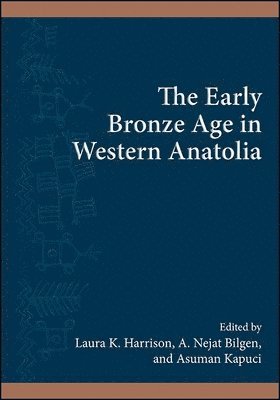
Examines the culture and chronology of increasingly complex urban societies in western Anatolia during the Early Bronze Age.Bringing together expert voices and key case studies from well-known and newly excavated sites, this book calls attention to the importance of western Anatolia as a legitimate, local context in its own right. The study of Early Bronze Age cultures in Europe and the Mediterranean has been shaped by a focus on the Levant, Europe, and Mesopotamia. Geographically, western Anatolia lies in between these regions, yet it is often overlooked because it doesn't fit neatly into existing explanatory models of Bronze Age cultural development and decline. Instead, the tendency has been to describe western Anatolia as a bridge between east and west, a place where ideas are transmitted and cultural encounters among different groups occur. This narrative has foregrounded discussions of outside innovations in the prehistory of the region while diminishing the role of local, endogenous developments and individual agency.The contributors to this book offer a counternarrative, ascribing a local impetus for change rather than a metanarrative of cultural diffusion. In doing so, they offer fresh observations about the chronology and delineation of regional cultural groups in western Anatolia; the architecture, settlement, and sociopolitical organization of the Early Bronze Age; and the local characteristics of material culture assemblages. Offering multiple authoritative studies on the archaeology of western Anatolia, this book is an essential resource for area research in western Anatolia, a key reference for comparative studies, and essential reading for college courses in the archaeology and anthropology of sociopolitical complexity, European and Mediterranean prehistory, and ancient Anatolia.
478 kr
Skickas inom 5-8 vardagar
Examines the culture and chronology of increasingly complex urban societies in western Anatolia during the Early Bronze Age.Bringing together expert voices and key case studies from well-known and newly excavated sites, this book calls attention to the importance of western Anatolia as a legitimate, local context in its own right. The study of Early Bronze Age cultures in Europe and the Mediterranean has been shaped by a focus on the Levant, Europe, and Mesopotamia. Geographically, western Anatolia lies in between these regions, yet it is often overlooked because it doesn't fit neatly into existing explanatory models of Bronze Age cultural development and decline. Instead, the tendency has been to describe western Anatolia as a bridge between east and west, a place where ideas are transmitted and cultural encounters among different groups occur. This narrative has foregrounded discussions of outside innovations in the prehistory of the region while diminishing the role of local, endogenous developments and individual agency.The contributors to this book offer a counternarrative, ascribing a local impetus for change rather than a metanarrative of cultural diffusion. In doing so, they offer fresh observations about the chronology and delineation of regional cultural groups in western Anatolia; the architecture, settlement, and sociopolitical organization of the Early Bronze Age; and the local characteristics of material culture assemblages. Offering multiple authoritative studies on the archaeology of western Anatolia, this book is an essential resource for area research in western Anatolia, a key reference for comparative studies, and essential reading for college courses in the archaeology and anthropology of sociopolitical complexity, European and Mediterranean prehistory, and ancient Anatolia.