Lauren Miller Griffith - Böcker
Visar alla böcker från författaren Lauren Miller Griffith. Handla med fri frakt och snabb leverans.
4 produkter
4 produkter
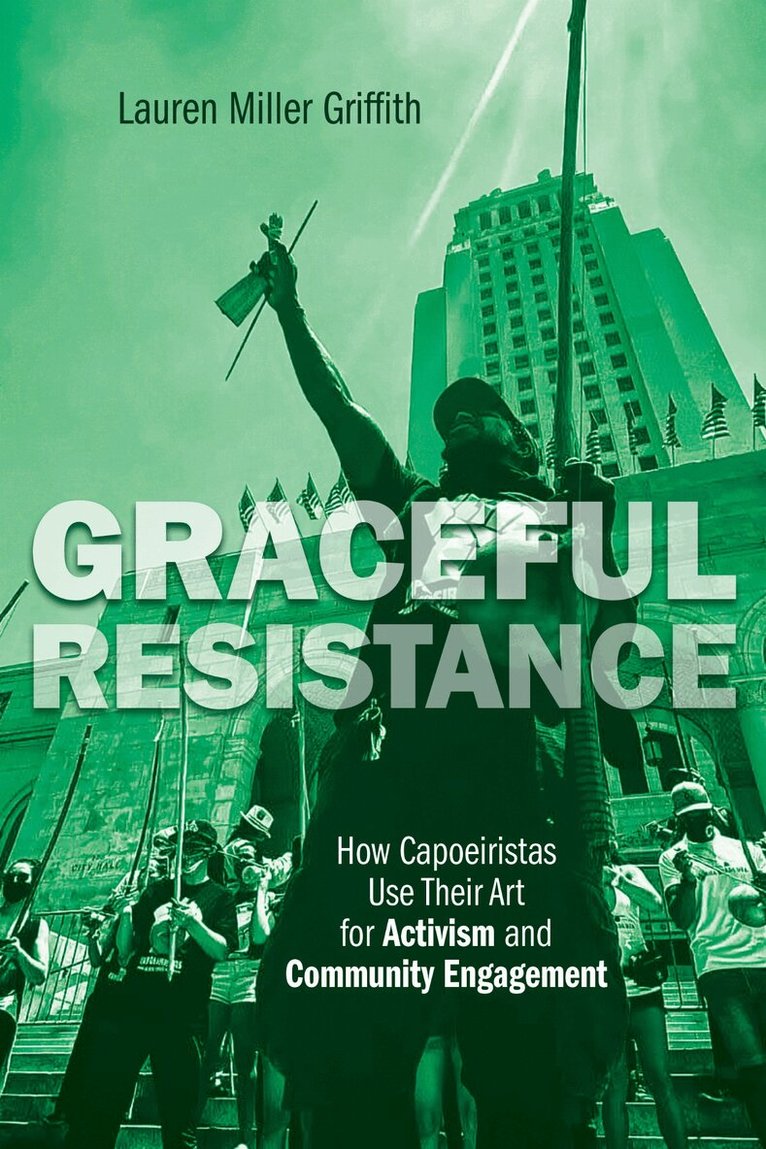
Graceful Resistance
How Capoeiristas Use Their Art for Activism and Community Engagement
Inbunden, Engelska, 2023
1 164 kr
Skickas inom 7-10 vardagar
Capoeira began as a martial art developed by enslaved Afro-Brazilians. Today, the practice incorporates song, dance, acrobatics, and theatrical improvisation-and leads many participants into activism.Lauren Miller Griffith’s extensive participant observation with multiple capoeira groups informs her ethnography of capoeiristas--both individuals and groups--in the United States. Griffith follows practitioners beyond their physical training into social justice activities that illuminate capoeira’s strong connection to resistance and subversion. As both individuals and communities of capoeiristas, participants march against racial discrimination, celebrate Martin Luther King Jr. Day and Juneteenth, organize professional clothing drives for job seekers, and pursue economic and environmental justice in their neighborhoods. For these people, capoeira becomes a type of serious leisure that contributes to personal growth, a sense of belonging, and an overall sense of self, while also imposing duties and obligations. An innovative look at capoeira in America, Graceful Resistance reveals how the practicing of an art can catalyze action and transform communities.
Graceful Resistance
How Capoeiristas Use Their Art for Activism and Community Engagement
Häftad, Engelska, 2023
257 kr
Skickas inom 7-10 vardagar
Capoeira began as a martial art developed by enslaved Afro-Brazilians. Today, the practice incorporates song, dance, acrobatics, and theatrical improvisation-and leads many participants into activism.Lauren Miller Griffith’s extensive participant observation with multiple capoeira groups informs her ethnography of capoeiristas--both individuals and groups--in the United States. Griffith follows practitioners beyond their physical training into social justice activities that illuminate capoeira’s strong connection to resistance and subversion. As both individuals and communities of capoeiristas, participants march against racial discrimination, celebrate Martin Luther King Jr. Day and Juneteenth, organize professional clothing drives for job seekers, and pursue economic and environmental justice in their neighborhoods. For these people, capoeira becomes a type of serious leisure that contributes to personal growth, a sense of belonging, and an overall sense of self, while also imposing duties and obligations. An innovative look at capoeira in America, Graceful Resistance reveals how the practicing of an art can catalyze action and transform communities.
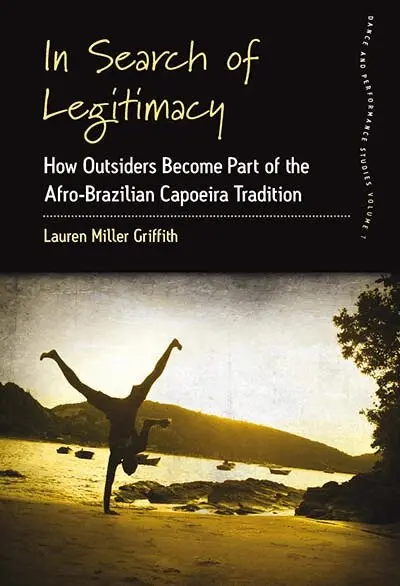
In Search of Legitimacy
How Outsiders Become Part of the Afro-Brazilian Capoeira Tradition
Inbunden, Engelska, 2016
2 014 kr
Skickas inom 3-6 vardagar
Every year, countless young adults from affluent, Western nations travel to Brazil to train in capoeira, the dance/martial art form that is one of the most visible strands of the Afro-Brazilian cultural tradition. In Search of Legitimacy explores why “first world” men and women leave behind their jobs, families, and friends to pursue a strenuous training regimen in a historically disparaged and marginalized practice. Using the concept of apprenticeship pilgrimage—studying with a local master at a historical point of origin—the author examines how non-Brazilian capoeiristas learn their art and claim legitimacy while navigating the complexities of wealth disparity, racial discrimination, and cultural appropriation.
In Search of Legitimacy
How Outsiders Become Part of the Afro-Brazilian Capoeira Tradition
Häftad, Engelska, 2021
583 kr
Skickas inom 3-6 vardagar
Every year, countless young adults from affluent, Western nations travel to Brazil to train in capoeira, the dance/martial art form that is one of the most visible strands of the Afro-Brazilian cultural tradition. In Search of Legitimacy explores why “first world” men and women leave behind their jobs, families, and friends to pursue a strenuous training regimen in a historically disparaged and marginalized practice. Using the concept of apprenticeship pilgrimage—studying with a local master at a historical point of origin—the author examines how non-Brazilian capoeiristas learn their art and claim legitimacy while navigating the complexities of wealth disparity, racial discrimination, and cultural appropriation.