Laurence Fontaine – författare
Visar alla böcker från författaren Laurence Fontaine. Handla med fri frakt och snabb leverans.
8 produkter
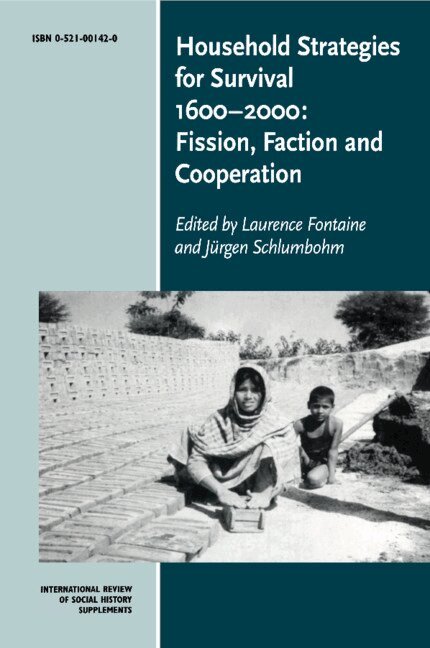
Household Strategies for Survival 1600-2000
Fission, Faction and Cooperation
Av Laurence Fontaine, Jürgen Schlumbohm
Häftad, 2001
435 kr
Lägg i varukorg
In pre-industrial Europe, as in developing countries today, much of the population had to struggle to survive. The livelihood of all those who lived by the work of their hands was highly insecure. This book considers the 'labouring poor' not simply as victims, but as actively pursuing a whole range …
History of Pedlars in Europe
Häftad, 1996
286 kr
Lägg i varukorg
In this, the first sustained account of pedlars and peddling, Laurence Fontaine argues that pedlars and the networks they built up played a crucial role in the birth of the modern European economy.
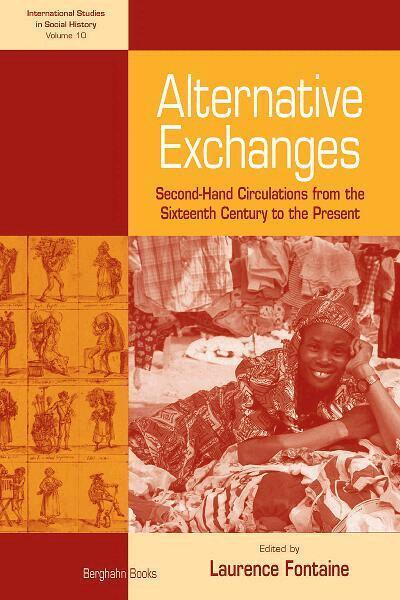
Alternative Exchanges
Second-Hand Circulations from the Sixteenth Century to the Present
E-bok, 2008
335 kr
Lägg i varukorg
Exchanges have always had more than economic significance: values circulate and encounters become institutionalized. This volume explores the changing meaning of the circulation of second-hand goods from the Renaissance to today, and thereby examines the blurring of boundaries between market, …
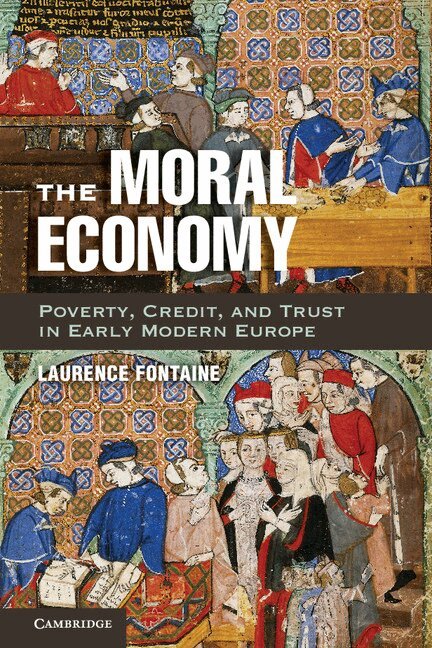
The Moral Economy
Poverty, Credit, and Trust in Early Modern Europe
Inbunden, 2014
1341 kr
Lägg i varukorg
The Moral Economy examines the nexus of poverty, credit, and trust in early modern Europe. It starts with an examination of poverty, the need for credit, and the lending practices of different social groups. It then reconstructs the battles between the Churches and the State around the ban on …
The Moral Economy
Poverty, Credit, and Trust in Early Modern Europe
Häftad, 2014
5,0 utav 5 stjärnor. Totalt antal röster: (1)
491 kr
Lägg i varukorg
The Moral Economy examines the nexus of poverty, credit, and trust in early modern Europe. It starts with an examination of poverty, the need for credit, and the lending practices of different social groups. It then reconstructs the battles between the Churches and the State around the ban on …
Alternative Exchanges
Second-Hand Circulations from the Sixteenth Century to the Present
Inbunden, 2008
942 kr
Lägg i varukorg
Exchanges have always had more than economic significance: values circulate and encounters become institutionalized. This volume explores the changing meaning of the circulation of second-hand goods from the Renaissance to today, and thereby examines the blurring of boundaries between market, …
Pauvreté et stratégies de survie
E-bok, 2008
54 kr
Lägg i varukorg
Quand le quotidien n''est plus assuré, que signifient les mots stratégie, survie et famille ? La pauvreté n''est pas seulement un état dont les seuils seraient facilement repérables : c''est un phénomène relatif, socialement construit et qui dépend des perceptions que chacun a de soi et de son …
History of Pedlars in Europe
Inbunden, 1996
689 kr
Tillfälligt slut
In this, the first sustained account of pedlars and peddling, Laurence Fontaine argues that pedlars and the networks they built up played a crucial role in the birth of the modern European economy.