Lawrence Bobo - Böcker
Visar alla böcker från författaren Lawrence Bobo. Handla med fri frakt och snabb leverans.
2 produkter
2 produkter
300 kr
Skickas inom 7-10 vardagar
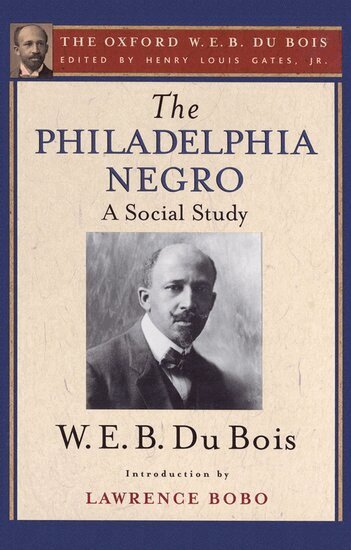
W. E. B. Du Bois was a public intellectual, sociologist, and activist on behalf of the African American community. He profoundly shaped black political culture in the United States through his founding role in the NAACP, as well as internationally through the Pan-African movement. Du Bois's sociological and historical research on African-American communities and culture broke ground in many areas, including the history of the post-Civil War Reconstruction period. Du Bois was also a prolific author of novels, autobiographical accounts, innumerable editorials and journalistic pieces, and several works of history.First published in 1899 at the dawn of sociology, The Philadelphia Negro: A Social Study is a landmark in empirical sociological research. Du Bois was the first sociologist to document the living circumstances of urban Black Americans. The Philadelphia Negro provides a framework for studying black communities, and it has steadily grown in importance since its original publication. Today, it is an indispensable model for sociologists, historians, political scientists, anthropologists, educators, philosophers, and urban studies scholars. With a series introduction by editor Henry Louis Gates, Jr., and an introduction by Lawrence Bobo, this edition is essential for anyone interested in African American history and sociology.
368 kr
Skickas inom 7-10 vardagar
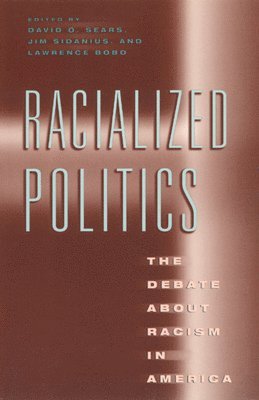
Are Americans less prejudiced now than they were in the 1970s, or has racism simply gone "underground"? Is racism something that is learned as children, or is it a result of certain social groups striving to maintain their privileged positions in society? In this text, political scientists, sociologists and psychologists explore the late-1990s debate surrounding the sources of racism in America. The essays represent three major approaches to the topic. The social psychological approach maintains that prejudice socialized early in life feeds racial stereotypes, while the social structural viewpoint argues that behaviour is shaped by whites' fear of losing their privileged status. The third perspective looks to non-racially inspired ideology, including attitudes about the size and role of government, as the reason for opposition to policies such as affirmative action. This collection provides a state-of-the-field assessment of the issues and findings on the role of racism in mass politics and public opinion.