Lawrence Weschler - Böcker
Visar alla böcker från författaren Lawrence Weschler. Handla med fri frakt och snabb leverans.
17 produkter
17 produkter
292 kr
Skickas inom 11-20 vardagar
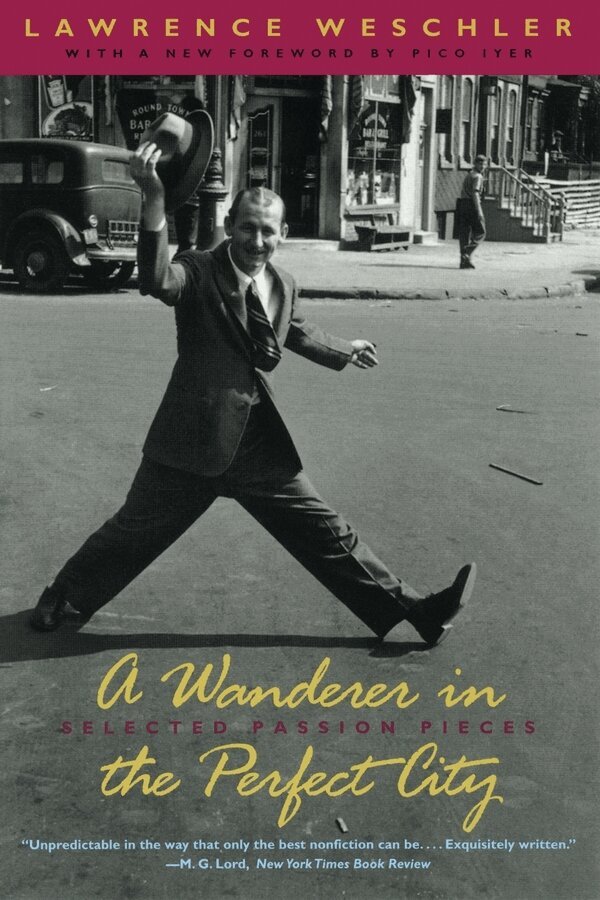
"There is something both marvelous and hilarious," writes Lawrence Weschler, "in watching the humdrum suddenly take flight. This is, in part, a collection of such launchings." Indeed, the eight essays collected in "A Wanderer in the Perfect City" do soar into the realm of passion as Weschler profiles people who "were just moseying down the street one day, minding their own business, when suddenly and almost spontaneously, they caught fire, they became obsessed, they became intensely focused and intensely alive." With keen observations and graceful prose, Weschler carries us along as a teacher of rudimentary English from India decides that his destiny is to promote the paintings of an obscure American abstract expressionist; a gifted poker player invents a more exciting version of chess; an avant-garde Russian emigre conductor speaks Latin, exclusively, to his infant daughter; and Art Spiegelman composes Maus. But simple summaries can't do these stories justice: like music, they derive their character from digressions and details, cadence and tone. And like the upwelling of passion Weschler's characters feel, they are better experienced than explained.
244 kr
Skickas inom 7-10 vardagar
From the author of Mr. Wilson's Cabinet of Wonder, Calamities of Exile combines three gripping narratives that afford a sort of double CAT scan into the natures of both modern totalitarianism and timeless exile."Beautiful but harrowing chronicles of three exiles that probe the moral and personal risks of their encounters with totalitarianism. . . . Piercing and timely."—Kirkus Reviews, starred review"Weschler . . . combines a novelist's gift for drama with the objectivity and research skills of a journalist. . . . The result is three gripping profiles of very human but also extraordinary men."—Publishers Weekly"[Weschler's] thorough accounting of the men's covert operations, assumed identities and strained relationships with fathers, wives, and colleagues creates a disturbing triptych of the perils of totalitarianism."—Lance Gould, New York Times Book Review"Weschler tells these three tragic tales with an admirable combination of psychological penetration, intellectual thrust, concision and compassion."—Francis King, Spectator"Endlessly absorbing. . . . Breathtaking."—Jeri Laber, Los Angeles Times Book Review
242 kr
Skickas inom 7-10 vardagar
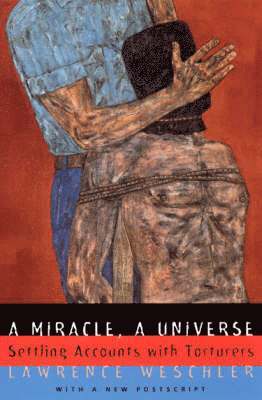
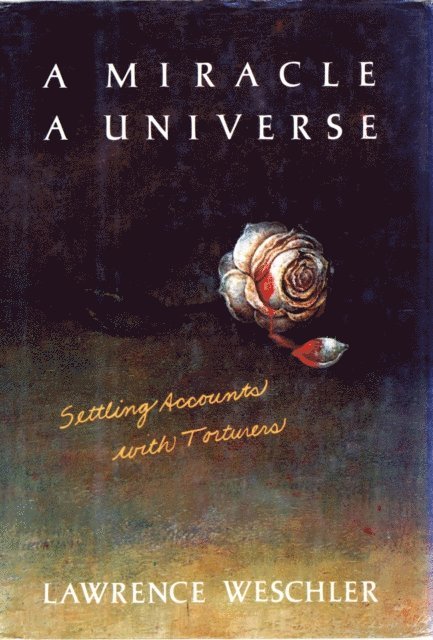
During the past fifteen years, one of the most vexing issues facing fledgling transitional democracies around the world--from South Africa to Eastern Europe, from Cambodia to Bosnia--has been what to do about the still-toxic security apparatuses left over from the previous regime. In this now-classic and profoundly influential study, the New Yorker's Lawrence Weschler probes these dilemmas across two gripping narratives (set in Brazil and Uruguay, among the first places to face such concerns), true-life thrillers in which torture victims, faced with the paralysis of the new regime, themselves band together to settle accounts with their former tormentors. "Disturbing and often enthralling."--New York Times Book Review "Extraordinarily moving...Weschler writes brilliantly."--Newsday "Implausible, intricate and dazzling."--Times Literary Supplement "As Weschler's interviewees told their tales, I paced agitatedly, choked back tears...Weschler narrates these two episodes with skill and tact...An inspiring book."--George Scialabba, Los Angeles Weekly
217 kr
Skickas inom 7-10 vardagar
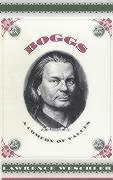
In this text, Lawrence Weschler chronicles the antics of J.S.G. Boggs, a young artist with a certain panache, a certain flair, an artist whose consuming passion is money, or perhaps, more precisely, value. What Boggs likes to do is to draw money - actual paper notes in the denominations of standard currencies from all over the world - and then to go out and try to spend those drawings. Instead of selling his money drawings outright to interested collectors, Boggs looks for merchants who will accept his drawings in lieu of cash payment for their wares or services as part of elaborately choreographed transactions, complete with receipts and even proper change - an artistic practice which regularly lands him in trouble with treasury around the world. This volume teases out these transactions and their sometimes dramatic legal consequences, following Boggs on a larkish, though at the same time disconcertingly profound, econo-philosophic chase. For in a madcap Socratic fashion, Boggs is raising all sorts of truly fundamental questions - what is it that we value in art, or, for that matter, in money? Indeed, how do we place a value on anything at all?And in particular, why do we, why should we, how can we place such trust in anything as confoundingly insubstantial as paper money? In passing, Weschler frames a concise, highly entertaining history of money itself - from cowrie shells through hedge funds.
242 kr
Tillfälligt slut
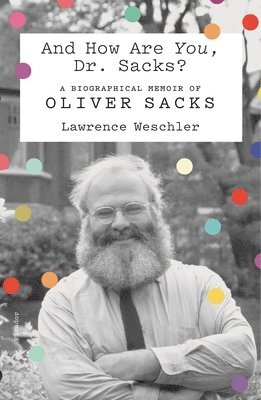
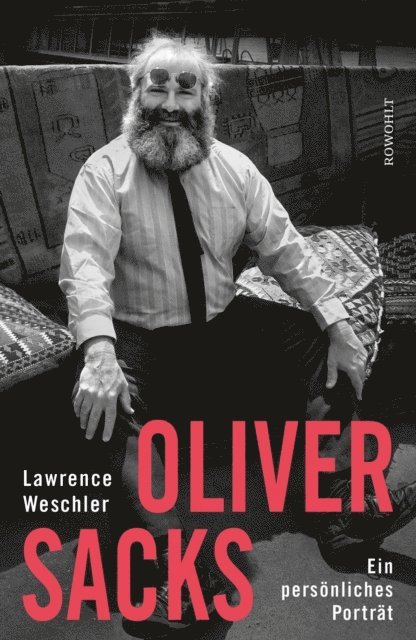
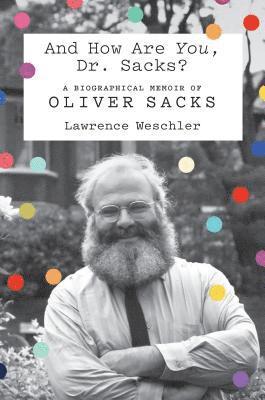
The author Lawrence Weschler began spending time with Oliver Sacks in the early 1980s, when he set out to profile the neurologist for his own new employer, The New Yorker. Almost a decade earlier, Dr. Sacks had published his masterpiece Awakenings - the account of his long-dormant patients’ miraculous but troubling return to life in a Bronx hospital ward. But the book had hardly been an immediate success, and the rumpled clinician was still largely unknown. Over the ensuing four years, the two men worked closely together until, for wracking personal reasons, Sacks asked Weschler to abandon the profile, a request to which Weschler acceded. The two remained close friends, however, across the next thirty years and then, just as Sacks was dying, he urged Weschler to take up the project once again. This book is the result of that entreaty.Weschler sets Sacks’s brilliant table talk and extravagant personality in vivid relief, casting himself as a beanpole Sancho to Sacks’s capacious Quixote. We see Sacks rowing and ranting and caring deeply; composing the essays that would form The Man Who Mistook His Wife for a Hat; recalling his turbulent drug-fueled younger days; helping his patients and exhausting his friends; and waging intellectual war against a medical and scientific establishment that failed to address his greatest concern: the spontaneous specificity of the individual human soul. And all the while he is pouring out a stream of glorious, ribald, hilarious, and often profound conversation that establishes him as one of the great talkers of the age. Here is the definitive portrait of Sacks as our preeminent romantic scientist, a self-described “clinical ontologist” whose entire practice revolved around the single fundamental question he effectively asked each of his patients: How are you? Which is to say, How do you be?A question which Weschler, with this book, turns back on the good doctor himself.
275 kr
Skickas inom 7-10 vardagar
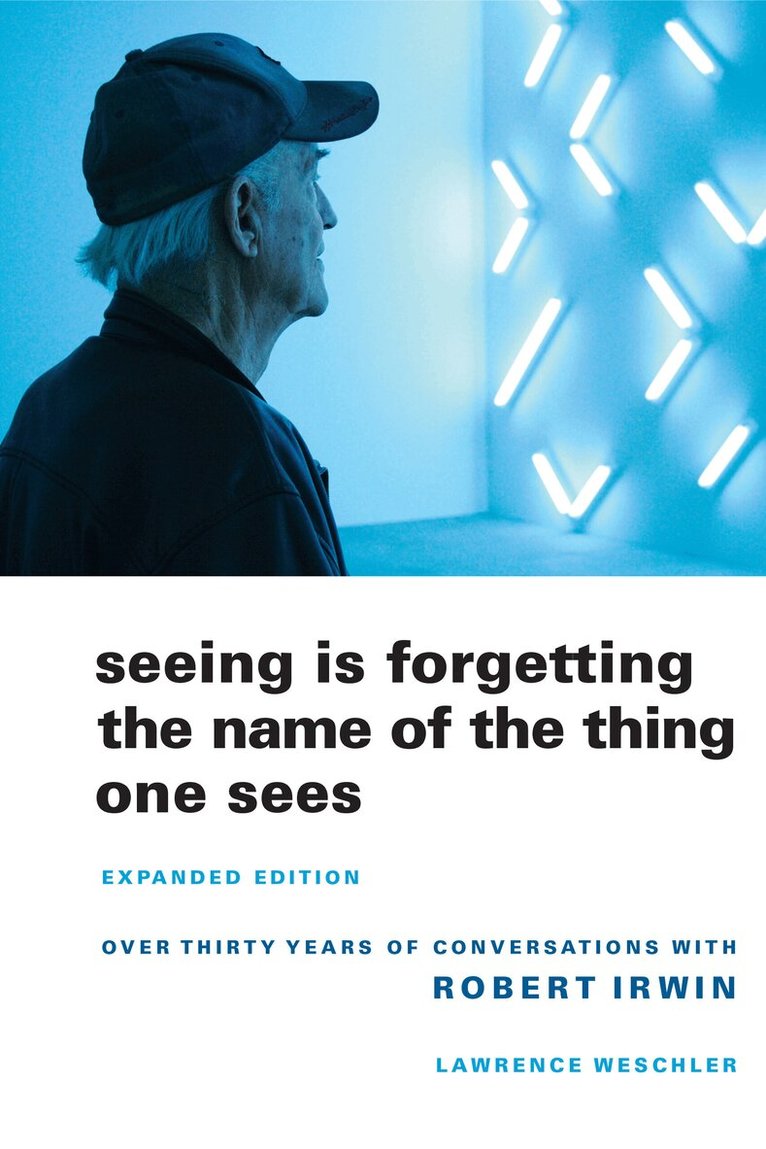
When this book first appeared in 1982, it introduced readers to Robert Irwin, the Los Angeles artist 'who one day got hooked on his own curiosity and decided to live it'. Now expanded to include six additional chapters and twenty-four pages of color plates, "Seeing Is Forgetting the Name of the Thing One Sees" chronicles three decades of conversation between Lawrence Weschler and light and space master Irwin. It surveys many of Irwin's site-conditioned projects - in particular the Central Gardens at the Getty Museum (the subject of an epic battle with the site's principal architect, Richard Meier) and the design that transformed an abandoned Hudson Valley factory into Dia's new Beacon campus - enhancing what many had already considered the best book ever on an artist.
267 kr
Skickas inom 7-10 vardagar
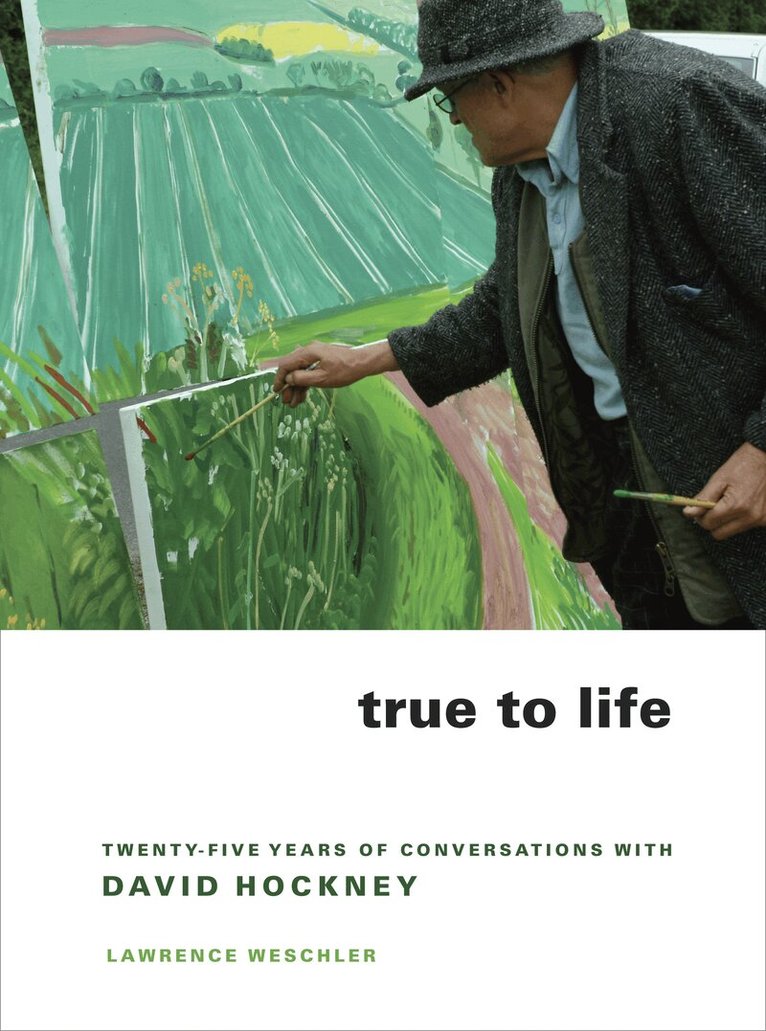
Soon after the book's publication in 1982, artist David Hockney read Lawrence Weschler's "Seeing Is Forgetting the Name of the Thing One Sees: A Life of Contemporary Artist" Robert Irwin and invited Weschler to his studio to discuss it, initiating a series of engrossing dialogs, gathered here for the first time. Weschler chronicles Hockney's protean production and speculations, including his scenic designs for opera, his homemade xerographic prints, his exploration of physics in relation to Chinese landscape painting, his investigations into optical devices, his taking up of watercolor - and then his spectacular return to oil painting, around 2005, with a series of landscapes of the East Yorkshire countryside of his youth. These conversations provide an astonishing record of what has been Hockney's grand endeavor, nothing less than an exploration of 'the structure of seeing' itself.
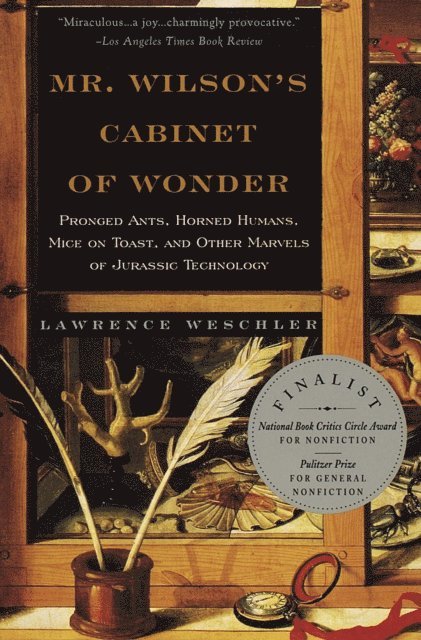
Mr. Wilson's Cabinet of Wonder: Pronged Ants, Horned Humans, Mice on Toast, and Other Marvels of Jurassic Technology
Häftad, Engelska, 1996
224 kr
Skickas inom 3-6 vardagar
308 kr
Skickas inom 3-6 vardagar
90 kr
Skickas inom 7-10 vardagar
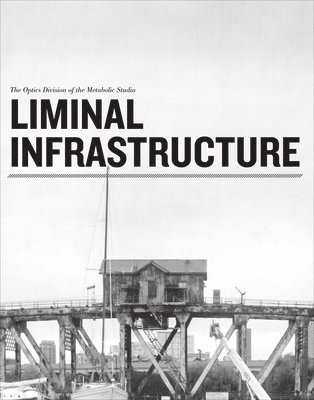
Led by artists Lauren Bon, Richard Nielsen, and Tristan Duke, the Optics Division of the Metabolic Studio is a team devoted to exploring and expanding the photographic medium. Working with the Liminal Camera, a massive, portable camera obscura fashioned from a shipping container, the Optics Division uses experimental technology in an ongoing effort to map and depict the American landscape. From the arid West to New York's waterways, the camera has captured dramatic scenes of regions in transition. As part of this project, The Liminal Camera presents newly commissioned photographs made in and around Chicago. Though enormous in size, the camera, transported on a semi-trailer truck, was unobtrusive from an outsider's perspective, allowing the artists to work without drawing attention. Photographs could be developed from within the shipping container, blending the image's subject with the process of photography itself. The resulting large-scale prints not only highlight the evolving history of photographic imaging, but also locate the city within a complex global network of transportation systems, industry, and commerce.
320 kr
Skickas inom 5-8 vardagar
The author Lawrence Weschler began spending time with Oliver Sacks in the early 1980s, when he set out to profile the neurologist for his own new employer, The New Yorker. Almost a decade earlier, Dr. Sacks had published his masterpiece Awakenings - the account of his long-dormant patients miraculous but troubling return to life in a Bronx hospital ward. But the book had hardly been an immediate success, and the rumpled clinician was still largely unknown. Over the ensuing four years, the two men worked closely together until, for wracking personal reasons, Sacks asked Weschler to abandon the profile, a request to which Weschler acceded. The two remained close friends, however, across the next thirty years and then, just as Sacks was dying, he urged Weschler to take up the project once again. This book is the result of that entreaty.Weschler sets Sacks’s brilliant table talk and extravagant personality in vivid relief, casting himself as a beanpole Sancho to Sacks’s capacious Quixote. We see Sacks rowing and ranting and caring deeply; composing the essays that would form The Man Who Mistook His Wife for a Hat; recalling his turbulent drug-fueled younger days; helping his patients and exhausting his friends; and waging intellectual war against a medical and scientific establishment that failed to address his greatest concern: the spontaneous specificity of the individual human soul. And all the while he is pouring out a stream of glorious, ribald, hilarious, and often profound conversation that establishes him as one of the great talkers of the age. Here is the definitive portrait of Sacks as our preeminent romantic scientist, a self-described “clinical ontologist” whose entire practice revolved around the single fundamental question he effectively asked each of his patients: How are you? Which is to say, How do you be? A question which Weschler, with this book, turns back on the good doctor himself.
715 kr
Skickas inom 7-10 vardagar
In the past fifty years, contemporary artistic practice has witnessed a surge in phenomenological types of artistic intent and methodology, represented by divergent impulses sharing a desire to channel ephemeral elements, resist categorization, and defy the rarified museum experience. Time-based work is now widely accepted as primary exhibition matter, and in the past ten years, performance art has risen to the mainstream. Defining “experiential art” as work that is immersive, participatory, performative, and kinetic, Strange Pilgrims is an exhibition and accompanying catalogue organized by The Contemporary Austin, weaving fourteen artists into a loose collection of propositions occupying unconventional spaces and formats. The title comes from Gabriel GarcÍa MÁrquez’s collection of twelve short stories of the same name, riffing on the wandering protagonist as a metaphor for an open-ended journey through strange and unfamiliar spaces.Created in tandem with the exhibition on view in fall 2015 and winter 2016 at The Contemporary Austin’s two sites, as well as a third venue, the Visual Arts Center at the University of Texas at Austin, this catalogue presents a parallel but stand-alone assemblage of ideas and concepts that respond to and resonate with one another under the broad umbrella of experience and perception. The book features an essay by the curator Heather Pesanti, a guest essay by the scholar Ann Reynolds, and an interview between author and critic Lawrence Weschler and the philosopher Alva NoË. All fourteen artists are represented through individual sections with color plates and explicatory text. In addition, Artist’s Voice sections have been contributed by Roger Hiorns, Trisha Baga and Jessie Stead, and Lakes Were Rivers.
This Land
An Epic Postcard Mural on the Future of a Country in Ecological Peril
Inbunden, Engelska, 2020
331 kr
Skickas inom 7-10 vardagar
David Opdyke's massive collage This Land (as elucidated in this book by award-winning author Lawrence Weschler) presents a slow-burning satire of the American Dream as it blunders into the reality of climate changeThis Land is an epic mural fashioned by New York artist David Opdyke out of vintage American postcards which he then treated with disconcerting painted interventions. What at first reads as a panoramic bird's-eye view of an idyllic alpine valley reveals itself, upon closer examination, to be an array of connected scenes and vignettes.Across more than five hundred postcards, each one portraying a distinct slice of idealized Americana (town squares, mountain highways, main streets and county seats), Opdyke's acerbic, emotionally jarring alterations gradually become evident.In this prophetic refashioning, forests are aflame, tornadoes torque from one card into the next, a steamboat gets swallowed up whole by some sort of new megafauna, frogs fall like Biblical hail from the sky.The human responses form a cacophony of desires and demands, panic and denial. Biplanes trail banners urging Repent Now!, others insist Legislative Action Would Be Premature, while still others advertise seats on an actual Ark.The book This Land affords readers a closer and closer viewing of Opdyke’s devastatingly sardonic take on our impending ecological future, one in turn enlivened by Lawrence Weschler's vividly sly blend of artist profile and critical interpretation.Featuring introductory essays providing background on the artist and the project as a whole, This Land also divides the sprawling mural into eight sections to allow for a more intimate viewing.Interspersed among the detailed visual sections are insightful thematic essays by Lawrence Weschler and an afterword that serves as a stirring call to action by civil rights attorney Maya Wiley. Additionally, the book's jacket is printed on both sides, folding out to reveal the work in its full grandeur.
195 kr
Skickas inom 7-10 vardagar
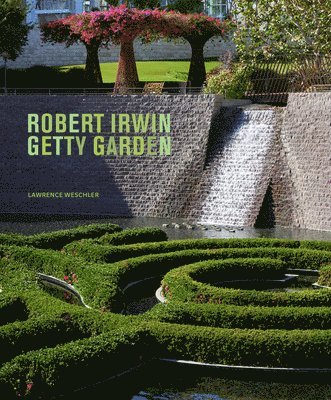
Among the most beloved sites at the Getty Center, the Central Garden has aroused intense interest from the moment artist Robert Irwin was awarded the commission. First published in 2002, 'Robert Irwin Getty Garden' is comprised of a series of discussions between noted author Lawrence Weschler and Irwin, providing a lively account of what Irwin has playfully termed "a sculpture in the form of a garden aspiring to be art." The text revolves around four garden walks: extended conversations in which the artist explains the critical choices he made - from plant materials to steel - in the creation of a living work of art that has helped to redefine what a modern garden can and should be. This updated edition features new photography of the Central Garden in a smaller, more accessible format.
187 kr
Skickas inom 7-10 vardagar
456 kr
Skickas inom 7-10 vardagar
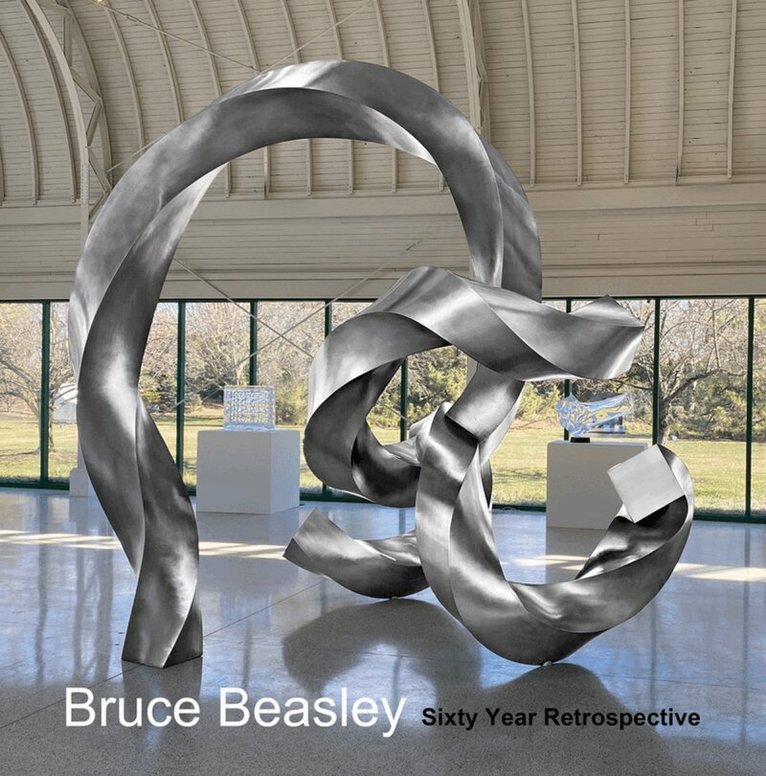
For six decades, sculptor Bruce Beasley has worked in a range of media to build complex, resonant sculptures that communicate the primacy of form and express the emotional language of shape. Bruce Beasley: Sixty Year Retrospective is an elegant survey of his illustrious career: from early experiments in scrap iron during the 1960s; aluminum works of the 1970s; cast acrylic sculptures of the 1970s and 80s; and stone, stainless steel and bronze works of the 1990s to the present day. The catalogue also features Beasley’s latest venture into two-dimensional media.This richly illustrated book includes Beasley’s reflections on his career. In a conversation, Beasley and Lawrence Weschler discuss art and activism. Essays discussing his processes and appraising his impact are written by curator Tom Moran and Marlena Doktorczyk-Donohue, Director of the Bruce Beasley Foundation and Professor of Art History at Otis College of Art and Design, Los Angeles.
670 kr
Skickas inom 3-6 vardagar
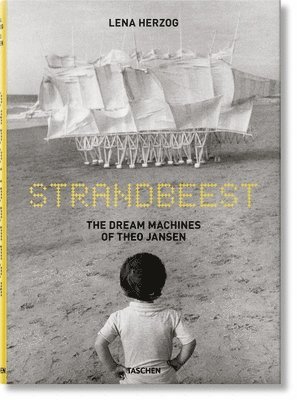
For seven years, photographer and artist Lena Herzog followed the evolution of a new kinetic species. Intricate as insects but with bursts of equine energy, the “Strandbeests,” or “beach creatures,” are the creation of Dutch artist Theo Jansen, who has been working for nearly two decades to generate these new life-forms that move, and even survive, on their own. Set to roam the beaches of Holland, the Strandbeests pick up the wind in their gossamer wings and spring, as if by metamorphosis, into action. As if it were blood, not the breeze, running through their delicate forms, they quiver, cavort, and trot against the sun and sea, pausing to change direction if they sense loose sand or water that might destabilize their movement. Coinciding with a traveling exhibition, Herzog’s photographic tribute captures Jansen’s menagerie in a meditative black and white, showcasing Jansen’s imaginative vision, as well as the compelling intersection of animate and inanimate in his creatures. The result is a work of art in its own right and a mesmerizing encounter not only with a very surrealist brand of marvelous, but also with whole new ideas of existence.