Lea Brilmayer - Böcker
Visar alla böcker från författaren Lea Brilmayer. Handla med fri frakt och snabb leverans.
4 produkter
4 produkter
464 kr
Skickas inom 5-8 vardagar
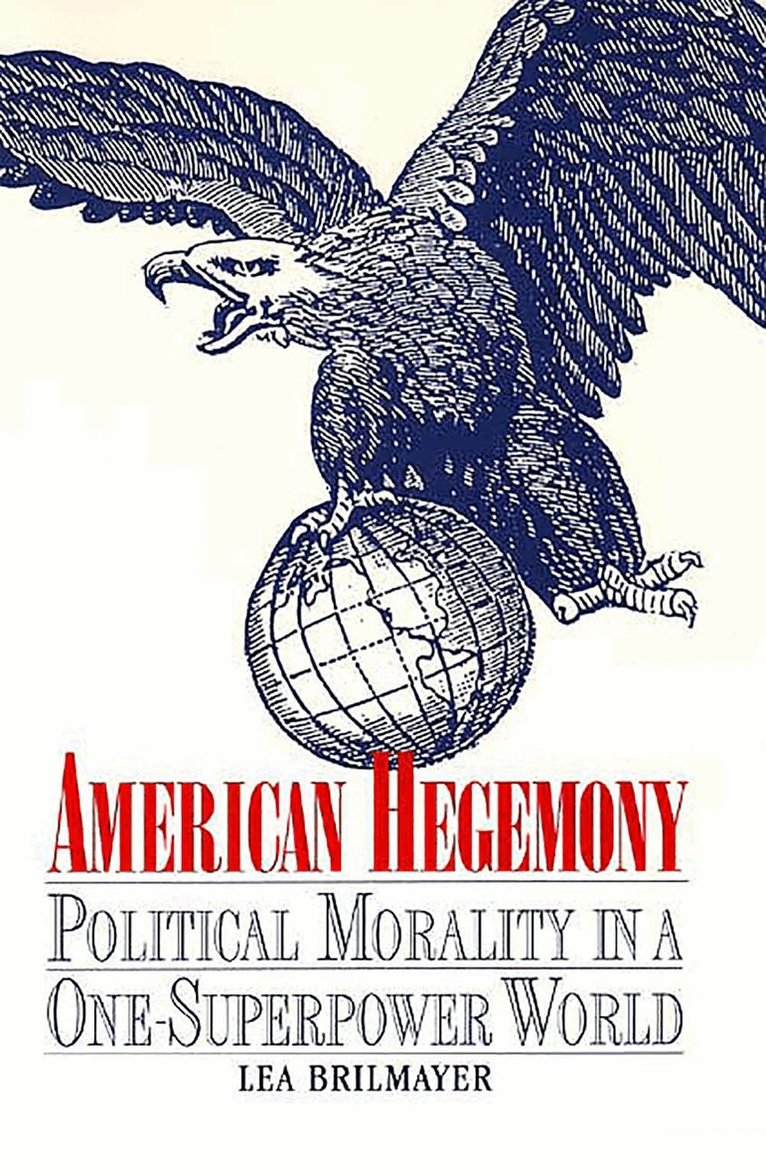
Is it morally acceptable for one nation to be the world's policeman? Are there circumstances under which one nation has either the right or the obligation to dominate the others? This important and timely book is the first to examine these and other moral issues raised by America's status as the sole world superpower after the end of the Cold War.Lea Brilmayer argues that American hegemony is a form of international governance and must be evaluated by liberals in the same way they would evaluate the legitimacy of domestic political arrangements. According to Brilmayer, liberal political morality as expounded by such philosophers as Rawls and Nozick requires that those who are governed give their consent, and so this becomes the key to hegemonic legitimacy. Brilmayer discusses three ways that consent can be obtained and then shows how a further justification for hegemonic governance can be provided derived from basic universal norms of human rights. Each of these four rationales, says Brilmayer, provides a standard for assessing the legitimacy of American actions. Each also specifies that there are certain circumstances in which hegemonic intervention is not only permitted but actually required. Liberal political morality thus provides a limited justification for American hegemony, although—since liberal political morality is often criticized as misguided or irrelevant—even this limited justification is dubious.Brilmayer's book is a brilliant demonstration of the importance of normative evaluation and of the moral problems underlying the enforcement of international law.
1 655 kr
Skickas inom 7-10 vardagar
International claims commissions have, over the last few decades, established themselves as important and permanent fixtures in international adjudication. This book provides a comprehensive review and analysis of the workings and mechanics of claims commissions to assess their success and predict their utility in the future. The book examines the legal framework of an international claims commission and the basic elements its processing procedure, as well as exploring the difficulties and challenges associated with operating costs, remedies and compliance with judgments. International claims commissions are created ad hoc to consider large numbers of complex legal claims resulting from an international upheaval, making them important international dispute resolution mechanisms. By focusing in large part on the examples set by the United Nations Claims Commissions, the Iran US Claims Tribunal, and the Eritrea Ethiopia Claims Commission, the authors assess the reasons to establish a claims commission by discussing their legal and operating structures, issues related to evidence and costs and the challenges and successes of creating them. The book concludes with a detailed analysis of lessons learnt to guide policy makers in the creation of future claims commissions. Written by two academics and a former practitioner this book is a practical resource for international law academics; counsel and judges in international courts and tribunals; policy makers in international organizations and foreign ministries, and diplomats.
987 kr
Skickas inom 10-15 vardagar
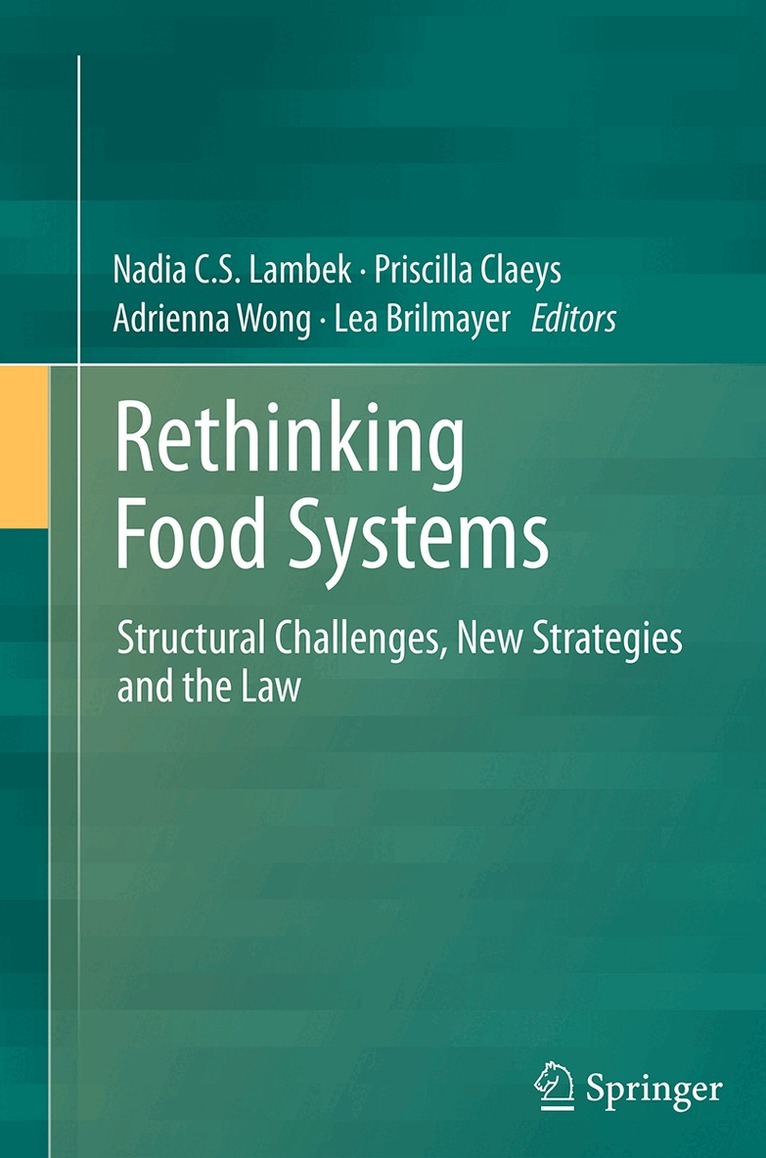
Taking as a starting point that hunger results from social exclusion and distributional inequities and that lasting, sustainable and just solutions are to be found in changing the structures that underlie our food systems, this book examines how law shapes global food systems and their ongoing transformations. Using detailed case studies, historical mapping and legal analysis, the contributors show how various actors (farmers, civil society groups, government officials, international bodies) use or could use different legal tools (legislative, jurisprudential, norm-setting) on various scales (local, national, regional, global) to achieve structural changes in food systems. Section 1, Institutionalizing New Approaches, explores the possibility of institutionalizing social change through two alternative visions for change – the right to food and food sovereignty. Individual chapters discuss Vía Campesina’s struggle to implement food sovereignty principles into international trade law, and present case studies on adopting food sovereignty legislation in Nicaragua and right to food legislation in Uganda. The chapters in Section 2, Regulating for Change, explore the extent to which the regulation of actors can or cannot change incentives and produce transformative results in food systems. They look at the role of the state in regulating its own actions as well as the actions of third parties and analyze various means of regulating land grabs. The final section, Governing for Better Food Systems, discusses the fragmentation of international law and the impacts of this fragmentation on the realization of human rights. These chapters trace the underpinnings of the current global food system, explore the challenges of competing regimes of intellectual property, farmers rights and human rights, and suggest new modes of governance for global and local food systems. The stakes for building better food systems are high. Our current path leaves many behind, destroyingthe environment and entrenching inequality and systemic poverty. While it is commonly understood that legal structures are at the heart of food systems, the legal academy has yet to make a significant contribution to recent discussions on improving food systems - this book aims to fill that gap.
987 kr
Skickas inom 10-15 vardagar
Taking as a starting point that hunger results from social exclusion and distributional inequities and that lasting, sustainable and just solutions are to be found in changing the structures that underlie our food systems, this book examines how law shapes global food systems and their ongoing transformations. Using detailed case studies, historical mapping and legal analysis, the contributors show how various actors (farmers, civil society groups, government officials, international bodies) use or could use different legal tools (legislative, jurisprudential, norm-setting) on various scales (local, national, regional, global) to achieve structural changes in food systems. Section 1, Institutionalizing New Approaches, explores the possibility of institutionalizing social change through two alternative visions for change – the right to food and food sovereignty. Individual chapters discuss Vía Campesina’s struggle to implement food sovereignty principles into international trade law, and present case studies on adopting food sovereignty legislation in Nicaragua and right to food legislation in Uganda. The chapters in Section 2, Regulating for Change, explore the extent to which the regulation of actors can or cannot change incentives and produce transformative results in food systems. They look at the role of the state in regulating its own actions as well as the actions of third parties and analyze various means of regulating land grabs. The final section, Governing for Better Food Systems, discusses the fragmentation of international law and the impacts of this fragmentation on the realization of human rights. These chapters trace the underpinnings of the current global food system, explore the challenges of competing regimes of intellectual property, farmers rights and human rights, and suggest new modes of governance for global and local food systems. The stakes for building better food systems are high. Our current path leaves many behind, destroyingthe environment and entrenching inequality and systemic poverty. While it is commonly understood that legal structures are at the heart of food systems, the legal academy has yet to make a significant contribution to recent discussions on improving food systems - this book aims to fill that gap.