Lee Bebout - Böcker
Visar alla böcker från författaren Lee Bebout. Handla med fri frakt och snabb leverans.
7 produkter
7 produkter
406 kr
Skickas inom 7-10 vardagar
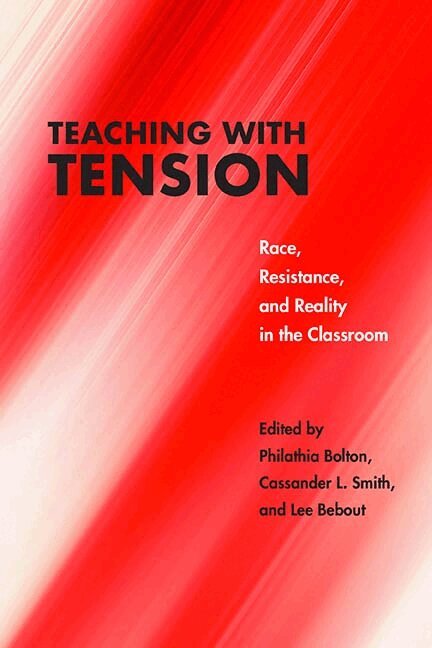
Teaching with Tension is a collection of seventeen original essays that address the extent to which attitudes about race, impacted by the current political moment in the United States, have produced pedagogical challenges for professors in the humanities. As a flashpoint, this current political moment is defined by the visibility of the country's first black president, the election of his successor, whose presidency has been associated with an increased visibility of the alt-right, and the emergence of the neoliberal university. Together these social currents shape the tensions with which we teach.Drawing together personal reflection, pedagogical strategies, and critical theory, Teaching with Tension offers concrete examinations that will foster student learning. The essays are organized into three thematic sections: ""Teaching in Times and Places of Struggle"" examines the dynamics of teaching race during the current moment, marked by neoconservative politics and twenty-first century freedom struggles. ""Teaching in the Neoliberal University"" focuses on how pressures and exigencies of neoliberalism (such as individualism, customer-service models of education, and online courses) impact the way in which race is taught and conceptualized in college classes. The final section, ""Teaching How to Read Race and (Counter)Narratives,"" homes in on direct strategies used to historicize race in classrooms comprised of millennials who grapple with race neutral ideologies. Taken together, these sections and their constitutive essays offer rich and fruitful insight into the complex dynamics of contemporary race and ethnic studies education.
1 260 kr
Skickas inom 10-15 vardagar
Teaching with Tension is a collection of seventeen original essays that address the extent to which attitudes about race, impacted by the current political moment in the United States, have produced pedagogical challenges for professors in the humanities. As a flashpoint, this current political moment is defined by the visibility of the country's first black president, the election of his successor, whose presidency has been associated with an increased visibility of the alt-right, and the emergence of the neoliberal university. Together these social currents shape the tensions with which we teach.Drawing together personal reflection, pedagogical strategies, and critical theory, Teaching with Tension offers concrete examinations that will foster student learning. The essays are organized into three thematic sections: ""Teaching in Times and Places of Struggle"" examines the dynamics of teaching race during the current moment, marked by neoconservative politics and twenty-first century freedom struggles. ""Teaching in the Neoliberal University"" focuses on how pressures and exigencies of neoliberalism (such as individualism, customer-service models of education, and online courses) impact the way in which race is taught and conceptualized in college classes. The final section, ""Teaching How to Read Race and (Counter)Narratives,"" homes in on direct strategies used to historicize race in classrooms comprised of millennials who grapple with race neutral ideologies. Taken together, these sections and their constitutive essays offer rich and fruitful insight into the complex dynamics of contemporary race and ethnic studies education.
298 kr
Skickas inom 10-15 vardagar
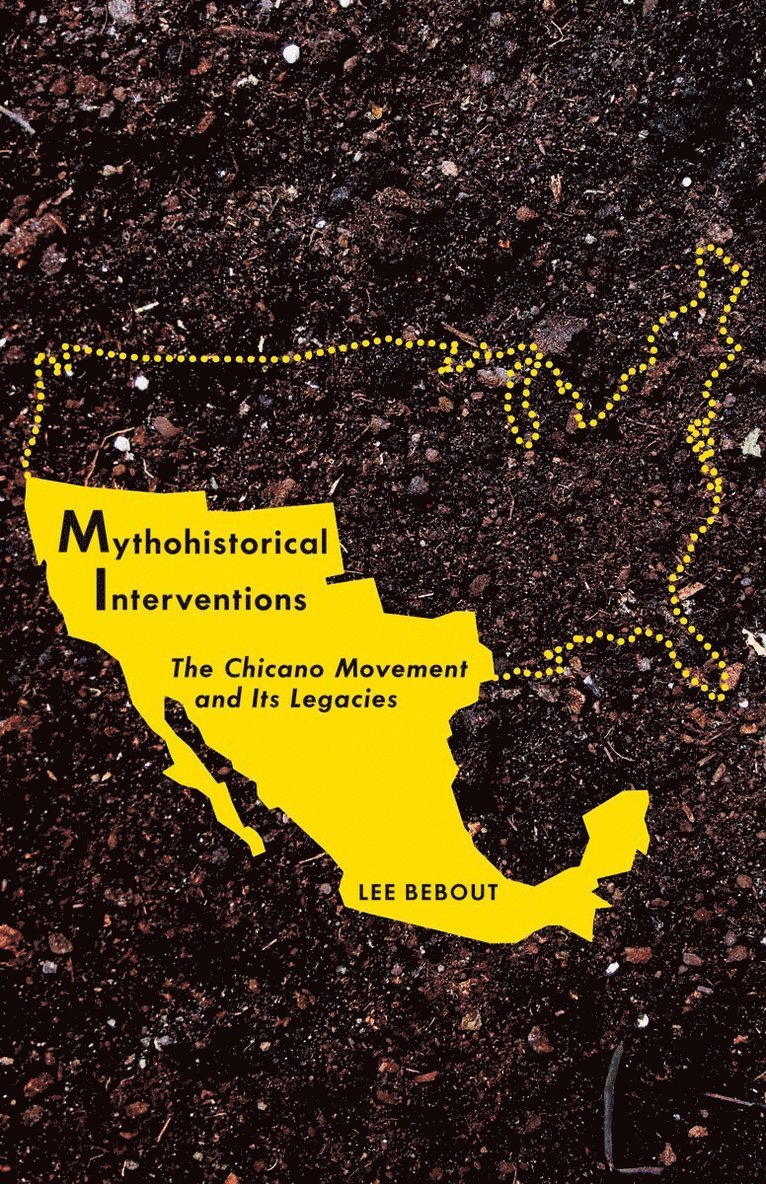
Mythohistorical Interventions explores how myth and history impacted the social struggle of the Chicano movement and the postmovement years. Drawing on archival materials and political speeches as well as music and protest poetry, Lee Bebout scrutinizes the ideas that emerged from the effort to organize and legitimize the Chicano movement’s aims. Examining the deployment of the Aztec eagle by the United Farm Workers union, the poem Yo Soy JoaquÍn, the document El Plan de Santa Barbara, and icons like La Malinche and La Virgen de Guadalupe, Bebout reveals the centrality of culture to the Chicano movement. For Bebout, the active implementation of cultural narrative was strategically significant in several ways. First, it allowed disparate movement participants to imagine themselves as part of a national, and nationalist, community of resistance. Second, Chicano use of these narratives contested the images that fostered Anglo-American hegemony. Bringing his analysis up to the present, Bebout delineates how demographic changes have, on the one hand, encouraged the possibility of a panethnic Latino community, while, on the other hand, anti-Mexican nativists attempt to resurrect Chicano myths as a foil to restrict immigration from Mexico.
285 kr
Skickas inom 7-10 vardagar
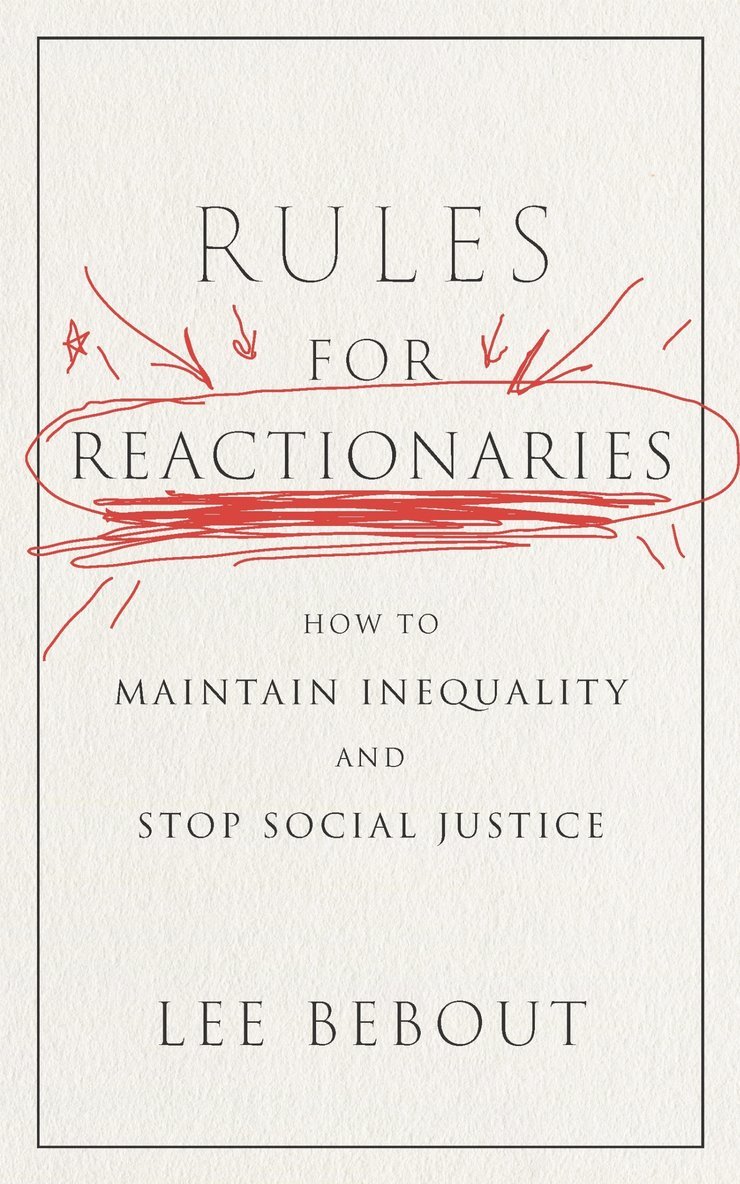
A tongue-in-cheek analysis of the communication strategies used to obstruct social justice movementsIn our increasingly polarized society, violence and echo chambers drown out all possibility of civil discourse. Thinly veiled racism, misogyny, and homophobia dominate media coverage. Again and again, national debates on race, gender, and justice go in circles. Is our language failing us?Rules for Reactionaries serves as both a faux guidebook for ultraconservative debaters and an analysis of their rhetorical strategies. Lee Bebout lays out how language can be manipulated by those who wish to suppress progressivism and maintain structures of inequality. Taking his readers across the turbulent political landscape of the late twentieth and early twenty-first century, he delineates the rhetorical strategies that have long been used to hinder progressive movements. Bebout identifies evasive tactics such as "All Lives Matter" and "Not All Men," which promote conservative viewpoints and disrupt calls for change. It's an old problem that keeps rearing its ugly head, and the only way to disrupt it is to anticipate and identify it.Rules for Reactionaries reveals how language both reflects and shapes our politics. By reminding us each of the power we possess, Bebout challenges us to not only combat the rhetoric of reactionaries, but to change our own way of thinking.
1 068 kr
Skickas inom 10-15 vardagar
A tongue-in-cheek analysis of the communication strategies used to obstruct social justice movementsIn our increasingly polarized society, violence and echo chambers drown out all possibility of civil discourse. Thinly veiled racism, misogyny, and homophobia dominate media coverage. Again and again, national debates on race, gender, and justice go in circles. Is our language failing us?Rules for Reactionaries serves as both a faux guidebook for ultraconservative debaters and an analysis of their rhetorical strategies. Lee Bebout lays out how language can be manipulated by those who wish to suppress progressivism and maintain structures of inequality. Taking his readers across the turbulent political landscape of the late twentieth and early twenty-first century, he delineates the rhetorical strategies that have long been used to hinder progressive movements. Bebout identifies evasive tactics such as "All Lives Matter" and "Not All Men," which promote conservative viewpoints and disrupt calls for change. It's an old problem that keeps rearing its ugly head, and the only way to disrupt it is to anticipate and identify it.Rules for Reactionaries reveals how language both reflects and shapes our politics. By reminding us each of the power we possess, Bebout challenges us to not only combat the rhetoric of reactionaries, but to change our own way of thinking.
389 kr
Skickas inom 7-10 vardagar
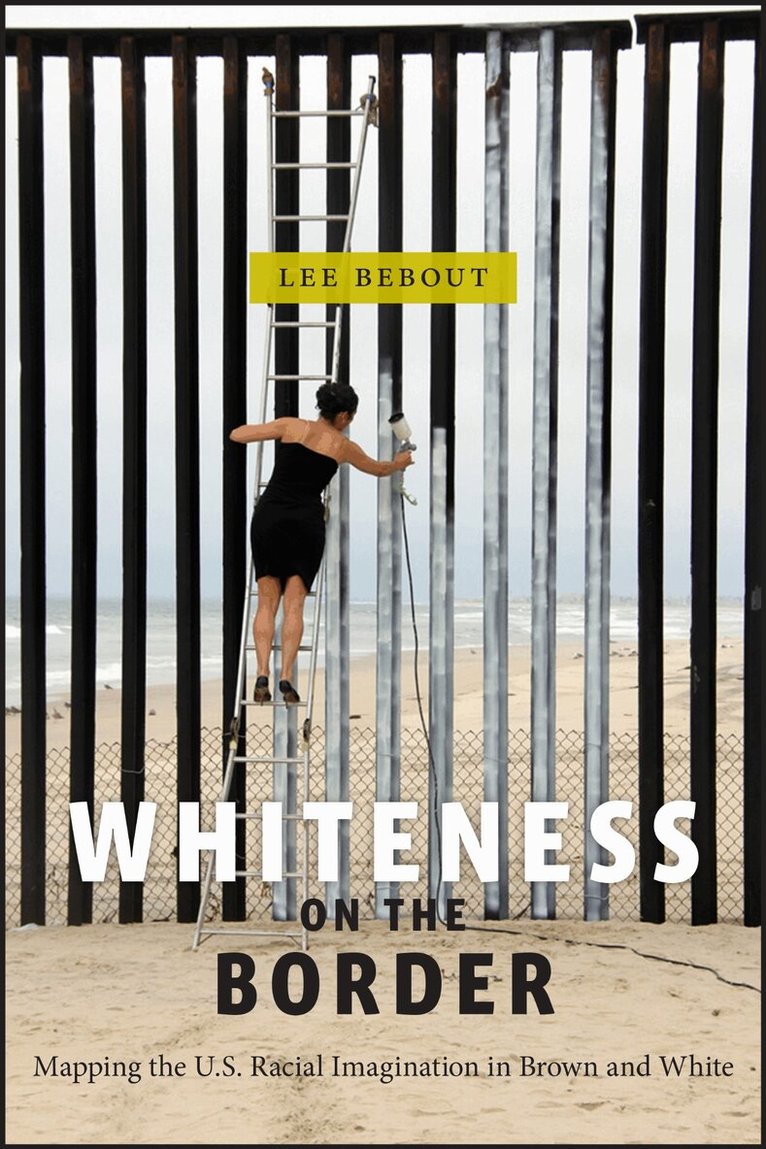
The many lenses of racism through which the white imagination sees Mexicans and Chicanos Historically, ideas of whiteness and Americanness have been built on the backs of racialized communities. The legacy of anti-Mexican stereotypes stretches back to the early nineteenth century when Anglo-American settlers first came into regular contact with Mexico and Mexicans. The images of the Mexican Other as lawless, exotic, or non-industrious continue to circulate today within US popular and political culture. Through keen analysis of music, film, literature, and US politics, Whiteness on the Border demonstrates how contemporary representations of Mexicans and Chicano/as are pushed further to foster the idea of whiteness as Americanness. Illustrating how the ideologies, stories, and images of racial hierarchy align with and support those of fervent US nationalism, Lee Bebout maps the relationship between whiteness and American exceptionalism. He examines how renderings of the Mexican Other have expressed white fear, and formed a besieged solidarity in anti-immigrant rhetoric and policies. Moreover, Whiteness on the Border elucidates how seemingly positive representations of Mexico and Chicano/as are actually used to reinforce investments in white American goodness and obscure systems of racial inequality. Whiteness on the Border pushes readers to consider how the racial logic of the past continues to thrive in the present.
1 228 kr
Skickas inom 10-15 vardagar
The many lenses of racism through which the white imagination sees Mexicans and Chicanos Historically, ideas of whiteness and Americanness have been built on the backs of racialized communities. The legacy of anti-Mexican stereotypes stretches back to the early nineteenth century when Anglo-American settlers first came into regular contact with Mexico and Mexicans. The images of the Mexican Other as lawless, exotic, or non-industrious continue to circulate today within US popular and political culture. Through keen analysis of music, film, literature, and US politics, Whiteness on the Border demonstrates how contemporary representations of Mexicans and Chicano/as are pushed further to foster the idea of whiteness as Americanness. Illustrating how the ideologies, stories, and images of racial hierarchy align with and support those of fervent US nationalism, Lee Bebout maps the relationship between whiteness and American exceptionalism. He examines how renderings of the Mexican Other have expressed white fear, and formed a besieged solidarity in anti-immigrant rhetoric and policies. Moreover, Whiteness on the Border elucidates how seemingly positive representations of Mexico and Chicano/as are actually used to reinforce investments in white American goodness and obscure systems of racial inequality. Whiteness on the Border pushes readers to consider how the racial logic of the past continues to thrive in the present.