Lee Congdon - Böcker
Visar alla böcker från författaren Lee Congdon. Handla med fri frakt och snabb leverans.
11 produkter
11 produkter
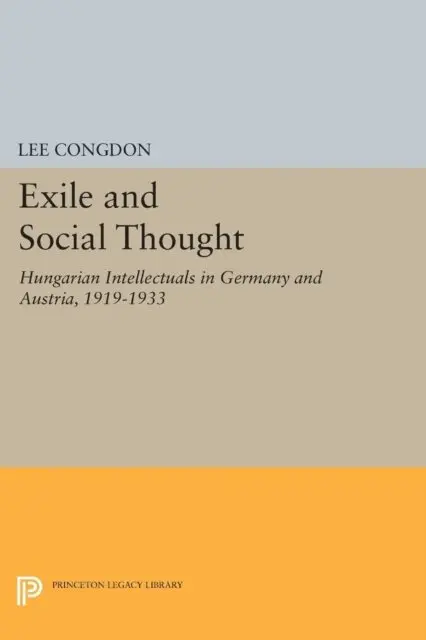
Exile and Social Thought
Hungarian Intellectuals in Germany and Austria, 1919-1933
Häftad, Engelska, 2014
1 056 kr
Skickas inom 3-6 vardagar
Embroiled in the political events surrounding World War I and the failed Hungarian revolutions of 1918-19, a number of intellectuals fled Hungary for Germany and Austria, where they essentially created Weimar culture. Among them were Georg Lukacs, whose History and Class Consciousness recast Marxism and challenged even those who repudiated its politics; Bela Balazs, who pioneered film theory and collaborated with film-makers G. W. Pabst, Leni Riefenstahl, and Alexander Korda; Laszlo Moholy-Nagy, who codirected the Bauhaus during its heyday in the mid-1920s; and Karl Mannheim, whose Ideology and Utopia was the most widely discussed work of noncommunist social theory during the Weimar years. In this collective portrait combining intellectual history with biographical detail, Lee Congdon describes how Hungarian thinkers, each in a different way, passionately advocated the need for community in a Europe torn by war and revolution. Whether communist, avant-gardist, or Catholic convert, each thinker is examined within the vast tapestry of his works, his cultural and intellectual milieu, and his experience as an exile.Despite the ideological differences of these men, Congdon reveals how their personal destinies and social goals often merged. Since many were assimilated Jews, he argues that their thinking on society was inextricably intertwined with their youthful sensitivity to anti-Semitism in Hungary and with the isolating limitations of their lives in Germany and Austria. Originally published in 1991. The Princeton Legacy Library uses the latest print-on-demand technology to again make available previously out-of-print books from the distinguished backlist of Princeton University Press. These editions preserve the original texts of these important books while presenting them in durable paperback and hardcover editions. The goal of the Princeton Legacy Library is to vastly increase access to the rich scholarly heritage found in the thousands of books published by Princeton University Press since its founding in 1905.
Exile and Social Thought
Hungarian Intellectuals in Germany and Austria, 1919-1933
Inbunden, Engelska, 2016
2 636 kr
Skickas inom 3-6 vardagar
Embroiled in the political events surrounding World War I and the failed Hungarian revolutions of 1918-19, a number of intellectuals fled Hungary for Germany and Austria, where they essentially created Weimar culture. Among them were Georg Lukacs, whose History and Class Consciousness recast Marxism and challenged even those who repudiated its politics; Bela Balazs, who pioneered film theory and collaborated with film-makers G. W. Pabst, Leni Riefenstahl, and Alexander Korda; Laszlo Moholy-Nagy, who codirected the Bauhaus during its heyday in the mid-1920s; and Karl Mannheim, whose Ideology and Utopia was the most widely discussed work of noncommunist social theory during the Weimar years. In this collective portrait combining intellectual history with biographical detail, Lee Congdon describes how Hungarian thinkers, each in a different way, passionately advocated the need for community in a Europe torn by war and revolution. Whether communist, avant-gardist, or Catholic convert, each thinker is examined within the vast tapestry of his works, his cultural and intellectual milieu, and his experience as an exile.Despite the ideological differences of these men, Congdon reveals how their personal destinies and social goals often merged. Since many were assimilated Jews, he argues that their thinking on society was inextricably intertwined with their youthful sensitivity to anti-Semitism in Hungary and with the isolating limitations of their lives in Germany and Austria. Originally published in 1991. The Princeton Legacy Library uses the latest print-on-demand technology to again make available previously out-of-print books from the distinguished backlist of Princeton University Press. These editions preserve the original texts of these important books while presenting them in durable paperback and hardcover editions. The goal of the Princeton Legacy Library is to vastly increase access to the rich scholarly heritage found in the thousands of books published by Princeton University Press since its founding in 1905.
545 kr
Skickas inom 10-15 vardagar
Based upon recently found manuscripts and correspondence, The Young Lukacs is the first comprehensive and fully researched portrait of Georg Lukacs to appear in any language. Lee Congdon finds in the young Lukacs's estrangement from his family and from Hungarian society roots for his continuing concern with the philosophic problem of alienation.The chance discovery in 1972 of Lukacs's early manuscripts and correspondence has made possible an authoritative intellectual biography of this major Marxist thinker. Congdon has mined the wealth of material in the Lukacs Archives in Budapest and drawn upon Hungarian scholarship that is all but unknown in the West. The result is a biography that reveals the relationship between the ideas Lukacs entertained, the world in which he lived, and the conditions of his personal existence.Congdon argues that Lukacs's understanding of Simmel, Dostoevski, and Hegel was profoundly affected by the world of fin de siecle Europe, the Great War, and the Russian Revolution. The evolution of Lukacs's own ideas, Congdon finds, was an expression of his relationships with three women -- Irma Siedler, Ljena Grabenko, and Gertrud Bortstieber. No one, writing in any language, has previously examined Lukacs's life and work in this context.Although Congdon acknowledges some sympathy for the young Lukacs and his enthusiasms, he shows that the brilliant and sensitive thinker, in the words of Dostoevski, ""started out with the idea of unrestricted freedom and . . . arrived at unrestricted despotism."" The tragedy of Lukacs, he concludes, was that he hated injustice more than he loved human beings.
553 kr
Skickas inom 10-15 vardagar
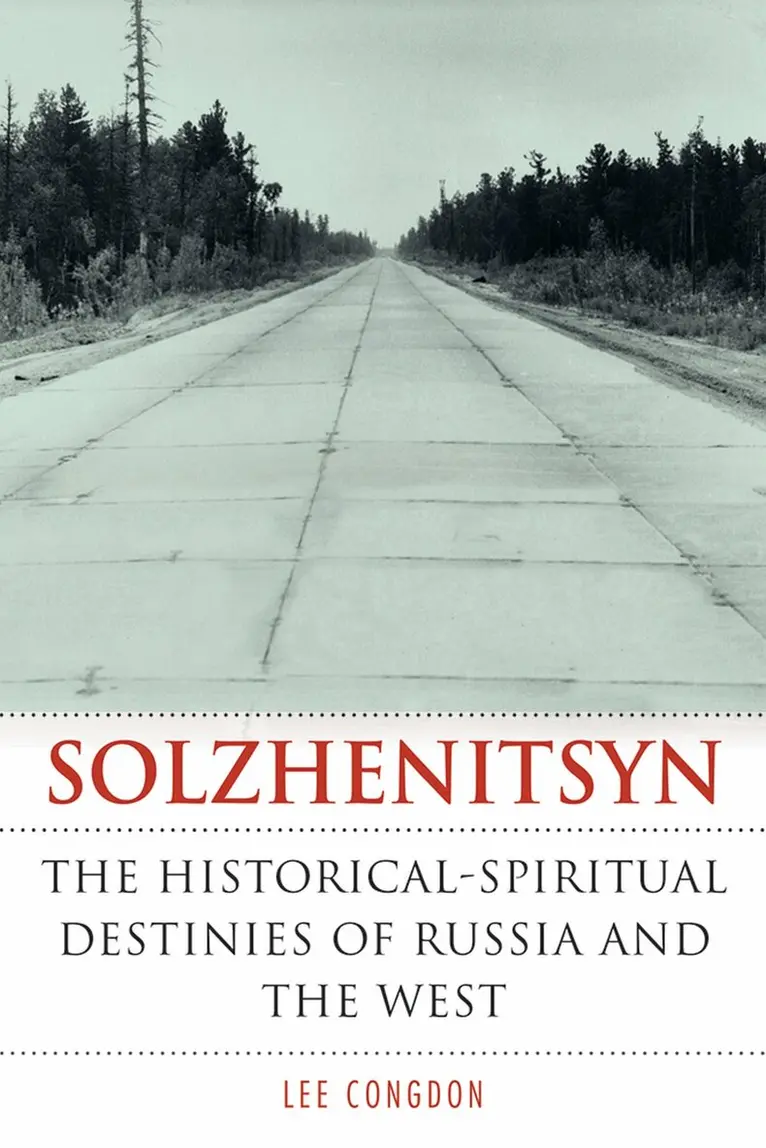
This study of Aleksandr Solzhenitsyn (1918–2008) and his writings focuses on his reflections on the religiopolitical trajectories of Russia and the West, understood as distinct civilizations. In his examination of the author and his work, Lee Congdon explores the consequences of the atheistic socialism that drove the Russian revolutionary movement. Beginning with a description of the post-revolutionary Russia into which Solzhenitsyn was born, Congdon outlines the Bolshevik victory in the civil war, the origins of the concentration camp system, and the Bolsheviks' war on Christianity and the Russian Orthodox Church. He then focuses on Solzhenitsyn's arrest near the war's end, his time in the labor camps, and his struggle with cancer. Congdon describes his time in exile and increasing alienation from the Western way of life, as well as his return home and his final years. He concludes with a reminder of Solzhenitsyn's warning to the West—that it was on a path parallel to that which Russia had followed into the abyss. This important study will appeal to scholars and educated general readers with an interest in Solzhenitsyn, Russia, Christianity, and the fate of Western civilization.
559 kr
Skickas inom 10-15 vardagar
In this examination of Solzhenitsyn and his work, Lee Congdon explores the consequences of the atheistic socialism that drove the Russian revolutionary movement. Beginning with a description of the post-revolutionary Russia into which Solzhenitsyn was born, Congdon addresses the Bolshevik victory in the civil war, the origins of the concentration camp system, the Bolsheviks' war on Christianity and the Russian Orthodox Church, Solzhenitsyn's arrest near the war's end, his time in the labor camps, his struggle with cancer, his exile and increasing alienation from the Western way of life, and his return home. He concludes with a reminder of Solzhenitsyn's warning to the West—that it was on a path parallel to that which Russia had followed into the abyss.
2 420 kr
Skickas inom 10-15 vardagar
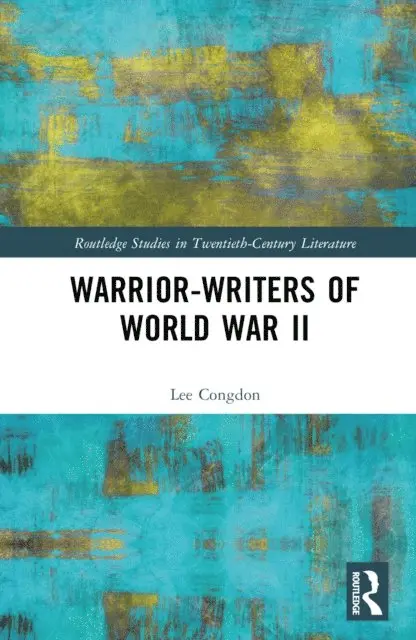
Warrior-Writers of World War II delivers a thorough study of Americans who saw combat in World War II, survived, and returned home to become famous writers. It considers the works of 16 important authors, among them J. D. Salinger, John Ciardi, and James Jones, exploring these men’s war experiences and their reflection in their writings. This includes what they learned about themselves and, even more important, what they can teach the rest of us about war and peace, good and evil, hatred and pity, honor and dishonor, fate and chance—and about the sustaining power of comradeship.This critical overview will be useful to general readers and academics seeking to deepen their understanding of the impact World War II has had on twentieth-century literature.
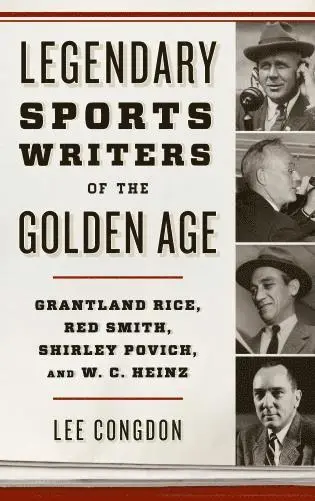
Legendary Sports Writers of the Golden Age
Grantland Rice, Red Smith, Shirley Povich, and W. C. Heinz
Inbunden, Engelska, 2017
518 kr
Skickas inom 10-15 vardagar
During the 1920s—the Golden Age of sports—sports writers gained their own recognition while covering such athletes as Babe Ruth, Bobby Jones, Jack Dempsey, and Red Grange. The top journalists of the era were the primary means by which fans learned about their favorite teams and athletes, and their popularity and importance in the sports world continued for decades. Legendary Sports Writers of the Golden Age: Grantland Rice, Red Smith, Shirley Povich, and W. C. Heinz details the lives and careers of four sports-writing greats and the iconic athletes and events they covered. Although these writers established themselves during the 1920s, their careers extended well into the decades that followed. They reported on Jesse Owens, Joe Louis, Sandy Koufax, Arnold Palmer, and many other stars from the 1920s and beyond. Lee Congdon examines not only the lives and careers of Rice, Smith, Povich, and Heinz, but the distinctive writing style that each of them developed. Taken together, these four writers lifted sports reporting to heights that it is unlikely to reach again. This book brings to life the greatest era in sports history, as seen through the eyes of four legendary sports writers. Sports fans, historians, and those interested in sports journalism will all find this a fascinating and informative look at a time when the sports world was at its peak.
248 kr
Skickas inom 10-15 vardagar
In this examination of Solzhenitsyn and his work, Lee Congdon explores the consequences of the atheistic socialism that drove the Russian revolutionary movement. Beginning with a description of the post-revolutionary Russia into which Solzhenitsyn was born, Congdon addresses the Bolshevik victory in the civil war, the origins of the concentration camp system, the Bolsheviks' war on Christianity and the Russian Orthodox Church, Solzhenitsyn's arrest near the war's end, his time in the labor camps, his struggle with cancer, his exile and increasing alienation from the Western way of life, and his return home. He concludes with a reminder of Solzhenitsyn's warning to the West—that it was on a path parallel to that which Russia had followed into the abyss.
210 kr
Skickas inom 7-10 vardagar
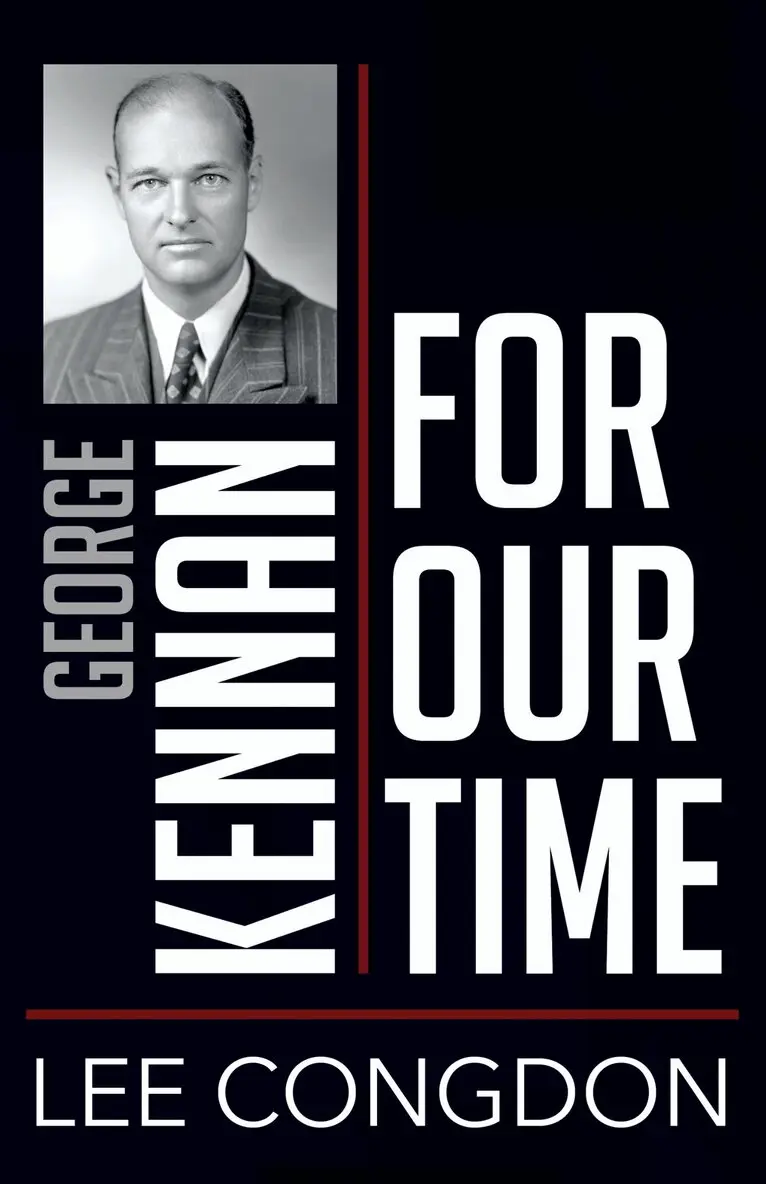
George Kennan for Our Time examines the work and thought of the most distinguished American diplomat of the twentieth century and extracts lessons for today. In his writings and lectures, Kennan outlined the proper conduct of foreign policy and issued warnings to an American society on the edge of the abyss. Lee Congdon identifies the principles Kennan applied to US relations with Russia and Eastern Europe, and to the Far and Near East. He takes particular note of Kennan's role in formulating postwar policy in Japan, measured response to North Korea's invasion of South Korea, and opposition to the war in Vietnam. Congdon also considers Kennan's strong criticisms of his own country, its egalitarianism, unrestricted immigration, and multiple addictions. He cites Kennan's call for a greater closeness to nature, a revival of religious faith, and a return to the representative government established by the Founding Fathers. George Kennan for Our Time describes the often-disastrous results of rejecting Kennan's counsel, and the dangers, international and national, posed by an ongoing failure to draw upon his wisdom. In view of America's foreign policy disasters in Afghanistan, Iraq, and around the world, Kennan's realist approach provides important lessons for our current age.
217 kr
Skickas inom 7-10 vardagar
470 kr
Skickas inom 10-15 vardagar
This book is a study in cultural collegiality and interchange. Over the course of a long life, Thomas Mann established working relationships with some of Hungary's cultural luminaries. On the six occasions that he visited Budapest to give public readings of his work, he met the novelists Dezső Kosztolányi and Sándor Márai. Because they wrote in Hungarian, those distinguished writers were not then widely known outside of Hungary; since then, however, many of their novels have appeared in English and other languages, to critical acclaim. Both Kosztolányi and Márai spoke German fluently and were thus able to engage Mann in serious discussions of the literary art. The Manns were received with pleasure at the Buda villa of József Lukács, a prominent banker whose son György (Georg) was living abroad because of the role he played in the Hungarian Soviet Republic of 1919. The young Lukács wrote primarily, though not exclusively, in German and Mann read and admired his early - and subsequently his later - work. The ensuing literary, epistolary, and personal contacts between the great German writer and the famous Marxist critic and philosopher led Mann to the work of Béla Balázs, the writer and film theorist, and Arnold Hauser, the sociologist of art and literature. It was primarily as a correspondent and a creative writer in need of expert advice that Mann formed a friendship with the learned student of mythology and religion Károly (Karl) Kerényi. From these Hungarians and others, including Arthur Koestler, Aurel Kolnai, Charles de Tolnay, and Béla Bartók, Mann was pleased to acknowledge that he gained insights that contributed immeasurably to his work and self-understanding. At the same time, the Hungarians drew inspiration from their association with one of the greatest writers of the twentieth century. Together with him, they wrote a little-known but fascinating chapter in the cultural history of modern Europe.