Leire Olabarria - Böcker
Visar alla böcker från författaren Leire Olabarria. Handla med fri frakt och snabb leverans.
5 produkter
5 produkter
228 kr
Skickas inom 7-10 vardagar
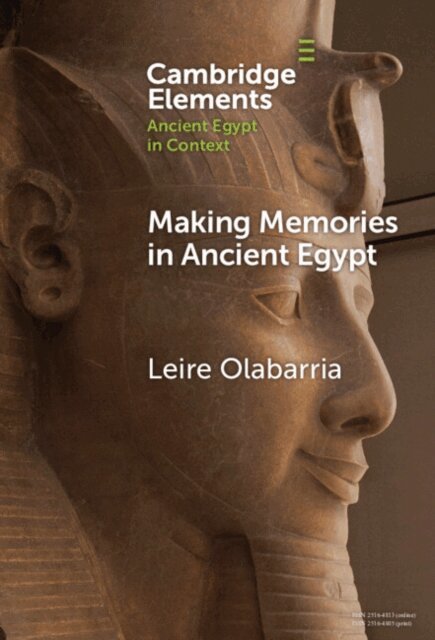
Memory is a fascinating way to approach modern and ancient cultures, as it raises questions about what, why, and how individuals and groups remember. Egyptology has had a major impact on the development of memory studies, with Jan Assmann's notion of cultural memory becoming a widespread model within the humanities. Despite this outstanding contribution of Egyptology to memory studies, remarkably few recent works on ancient Egypt deal with memory from a theoretical and methodological point of view. This Element provides a general introduction to memory, followed by a discussion of the role of materiality and performativity in the process of remembering. A case study from Middle Kingdom Abydos illustrates how memory can be embodied in the monumental record of ancient Egypt. The purpose of this Element is to present an up-to-date introduction to memory studies in Egyptology and to invite the reader to rethink how and why memory matters.
705 kr
Skickas inom 7-10 vardagar
Memory is a fascinating way to approach modern and ancient cultures, as it raises questions about what, why, and how individuals and groups remember. Egyptology has had a major impact on the development of memory studies, with Jan Assmann's notion of cultural memory becoming a widespread model within the humanities. Despite this outstanding contribution of Egyptology to memory studies, remarkably few recent works on ancient Egypt deal with memory from a theoretical and methodological point of view. This Element provides a general introduction to memory, followed by a discussion of the role of materiality and performativity in the process of remembering. A case study from Middle Kingdom Abydos illustrates how memory can be embodied in the monumental record of ancient Egypt. The purpose of this Element is to present an up-to-date introduction to memory studies in Egyptology and to invite the reader to rethink how and why memory matters.
1 404 kr
Skickas inom 7-10 vardagar
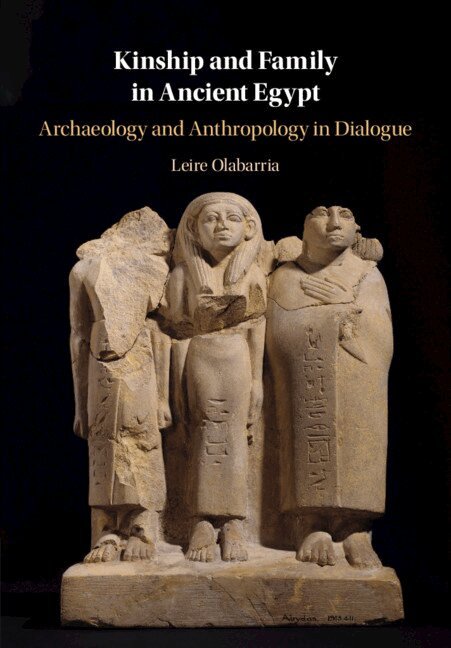
In this interdisciplinary study, Leire Olabarria examines ancient Egyptian society through the notion of kinship. Drawing on methods from archaeology and sociocultural anthropology, she provides an emic characterisation of ancient kinship that relies on performative aspects of social interaction. Olabarria uses memorial stelae of the First Intermediate Period and the Middle Kingdom (ca.2150-1650 BCE) as her primary evidence. Contextualising these monuments within their social and physical landscapes, she proposes a dynamic way to explore kin groups through sources that have been considered static. The volume offers three case studies of kin groups at the beginning, peak, and decline of their developmental cycles respectively. They demonstrate how ancient Egyptian evidence can be used for cross-cultural comparison of key anthropological topics, such as group formation, patronage, and rites of passage.
1 467 kr
Skickas inom 10-15 vardagar
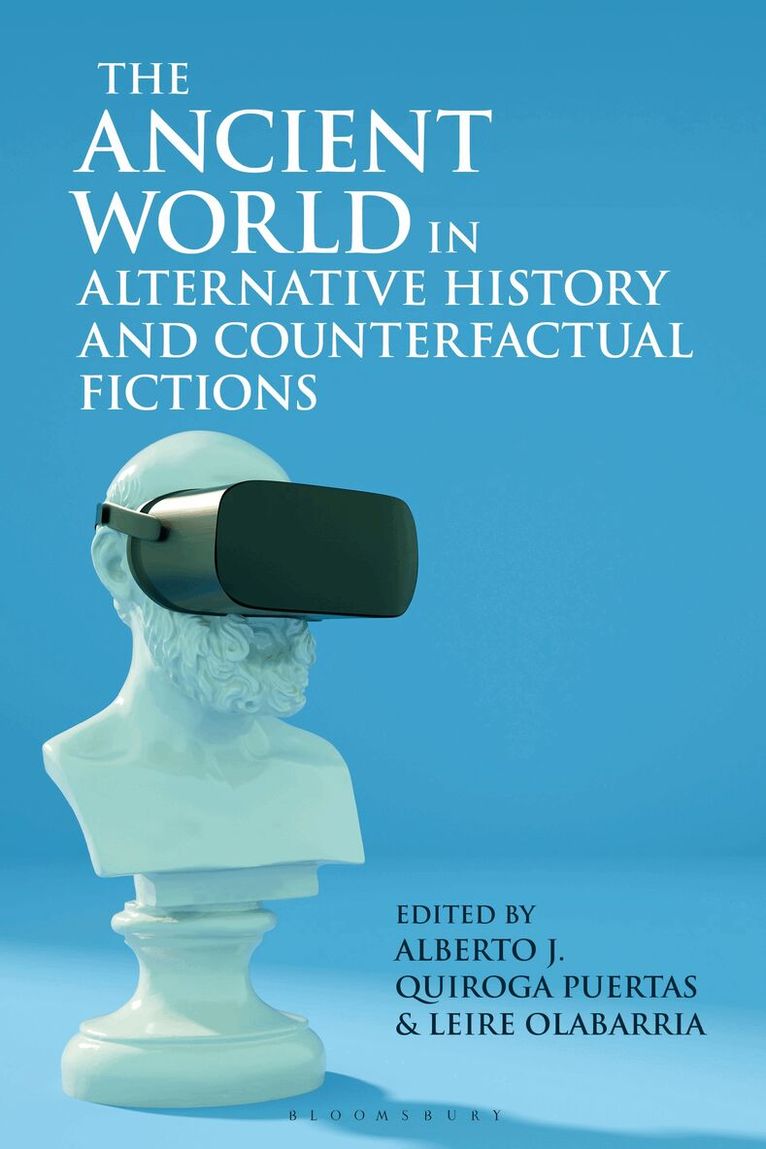
Focusing in turn on history, powerful individuals, under-represented voices and the arts, the essays in this collection cover a wide variety of modern and contemporary narrative fiction from Jo Walton and L. Sprague De Camp to T. S. Chaudhry and Catherynne M. Valente. Chapters look into the question of chance versus determinism in the unfolding of historical events, the role individuals play in shaping a society or occasion, and the way art and literature symbolise important messages in counterfactual histories. They also show how uchronic narratives can take advantage of modern literary techniques to reveal new and relevant aspects of the past, giving voices to marginalised minorities and suppressed individuals of the ancient world.Counterfactual fiction and uchronic narratives have been largely up until now the domain of literary critics. However, these modes of literature are here analysed by scholars of Ancient History, Egyptology and Classics, shedding important new light on how cultures of the ancient world have been (and still are) perceived, and to what extent our conceptions of the past are used to explore alternate presents and futures. Alternate history entices the imagination of the public by suggesting hypothetical scenarios that never occurred, underlining a latent tension between reality and imagination, and between determinism and contingency. This interest has resulted in a growing number of publications that gauge the impact of what-if narratives, and this one is the first to give scholars of the ancient world centre-stage.
453 kr
Skickas inom 10-15 vardagar
Focusing in turn on history, powerful individuals, under-represented voices and the arts, the essays in this collection cover a wide variety of modern and contemporary narrative fiction from Jo Walton and L. Sprague De Camp to T. S. Chaudhry and Catherynne M. Valente. Chapters look into the question of chance versus determinism in the unfolding of historical events, the role individuals play in shaping a society or occasion, and the way art and literature symbolise important messages in counterfactual histories. They also show how uchronic narratives can take advantage of modern literary techniques to reveal new and relevant aspects of the past, giving voices to marginalised minorities and suppressed individuals of the ancient world.Counterfactual fiction and uchronic narratives have been largely up until now the domain of literary critics. However, these modes of literature are here analysed by scholars of Ancient History, Egyptology and Classics, shedding important new light on how cultures of the ancient world have been (and still are) perceived, and to what extent our conceptions of the past are used to explore alternate presents and futures. Alternate history entices the imagination of the public by suggesting hypothetical scenarios that never occurred, underlining a latent tension between reality and imagination, and between determinism and contingency. This interest has resulted in a growing number of publications that gauge the impact of what-if narratives, and this one is the first to give scholars of the ancient world centre-stage.