Leonard F. Koziol - Böcker
Visar alla böcker från författaren Leonard F. Koziol. Handla med fri frakt och snabb leverans.
6 produkter
6 produkter
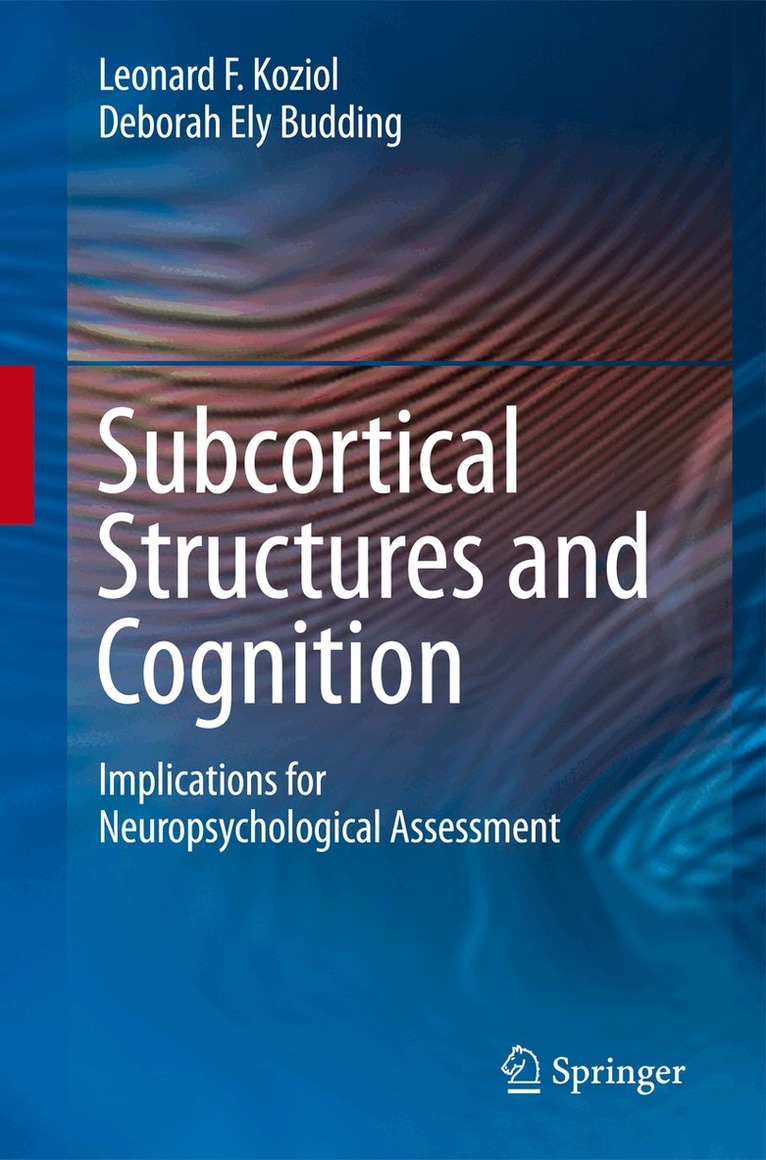
Subcortical Structures and Cognition
Implications for Neuropsychological Assessment
Inbunden, Engelska, 2008
1 744 kr
Skickas inom 10-15 vardagar
Clinical psychologists and neuropsychologists are traditionally taught that cognition is mediated by the cortex and that subcortical brain regions mediate the coordination of movement. However, this argument can easily be challenged based upon the anatomic organization of the brain. The relationship between the prefrontal cortex/frontal lobes and basal ganglia is characterized by loops from these anterior brain regions to the striatum, the globus pallidus, and the thalamus, and then back to the frontal cortex. There is also a cerebrocerebellar system defined by projections from the cerebral cortex to the pontine nuclei, to the cerebellar cortex and deep cerebellar nuclei, to the red nucleus and then back to thalamus and cerebral cortex, including all regions of the frontal lobes. Therefore, both the cortical-striatal and cortical-cerebellar projections are anatomically defined as re-entrant systems that are obviously in a position to influence not only motor behavior, but also cognition and affect. This represents overwhelming evidence based upon neuroanatomy alone that subcortical regions play a role in cognition. The first half of this book defines the functional neuroanatomy of cortical-subcortical circuitries and establishes that since structure is related to function, what the basal ganglia and cerebellum do for movement they also do for cognition and emotion.The second half of the book examines neuropsychological assessment. Patients with lesions restricted to the cerebellum and/or basal ganglia have been described as exhibiting a variety of cognitive deficits on neuropsychological tests. Numerous investigations have demonstrated that higher-level cognitive functions such as attention, executive functioning, language, visuospatial processing, and learning and memory are affected by subcortical pathologies. There is also considerable evidence that the basal ganglia and cerebellum play a critical role in the regulation of affect and emotion. These brain regions are an integral part of the brain’s executive system. The ability to apply new methodologies clinically is essential in the evaluation of disorders with subcortical pathology, including various developmental disorders (broadly defined to include learning disorders and certain psychiatric conditions), for the purpose of gaining greater understanding of these conditions and developing appropriate methodologies for treatment. The book is organized around three sources of evidence:neuroanatomical connections;patients with various disease processes;experimental studies, including various imaging techniques.These three sources of data present compelling evidence that the basal ganglia and cerebellum are involved in cognition, affect, and emotion. The question is no longer if these subcortical regions are involved in these processes, but instead, how they are involved. The book is also organized around two basic concepts: (1) the functional neuroanatomy of the basal ganglia and the cerebellum; and (2) how this relates to behavior and neuropsychological testing.Cognitive neuroscience is entering a new era as we recognize the roles of subcortical structures in the modulation of cognition. The fields of neuropsychology, cognitive psychology, neuropsychiatry, and neurology are all developing in the direction of understanding the roles of subcortical structures in behavior. This book is informative while defining the need and direction for new paradigms and methodologies for neuropsychological assessment.
Subcortical Structures and Cognition
Implications for Neuropsychological Assessment
Häftad, Engelska, 2010
1 744 kr
Skickas inom 10-15 vardagar
Clinical psychologists and neuropsychologists are traditionally taught that cognition is mediated by the cortex and that subcortical brain regions mediate the coordination of movement. However, this argument can easily be challenged based upon the anatomic organization of the brain. The relationship between the prefrontal cortex/frontal lobes and basal ganglia is characterized by loops from these anterior brain regions to the striatum, the globus pallidus, and the thalamus, and then back to the frontal cortex. There is also a cerebrocerebellar system defined by projections from the cerebral cortex to the pontine nuclei, to the cerebellar cortex and deep cerebellar nuclei, to the red nucleus and then back to thalamus and cerebral cortex, including all regions of the frontal lobes. Therefore, both the cortical-striatal and cortical-cerebellar projections are anatomically defined as re-entrant systems that are obviously in a position to influence not only motor behavior, but also cognition and affect. This represents overwhelming evidence based upon neuroanatomy alone that subcortical regions play a role in cognition. The first half of this book defines the functional neuroanatomy of cortical-subcortical circuitries and establishes that since structure is related to function, what the basal ganglia and cerebellum do for movement they also do for cognition and emotion.The second half of the book examines neuropsychological assessment. Patients with lesions restricted to the cerebellum and/or basal ganglia have been described as exhibiting a variety of cognitive deficits on neuropsychological tests. Numerous investigations have demonstrated that higher-level cognitive functions such as attention, executive functioning, language, visuospatial processing, and learning and memory are affected by subcortical pathologies. There is also considerable evidence that the basal ganglia and cerebellum play a critical role in the regulation of affect and emotion. These brain regions are an integral part of the brain’s executive system. The ability to apply new methodologies clinically is essential in the evaluation of disorders with subcortical pathology, including various developmental disorders (broadly defined to include learning disorders and certain psychiatric conditions), for the purpose of gaining greater understanding of these conditions and developing appropriate methodologies for treatment. The book is organized around three sources of evidence:neuroanatomical connections;patients with various disease processes;experimental studies, including various imaging techniques.These three sources of data present compelling evidence that the basal ganglia and cerebellum are involved in cognition, affect, and emotion. The question is no longer if these subcortical regions are involved in these processes, but instead, how they are involved. The book is also organized around two basic concepts: (1) the functional neuroanatomy of the basal ganglia and the cerebellum; and (2) how this relates to behavior and neuropsychological testing.Cognitive neuroscience is entering a new era as we recognize the roles of subcortical structures in the modulation of cognition. The fields of neuropsychology, cognitive psychology, neuropsychiatry, and neurology are all developing in the direction of understanding the roles of subcortical structures in behavior. This book is informative while defining the need and direction for new paradigms and methodologies for neuropsychological assessment.
767 kr
Skickas inom 10-15 vardagar
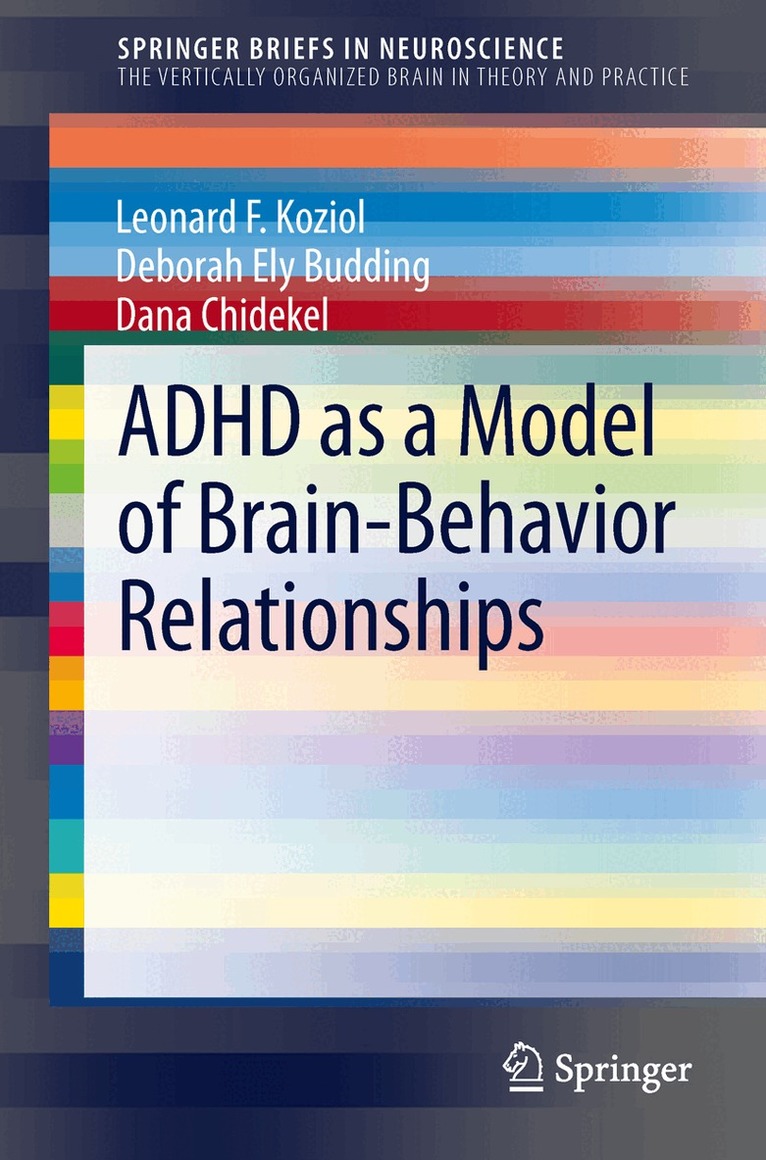
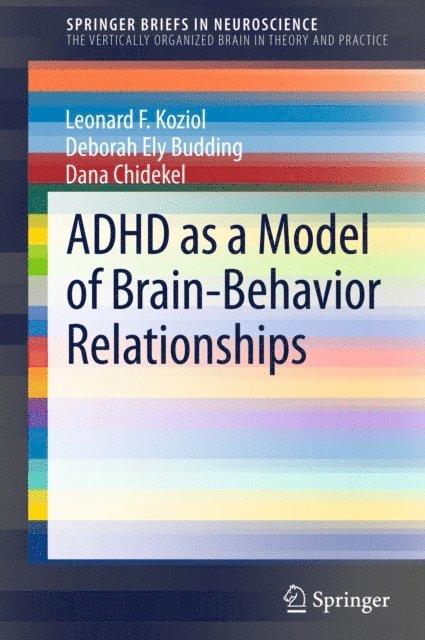
ADHD as a Model of Brain-Behavior RelationshipsLeonard F. Koziol, Deborah Ely Budding, and Dana ChidekelSeries Title: Springer Briefs in NeuroscienceSubseries: The Vertically Organized Brain in Theory and PracticeIt's been a basic neurological given: the brain does our thinking, and has evolved to do the thinking, as controlled by the neocortex. In this schema, all dysfunction can be traced to problems in the brain’s lateral interactions. But in scientific reality, is this really true? Challenging this traditional cortico-centric view is a body of research emphasizing the role of the structures that control movement-the brain's vertical organization-in behavioral symptoms. Using a well-known, widely studied disorder as a test case, ADHD as a Model of Brain-Behavior Relationships offers an innovative framework for integrating neuroscience and behavioral research to refine diagnostic process and advance the understanding of disorders. Identifying a profound disconnect between current neuropsychological testing and the way the brain actually functions, this revision of the paradigm critiques the DSM and ICD in terms of the connectedness of brain structures regarding cognition and behavior. The authors argue for a large-scale brain network approach to pathology instead of the localizing that is so common historically, and for an alternate set of diagnostic criteria proposed by the NIMH. Included in the coverage:The diagnosis of ADHD: history and context.ADHD and neuropsychological nomenclatureResearch Domain Criteria: a dimensional approach to evaluating disorderThe development of motor skills, executive function, and a relation to ADHDThe role of the cerebellum in cognition, emotion, motivation, and dysfunctionHow large-scale brain networks interactHeralding a more accurate future of assessment, diagnosis, and treatment of neurodevelopmentaldisorders, ADHD as a Model of Brain-Behavior Relationships represents a major step forward for neuropsychologists, child psychologists, and psychiatrists, or any related profession interested in a neuroscientific understanding of brain function.
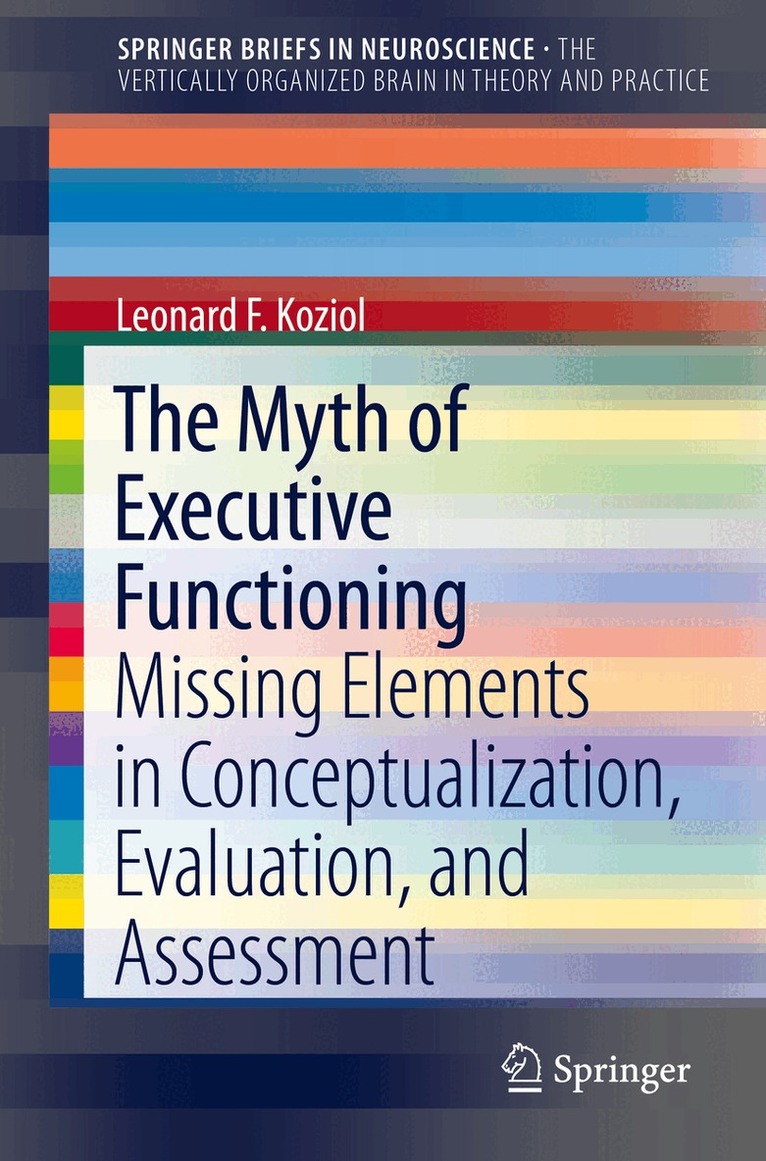
Myth of Executive Functioning
Missing Elements in Conceptualization, Evaluation, and Assessment
Häftad, Engelska, 2014
767 kr
Skickas inom 10-15 vardagar
This book calls basic assumptions, prominent theories, commonly used test methods and even the phrase executive functioning into question. It places new emphasis on stimulus processing and on the relationship between movement and thought.
Large-Scale Brain Systems and Neuropsychological Testing
An Effort to Move Forward
Inbunden, Engelska, 2016
875 kr
Skickas inom 10-15 vardagar
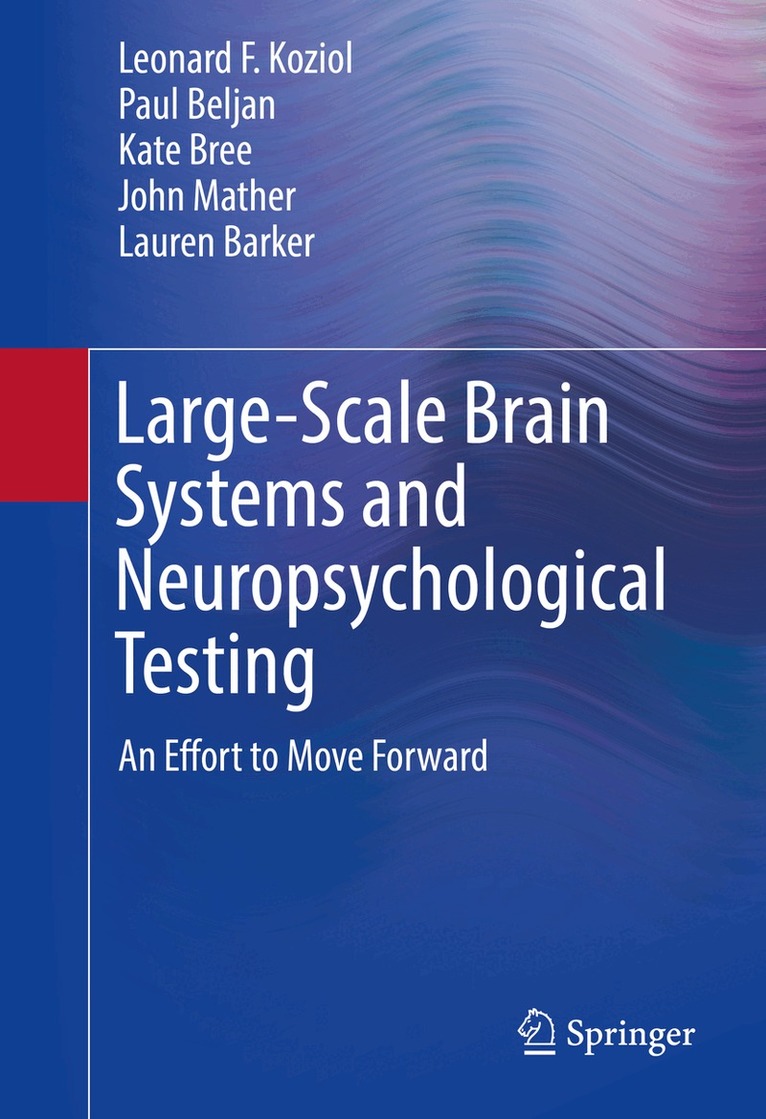
This leading-edge volume offers a new framework for neuropsychological testing rooted in the current evidence base on large-scale brain system interactions. Expert coverage brings traditional discrete areas of cognitive functioning (e.g., attention, memory) in line with highly nuanced relationships between cortical and subcortical processing. The new findings point to more accurate and targeted testing, as authors expand on the judicious addition of nonstandardized methods to core diagnostic tools and the underused capacity of neuropsychological testing to assess social behavior and personality. The book’s emphasis on cognition in context gives practitioners better understanding of assessment and evaluation, leading to improved diagnosis, treatment, and outcomes for individuals as well as significant improvements in the field. This innovative reference: Reframes cognitive functioning in light of current data on brain interconnectivity.Critiques current methods of neuropsychological test interpretation.Reviews known, useful interpretive methodologies within a new context.Features instructive case examples emphasizing accurate historical and test data.Revisits the strengths and limitations of the bell curve construct.Examines the interpretive significance of pathognomonic signs.Details strategies for making neuropsychological evaluations more clinically relevant. Large-Scale Brain Systems and Neuropsychological Testing combines current findings, clinical sense, and common sense to ground neuropsychologists, school psychologists, child psychologists, and clinical social workers in the effective assessment of real-world functioning.
Large-Scale Brain Systems and Neuropsychological Testing
An Effort to Move Forward
Häftad, Engelska, 2018
626 kr
Skickas inom 10-15 vardagar
This leading-edge volume offers a new framework for neuropsychological testing rooted in the current evidence base on large-scale brain system interactions. Expert coverage brings traditional discrete areas of cognitive functioning (e.g., attention, memory) in line with highly nuanced relationships between cortical and subcortical processing. The new findings point to more accurate and targeted testing, as authors expand on the judicious addition of nonstandardized methods to core diagnostic tools and the underused capacity of neuropsychological testing to assess social behavior and personality. The book’s emphasis on cognition in context gives practitioners better understanding of assessment and evaluation, leading to improved diagnosis, treatment, and outcomes for individuals as well as significant improvements in the field. This innovative reference: Reframes cognitive functioning in light of current data on brain interconnectivity.Critiques current methods of neuropsychological test interpretation.Reviews known, useful interpretive methodologies within a new context.Features instructive case examples emphasizing accurate historical and test data.Revisits the strengths and limitations of the bell curve construct.Examines the interpretive significance of pathognomonic signs.Details strategies for making neuropsychological evaluations more clinically relevant. Large-Scale Brain Systems and Neuropsychological Testing combines current findings, clinical sense, and common sense to ground neuropsychologists, school psychologists, child psychologists, and clinical social workers in the effective assessment of real-world functioning.