Leonidas Donskis - Böcker
Visar alla böcker från författaren Leonidas Donskis. Handla med fri frakt och snabb leverans.
9 produkter
9 produkter
664 kr
Skickas inom 7-10 vardagar
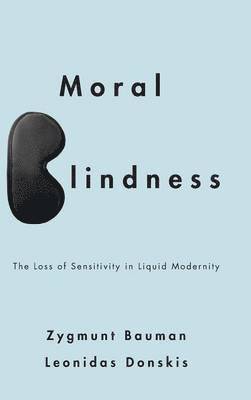
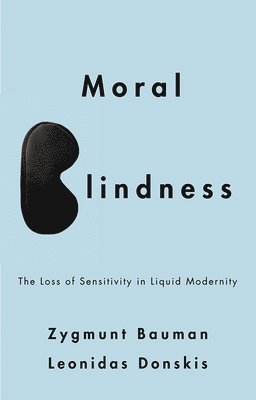
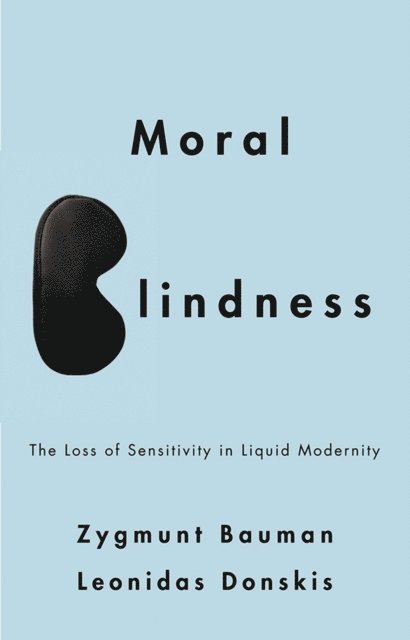
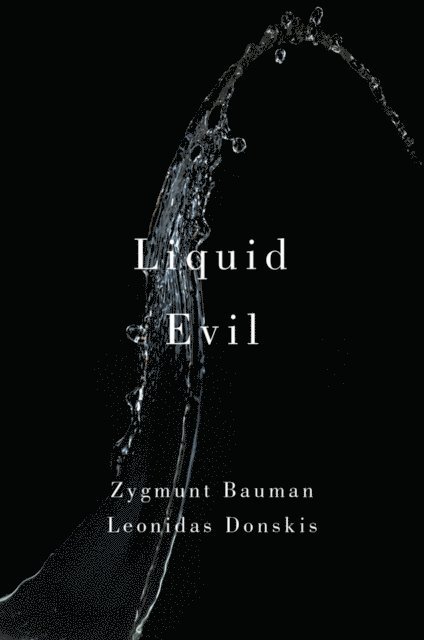
Evil is not confined to war or to circumstances in which people are acting under extreme duress. Today it more frequently reveals itself in the everyday insensitivity to the suffering of others, in the inability or refusal to understand them and in the casual turning away of one’s ethical gaze. Evil and moral blindness lurk in what we take as normality and in the triviality and banality of everyday life, and not just in the abnormal and exceptional cases.The distinctive kind of moral blindness that characterizes our societies is brilliantly analysed by Zygmunt Bauman and Leonidas Donskis through the concept of adiaphora: the placing of certain acts or categories of human beings outside of the universe of moral obligations and evaluations. Adiaphora implies an attitude of indifference to what is happening in the world – a moral numbness. In a life where rhythms are dictated by ratings wars and box-office returns, where people are preoccupied with the latest gadgets and forms of gossip, in our ‘hurried life’ where attention rarely has time to settle on any issue of importance, we are at serious risk of losing our sensitivity to the plight of the other. Only celebrities or media stars can expect to be noticed in a society stuffed with sensational, valueless information.This probing inquiry into the fate of our moral sensibilities will be of great interest to anyone concerned with the most profound changes that are silently shaping the lives of everyone in our contemporary liquid-modern world.
230 kr
Skickas inom 7-10 vardagar
Evil is not confined to war or to circumstances in which people are acting under extreme duress. Today it more frequently reveals itself in the everyday insensitivity to the suffering of others, in the inability or refusal to understand them and in the casual turning away of one’s ethical gaze. Evil and moral blindness lurk in what we take as normality and in the triviality and banality of everyday life, and not just in the abnormal and exceptional cases.The distinctive kind of moral blindness that characterizes our societies is brilliantly analysed by Zygmunt Bauman and Leonidas Donskis through the concept of adiaphora: the placing of certain acts or categories of human beings outside of the universe of moral obligations and evaluations. Adiaphora implies an attitude of indifference to what is happening in the world – a moral numbness. In a life where rhythms are dictated by ratings wars and box-office returns, where people are preoccupied with the latest gadgets and forms of gossip, in our ‘hurried life’ where attention rarely has time to settle on any issue of importance, we are at serious risk of losing our sensitivity to the plight of the other. Only celebrities or media stars can expect to be noticed in a society stuffed with sensational, valueless information.This probing inquiry into the fate of our moral sensibilities will be of great interest to anyone concerned with the most profound changes that are silently shaping the lives of everyone in our contemporary liquid-modern world.
Del 39 - New Studies in Aesthetics
Power and Imagination
Studies in Politics and Literature
Inbunden, Engelska, 2008
704 kr
Skickas inom 5-8 vardagar
Classical and modern literature often reveal more about the organized world’s forms of power and authority structures than do works of political philosophy. What are the origins of political consciousness? How does our understanding of political power and its exercise originate in literature? Why do the early manifestations of political and religious tolerance appear in utopian literature, rather than in philosophical treatises? Is it possible to do fictionally what others tend to do academically and theoretically? Exploring these questions allows Leonidas Donskis to analyze the relationship between power and imagination, politics and literature, and the principles of reality and imagination.
640 kr
Skickas inom 7-10 vardagar
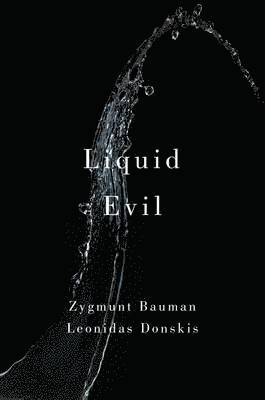
There is nothing new about evil; it has been with us since time immemorial. But there is something new about the kind of evil that characterizes our contemporary liquid-modern world. The evil that characterized earlier forms of solid modernity was concentrated in the hands of states claiming monopolies on the means of coercion and using the means at their disposal to pursue their ends ends that were at times horrifically brutal and barbaric. In our contemporary liquid-modern societies, by contrast, evil has become altogether more pervasive and at the same time less visible. Liquid evil hides in the seams of the canvass woven daily by the liquid-modern mode of human interaction and commerce, conceals itself in the very tissue of human cohabitation and in the course of its routine and day-to-day reproduction. Evil lurks in the countless black holes of a thoroughly deregulated and privatized social space in which cutthroat competition and mutual estrangement have replaced cooperation and solidarity, while forceful individualization erodes the adhesive power of inter-human bonds. In its present form evil is hard to spot, unmask and resist. It seduces us by its ordinariness and then jumps out without warning, striking seemingly at random. The result is a social world that is comparable to a minefield: we know it is full of explosives and that explosions will happen sooner or later but we have no idea when and where they will occur.In this new book, the sequel to their acclaimed work Moral Blindness Zygmunt Bauman and Leonidas Donskis guide the reader through this new terrain in which evil has become both more ordinary and more insidious, threatening to strip humanity of its dreams, alternative projects and powers of dissent at the very time when they are needed most.
217 kr
Skickas inom 7-10 vardagar
There is nothing new about evil; it has been with us since time immemorial. But there is something new about the kind of evil that characterizes our contemporary liquid-modern world. The evil that characterized earlier forms of solid modernity was concentrated in the hands of states claiming monopolies on the means of coercion and using the means at their disposal to pursue their ends ends that were at times horrifically brutal and barbaric. In our contemporary liquid-modern societies, by contrast, evil has become altogether more pervasive and at the same time less visible. Liquid evil hides in the seams of the canvass woven daily by the liquid-modern mode of human interaction and commerce, conceals itself in the very tissue of human cohabitation and in the course of its routine and day-to-day reproduction. Evil lurks in the countless black holes of a thoroughly deregulated and privatized social space in which cutthroat competition and mutual estrangement have replaced cooperation and solidarity, while forceful individualization erodes the adhesive power of inter-human bonds. In its present form evil is hard to spot, unmask and resist. It seduces us by its ordinariness and then jumps out without warning, striking seemingly at random. The result is a social world that is comparable to a minefield: we know it is full of explosives and that explosions will happen sooner or later but we have no idea when and where they will occur.In this new book, the sequel to their acclaimed work Moral Blindness Zygmunt Bauman and Leonidas Donskis guide the reader through this new terrain in which evil has become both more ordinary and more insidious, threatening to strip humanity of its dreams, alternative projects and powers of dissent at the very time when they are needed most.
Freiheit und Zugehörigkeit
Europäischer Kanon, kulturelle Identität und postmoderne Krise
Inbunden, Tyska, 2014
797 kr
Skickas inom 10-15 vardagar
Das Buch befasst sich mit der oft beschworenen Krise der Moderne. Es ist der polemische Text eines mitteleuropäischen Philosophen, Ideenhistorikers und Publizisten, der die gegenwärtigen Fragen zur kulturellen und politischen Identität nicht nur für Ost- und Mitteleuropa stellt: Was bedeutet uns Freiheit?
Del 226 - Philosophy, Literature, and Politics
Niccolò Machiavelli
History, Power, and Virtue
Häftad, Engelska, 2011
625 kr
Skickas inom 5-8 vardagar
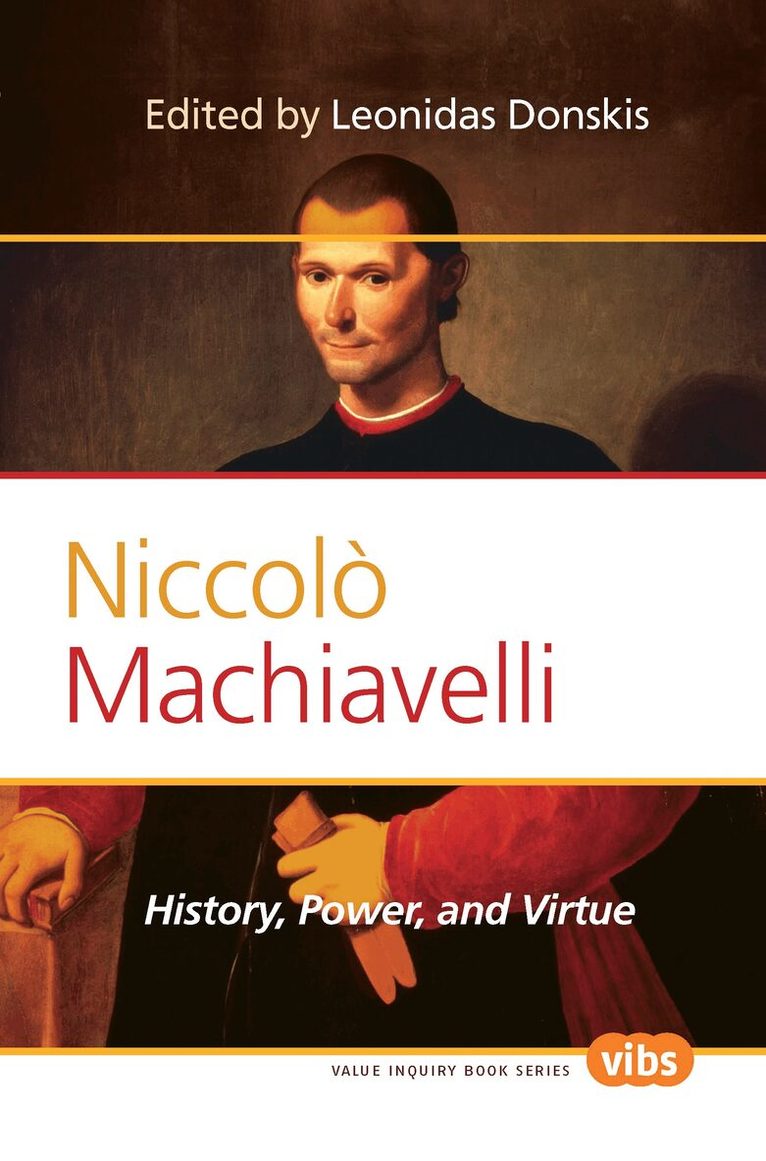
This volume is an attempt to rethink Niccolò Machiavelli, one of the most challenging political thinkers in the history of European political thought. In 2013, we will mark 500 years since Machiavelli wrote his puzzling letter to Lorenzo de’ Medici, Il Principe. This book is an endeavor to cover some of the most complex aspects of Machiavelli’s life and work.
Del 242 - Philosophy, Literature, and Politics
Politics Otherwise
Shakespeare as Social and Political Critique
Häftad, Engelska, 2012
1 019 kr
Skickas inom 5-8 vardagar
The book is comprised of essays that utilize Shakespeare as a productive window into topics of contemporary social and political relevance. Its interdisciplinary qualities make the book relevant for students of political studies, literature, philosophy, cultural studies, and history.
Del 252 - Philosophy, Literature, and Politics
Yet Another Europe after 1984
Rethinking Milan Kundera and the Idea of Central Europe
Häftad, Engelska, 2012
1 304 kr
Skickas inom 5-8 vardagar
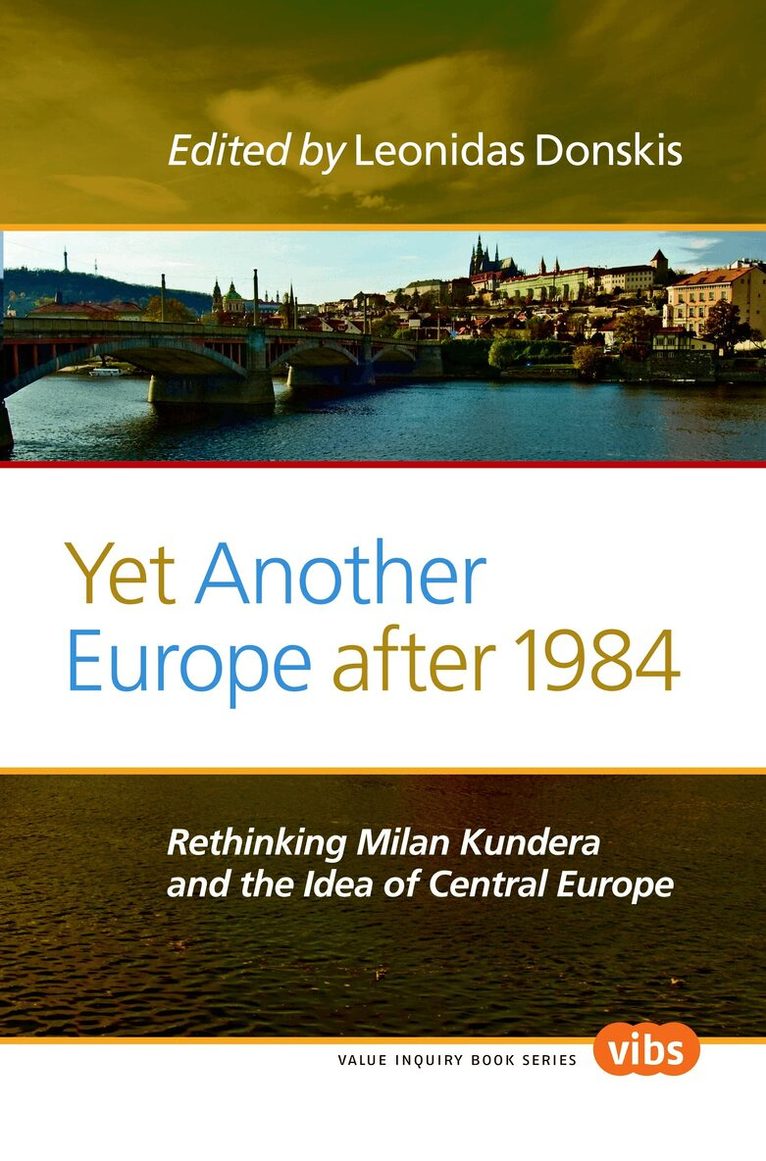
Much of the debates in this book revolves around Milan Kundera and his 1984 essay “The Tragedy of Central Europe.” Kundera wrote his polemical text when the world was pregnant with imminent social and political change, yet that world was still far from realizing that we would enter the last decade of the twentieth century with the Soviet empire and its network of satellite states missing from the political map. Kundera was challenged by Joseph Brodsky and György Konrád for allegedly excluding Russia from the symbolic space of Europe, something the great author deeply believes he never did. To what extent was Kundera right in assuming that, if to exist means to be present in the eyes of those we love, then Central Europe does not exist anymore, just as Western Europe as we knew it has stopped existing? What were the mental, cultural, and intellectual realities that lay beneath or behind his beautiful and graceful metaphors? Are we justified in rehabilitating political optimism at the beginning of the twenty-first century? Are we able to reconcile the divided memories of Eastern or Central Europe and Western Europe regarding what happened to the world in 1968? And where is Central Europe now?