Leonie Holthaus – författare
Visar alla böcker från författaren Leonie Holthaus. Handla med fri frakt och snabb leverans.
9 produkter
9 produkter
Inbunden, Engelska, 2020
1 227 kr
Skickas inom 5-8 vardagar
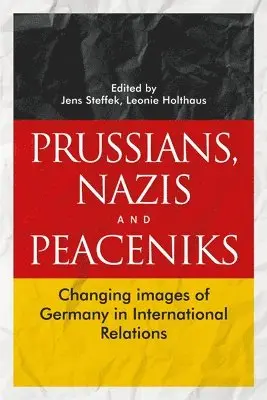
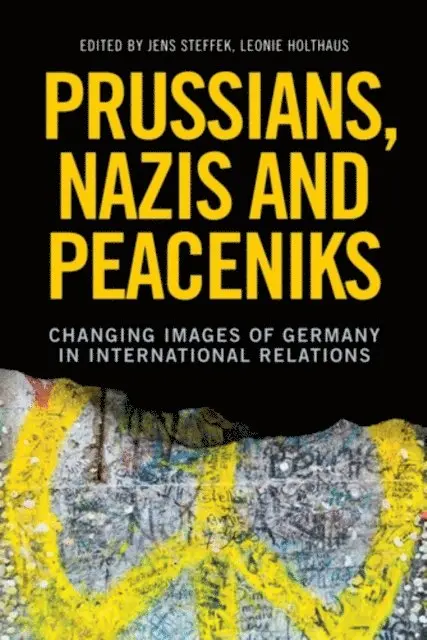
Germany looms large in international politics, far larger than its size and population would suggest. From images of Prussian militarism, to the Holocaust, the Nuremberg trials, and the fall of the Berlin Wall, changing perceptions of Germany in the twentieth century not only determined how Germans were seen and treated, but they influenced the concepts that scholars and practitioners used to theorise international relations in the English-speaking world. Today, ‘civil power’ Germany, an economic giant but a military dwarf, is seen as a puzzling aberration from normal state behaviour.Situated at the intersection of International Relations and international history, Prussians, Nazis and Peaceniks examines external perceptions of Germany and their implications for international theory. At crucial moments in the development of these disciplines, scholars cited Germany in debates on the nature and mechanisms of international politics: liberal internationalists contrasted cooperative foreign policies with an inherently aggressive ‘Prussianism,’ early realists looked to German revisionism and its fight against the Treaty of Versailles, and in the United States, German émigré scholars translated historical experiences into social-scientific vocabularies.The changing images of Germany in debates in International Relations demonstrate that it is not just the nation-state we often perceive it to be. Rather, Germany continues to be a contestable concept: a political construct that is both contingent and in constant flux.
E-bok
PDF, Engelska, 20201 177 kr
Läs direkt efter köp
Germany looms large in international politics, far larger than its size and population would suggest. From images of Prussian militarism, to the Holocaust, the Nuremberg trials, and the fall of the Berlin Wall, changing perceptions of Germany in the twentieth century not only determined how Germans were seen and treated, but they influenced the concepts that scholars and practitioners used to theorise international relations in the English-speaking world. Today, ‘civil power’ Germany, an economic giant but a military dwarf, is seen as a puzzling aberration from normal state behaviour.Situated at the intersection of International Relations and international history, Prussians, Nazis and Peaceniks examines external perceptions of Germany and their implications for international theory. At crucial moments in the development of these disciplines, scholars cited Germany in debates on the nature and mechanisms of international politics: liberal internationalists contrasted cooperative foreign policies with an inherently aggressive ‘Prussianism,’ early realists looked to German revisionism and its fight against the Treaty of Versailles, and in the United States, German émigré scholars translated historical experiences into social-scientific vocabularies.The changing images of Germany in debates in International Relations demonstrate that it is not just the nation-state we often perceive it to be. Rather, Germany continues to be a contestable concept: a political construct that is both contingent and in constant flux.
E-bok
Engelska, 20201 177 kr
Läs direkt efter köp
Germany looms large in international politics, far larger than its size and population would suggest. From images of Prussian militarism, to the Holocaust, the Nuremberg trials, and the fall of the Berlin Wall, changing perceptions of Germany in the twentieth century not only determined how Germans were seen and treated, but they influenced the concepts that scholars and practitioners used to theorise international relations in the English-speaking world. Today, ‘civil power’ Germany, an economic giant but a military dwarf, is seen as a puzzling aberration from normal state behaviour.Situated at the intersection of International Relations and international history, Prussians, Nazis and Peaceniks examines external perceptions of Germany and their implications for international theory. At crucial moments in the development of these disciplines, scholars cited Germany in debates on the nature and mechanisms of international politics: liberal internationalists contrasted cooperative foreign policies with an inherently aggressive ‘Prussianism,’ early realists looked to German revisionism and its fight against the Treaty of Versailles, and in the United States, German émigré scholars translated historical experiences into social-scientific vocabularies.The changing images of Germany in debates in International Relations demonstrate that it is not just the nation-state we often perceive it to be. Rather, Germany continues to be a contestable concept: a political construct that is both contingent and in constant flux.
Häftad, Engelska, 2026
364 kr
Skickas
Germany looms large in international politics, far larger than its size and population would suggest. From images of Prussian militarism, to the Holocaust, the Nuremberg trials, and the fall of the Berlin Wall, changing perceptions of Germany in the twentieth century not only determined how Germans were seen and treated, but they influenced the concepts that scholars and practitioners used to theorise international relations in the English-speaking world. Today, ‘civil power’ Germany, an economic giant but a military dwarf, is seen as a puzzling aberration from normal state behaviour.Situated at the intersection of International Relations and international history, Prussians, Nazis and Peaceniks examines external perceptions of Germany and their implications for international theory. At crucial moments in the development of these disciplines, scholars cited Germany in debates on the nature and mechanisms of international politics: liberal internationalists contrasted cooperative foreign policies with an inherently aggressive ‘Prussianism,’ early realists looked to German revisionism and its fight against the Treaty of Versailles, and in the United States, German émigré scholars translated historical experiences into social-scientific vocabularies.The changing images of Germany in debates in International Relations demonstrate that it is not just the nation-state we often perceive it to be. Rather, Germany continues to be a contestable concept: a political construct that is both contingent and in constant flux.
Häftad, Engelska, 2018
1 246 kr
Skickas inom 10-15 vardagar
This book demonstrates the importance of democracy for understanding modern international relations and recovers the pluralist tradition of L.T. Hobhouse, G.D.H. Cole, and David Mitrany. It shows that pluralism’s typical interest in civil society, trade unionism, and transnationalism evolved as part of a wide-ranging democratic critique that representative democracies are hardly self-sustaining and are ill-equipped to represent all entitled social and political interests in international relations. Pluralist democratic peace theory advocates transnational loyalties to check nationalist sentiments and demands the functional representation of social and economic interests in international organizations. On the basis of the pluralist tradition, the book shows that theories about domestic democracy and international organizations co-evolved before scientific liberal democratic peace theory introduced new inside/outside distinctions.
Inbunden, Engelska, 2018
1 246 kr
Skickas inom 10-15 vardagar
This book demonstrates the importance of democracy for understanding modern international relations and recovers the pluralist tradition of L.T. Hobhouse, G.D.H. Cole, and David Mitrany. It shows that pluralism’s typical interest in civil society, trade unionism, and transnationalism evolved as part of a wide-ranging democratic critique that representative democracies are hardly self-sustaining and are ill-equipped to represent all entitled social and political interests in international relations. Pluralist democratic peace theory advocates transnational loyalties to check nationalist sentiments and demands the functional representation of social and economic interests in international organizations. On the basis of the pluralist tradition, the book shows that theories about domestic democracy and international organizations co-evolved before scientific liberal democratic peace theory introduced new inside/outside distinctions.
E-bok
Engelska, 20181 575 kr
Läs direkt efter köp
This book demonstrates the importance of democracy for understanding modern international relations and recovers the pluralist tradition of L.T. Hobhouse, G.D.H. Cole, and David Mitrany. It shows that pluralism’s typical interest in civil society, trade unionism, and transnationalism evolved as part of a wide-ranging democratic critique that representative democracies are hardly self-sustaining and are ill-equipped to represent all entitled social and political interests in international relations. Pluralist democratic peace theory advocates transnational loyalties to check nationalist sentiments and demands the functional representation of social and economic interests in international organizations. On the basis of the pluralist tradition, the book shows that theories about domestic democracy and international organizations co-evolved before scientific liberal democratic peace theory introduced new inside/outside distinctions.
E-bok
PDF, Tyska, 2019215 kr
Läs direkt efter köp
Die empirische Bestandaufnahme der Menschenrechtslage ist ein methodisch anspruchsvolles Unterfangen von großer politischer Bedeutung. Die Fragen, wie es um die Menschenrechte in einem Land bestellt ist und inwiefern die jeweiligen Staaten die Menschenrechte umsetzen oder aber verletzen, bilden für gewöhnlich den Ausgangspunkt staatlicher wie nichtstaatlicher Bemühungen, die Menschenrechte besser zu schützen.Zugleich ist die methodisch reflektierte Erfassung der Menschenrechtslage auch sozialwissenschaftlich bedeutsam. Erst so lassen sich im zeitversetzten (diachronen) oder zeitgleichen (synchronen) Ländervergleich Entwicklungen und Unterschiede aufzeigen, die es zu erklären gilt. Warum hat sich beispielsweise die Menschenrechtslage in einem Land über die Zeit verbessert oder aber verschlechtert? Weshalb weisen einige Staaten ein besseres oder schlechteres Menschenrechtsprofil als andere Staaten auf? Gibt es Situationen, in denen die Menschenrechte besonders gefährdet sind, und gesellschaftliche Gruppen, die von Menschenrechtsverletzungen besonders betroffen sind? Solche Fragen lassen sich nicht beantworten, ohne die Menschenrechtslage empirisch zu erfassen.Es geht in diesem Heft also um quantitative Angaben zu Menschenrechten. Die jeweiligen Autorinnen und Autoren setzen sich mit menschenrechtsbezogenen oder -relevanten Daten, Indikatoren und Indizes auseinander, die für ihre Arbeitsbereiche wichtig sind. Dabei werden auch Probleme quantitativer Messungen von Menschenrechten benannt und deren Aussagekraft und Verwendung hinterfragt. So hoffen wir, der Debatte über "Menschenrechte in Zahlen" den einen oder anderen Impuls zu geben.
Del 586 - Europaeische Hochschulschriften / European University Studie
Regimelegitimitaet Und Regionale Kooperation Im Golf-Kooperationsrat (Gulf Cooperation Council)
Häftad, Tyska, 2010
240 kr
Tillfälligt slut