Lila Corwin Berman - Böcker
Visar alla böcker från författaren Lila Corwin Berman. Handla med fri frakt och snabb leverans.
5 produkter
5 produkter
315 kr
Skickas inom 7-10 vardagar
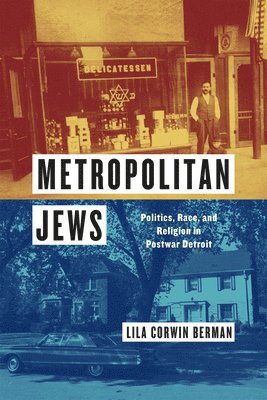
In this provocative and accessible urban history, Lila Corwin Berman considers the role that Detroit's Jews played in the city's well-known narrative of migration and decline. Taking its cue from social critics and historians who have long looked toward Detroit to understand twentieth-century urban transformations, Metropolitan Jews tells the story of Jews leaving the city while retaining a deep connection to it. Berman argues convincingly that though most Jews moved to the suburbs, urban abandonment, disinvestment, and an embrace of conservatism did not invariably accompany their moves. Instead, the Jewish postwar migration was marked by an enduring commitment to a newly fashioned urbanism with a vision of self, community, and society that persisted well beyond city limits. Complex and subtle, Metropolitan Jews pushes urban scholarship beyond the tenacious black/white, urban/suburban dichotomy. It demands a more nuanced understanding of the process and politics of suburbanization and will reframe how we think about the American urban experiment and modern Jewish history.
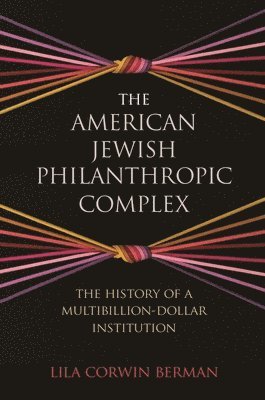
American Jewish Philanthropic Complex
The History of a Multibillion-Dollar Institution
Inbunden, Engelska, 2020
385 kr
Skickas inom 7-10 vardagar
The first comprehensive history of American Jewish philanthropy and its influence on democracy and capitalismFor years, American Jewish philanthropy has been celebrated as the proudest product of Jewish endeavors in the United States, its virtues extending from the local to the global, the Jewish to the non-Jewish, and modest donations to vast endowments. Yet, as Lila Corwin Berman illuminates in The American Jewish Philanthropic Complex, the history of American Jewish philanthropy reveals the far more complicated reality of changing and uneasy relationships among philanthropy, democracy, and capitalism.With a fresh eye and lucid prose, and relying on previously untapped sources, Berman shows that from its nineteenth-century roots to its apex in the late twentieth century, the American Jewish philanthropic complex tied Jewish institutions to the American state. The government’s regulatory efforts—most importantly, tax policies—situated philanthropy at the core of its experiments to maintain the public good without trammeling on the private freedoms of individuals. Jewish philanthropic institutions and leaders gained financial strength, political influence, and state protections within this framework. However, over time, the vast inequalities in resource distribution that marked American state policy became inseparable from philanthropic practice. By the turn of the millennium, Jewish philanthropic institutions reflected the state’s growing investment in capitalism against democratic interests. But well before that, Jewish philanthropy had already entered into a tight relationship with the governing forces of American life, reinforcing and even transforming the nation’s laws and policies.The American Jewish Philanthropic Complex uncovers how capitalism and private interests came to command authority over the public good, in Jewish life and beyond.
American Jewish Philanthropic Complex
The History of a Multibillion-Dollar Institution
Häftad, Engelska, 2022
298 kr
Skickas inom 7-10 vardagar
The first comprehensive history of American Jewish philanthropy and its influence on democracy and capitalismFor years, American Jewish philanthropy has been celebrated as the proudest product of Jewish endeavors in the United States, its virtues extending from the local to the global, the Jewish to the non-Jewish, and modest donations to vast endowments. Yet, as Lila Corwin Berman illuminates in The American Jewish Philanthropic Complex, the history of American Jewish philanthropy reveals the far more complicated reality of changing and uneasy relationships among philanthropy, democracy, and capitalism.With a fresh eye and lucid prose, and relying on previously untapped sources, Berman shows that from its nineteenth-century roots to its apex in the late twentieth century, the American Jewish philanthropic complex tied Jewish institutions to the American state. The government’s regulatory efforts—most importantly, tax policies—situated philanthropy at the core of its experiments to maintain the public good without trammeling on the private freedoms of individuals. Jewish philanthropic institutions and leaders gained financial strength, political influence, and state protections within this framework. However, over time, the vast inequalities in resource distribution that marked American state policy became inseparable from philanthropic practice. By the turn of the millennium, Jewish philanthropic institutions reflected the state’s growing investment in capitalism against democratic interests. But well before that, Jewish philanthropy had already entered into a tight relationship with the governing forces of American life, reinforcing and even transforming the nation’s laws and policies.The American Jewish Philanthropic Complex uncovers how capitalism and private interests came to command authority over the public good, in Jewish life and beyond.
349 kr
Kommande
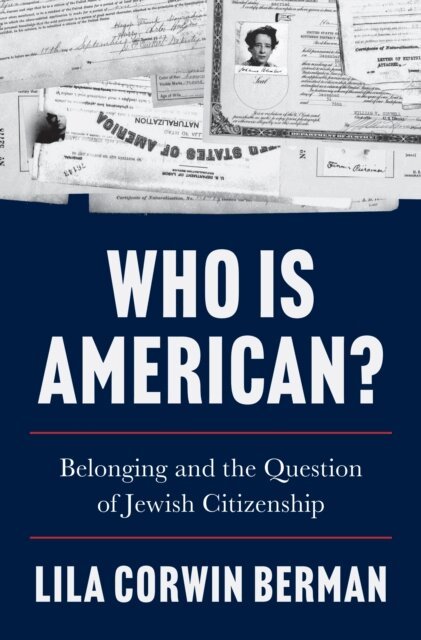
A groundbreaking history of how modern American citizenship has worked—and not worked—for Jews in the United StatesThe history of Jews in the United States is often told as if they immigrated, gained citizenship, and almost immediately achieved full legal rights. Yet this story fundamentally misses how citizenship rights worked for Jews and countless others who arrived on American shores. In Who Is American? Lila Corwin Berman draws on case law, statutes, and debates to argue that both the laws of American citizenship and Jews’ position in them changed repeatedly across the twentieth century. Courts, policymakers, and the public persistently asked what it meant to be Jewish under the law. Were Jews a race, a nationality, a religion—or some combination of each? The answer carried profound legal consequences. Not only did it determine Jews’ citizenship status, but it also affected the rights they could exercise. Just as significantly, the meaning of the categories under law changed over time, affecting Jews’ self-understanding, their political ideals, and their relationships to other groups of Americans.Who Is American? tells a history that resonates powerfully with today’s high-stakes battles over citizenship and rights. As Berman concludes, citizenship law has always been better at posing questions about the terms of belonging than at providing any ultimate resolution. The tangled story of Jewish citizenship demonstrates the limits of law and explains why the United States continues to fall into new and, often, unsettling debates about who is American.
666 kr
Skickas inom 10-15 vardagar
Leading scholars of American Jewish experience offer bold historical interpretations that reimagine American Jewish studiesThe Future of American Jewish Pasts boldly imagines the next chapters in the study of American Jewish life. Conceived during the COVID-19 pandemic and completed just before the October 7, 2023, Hamas attack on Israel and ensuing war, this innovative volume gathers leading scholars of American Jewish experience to ask what the future of the study of the American Jewish past holds.The contributors reconceive traditional approaches to American Jewish life and delve into underexplored topics to present a vision of a rich future for the field of American Jewish studies. Essays on antisemitism, Zionism, liberalism, immigration, feminism, family histories, and more stake out new sources, methods, and interpretations of histories and historiographies. To understand American Jewish life in its complexity and richness, these essays engage multiple disciplines, including history, ethnography, and literary studies. Many showcase comparative or theoretical approaches that illuminate new dimensions of American Jewish studies, and others offer personal reflections to reveal how scholars' own life stories intersect with the questions that animate their scholarship. For students, scholars, and the general public, this interdisciplinary volume provides a tantalizing selection of the freshest approaches to understanding American Jewish life.Contributors: Lila Corwin Berman, Tobias Brinkmann, Ayelet Brinn, Alanna E. Cooper, Jessica Cooperman, Deborah Dash Moore, Hasia R. Diner, Kathryn Hellerstein, Markus Krah, Heather S. Nathans, Noam Pianko, Lana Dee Povitz, Riv-Ellen Prell, Kate Rosenblatt, Laurence Roth, Britt Tevis, JT Waldman, Amy Weiss, Beth S. Wenger.