Lindsay Judson - Böcker
Visar alla böcker från författaren Lindsay Judson. Handla med fri frakt och snabb leverans.
5 produkter
5 produkter
758 kr
Skickas inom 5-8 vardagar
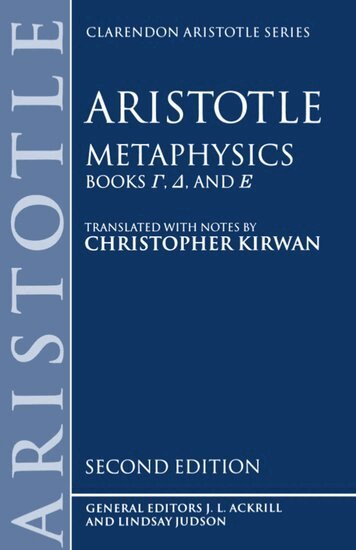
The books translated in this volume are fourth, fifth, and sixth in the traditional ordering of Aristotle's Metaphysics. The nature and scope of metaphysics are discussed in gamma and epsilon. A subtle examination of the principles of non-contradiction and excluded middle occupies the latter part of gamma. Delta is in the form of a philosophical lexicon. All three books contain important material on being, substance, `accident', unity, truth, cause, and other such concepts. The translation is very close to the Greek, as an aid to students who cannot check the English version against the original. It is followed by an interpretative and critical commentary. For this new edition Mr Kirwan has added a substantial section of further comment on several central issues, and considerably expanded the bibliography.
2 025 kr
Skickas inom 3-6 vardagar
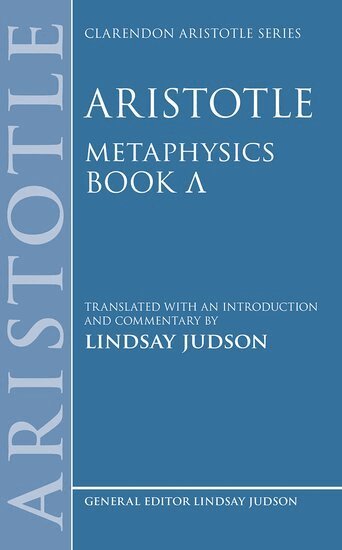
The Clarendon Aristotle Series is designed for both students and professionals. It provides accurate translations of selected Aristotelian texts, accompanied by incisive commentaries that focus on philosophical problems and issues. The volumes in the series have been widely welcomed and favourably reviewed. Important new titles are being added to the series, and a number of well-established volumes are being reissued with revisions and/or supplementary material.Lindsay Judson provides a rigorous translation of the twelfth book (Lambda) of Aristotle's Metaphysics and a detailed philosophical commentary. Lambda is an outline for a much more extended work in metaphysics - or more accurately, since Aristotle does not use the term 'metaphysics', in what he calls 'first philosophy', the inquiry into 'the principles and causes of all things'. Aristotle discusses the principles of natural and changeable substances, which include form, matter, privation and efficient cause; he argues that principles of this sort are, at least by analogy, the principles of non-substantial items as well. In the second half of the book he turns to unchanging, immaterial substances, first arguing that there must be at least one such substance, which he calls 'God', to act as the 'prime unmoved mover', the source of all change in the natural world. He then explores the nature of God and its activity of thinking (it is the fullest exposition there is of Aristotle's extraordinary and very difficult conception of his supreme god, its goodness, and its activity), and in the course of arguing for a plurality of immaterial unmoved movers he provides important evidence for the leading astronomical theory of his day (by Eudoxus) and for his own highly impressive cosmology. The commentary on each chapter or pair of chapters is preceded by a Prologue, which sets the scene for Aristotle's often very compressed discussion, and explores the general issues raised by that discussion. The Introduction discusses the place of Lambda in the Metaphysics, and offers a solution to the problem of the unity of Aristotle's project in the book.
476 kr
Skickas inom 5-8 vardagar
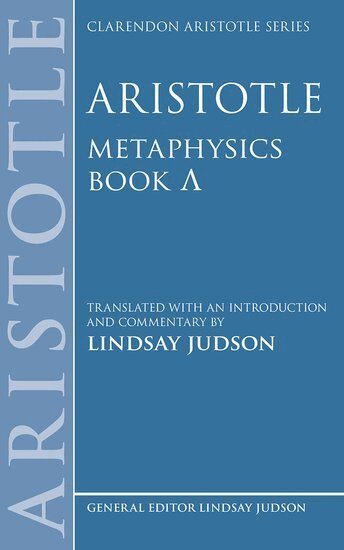
The Clarendon Aristotle Series is designed for both students and professionals. It provides accurate translations of selected Aristotelian texts, accompanied by incisive commentaries that focus on philosophical problems and issues. The volumes in the series have been widely welcomed and favourably reviewed. Important new titles are being added to the series, and a number of well-established volumes are being reissued with revisions and/or supplementary material.Lindsay Judson provides a rigorous translation of the twelfth book (Lambda) of Aristotle's Metaphysics and a detailed philosophical commentary. Lambda is an outline for a much more extended work in metaphysics - or more accurately, since Aristotle does not use the term 'metaphysics', in what he calls 'first philosophy', the inquiry into 'the principles and causes of all things'. Aristotle discusses the principles of natural and changeable substances, which include form, matter, privation and efficient cause; he argues that principles of this sort are, at least by analogy, the principles of non-substantial items as well. In the second half of the book he turns to unchanging, immaterial substances, first arguing that there must be at least one such substance, which he calls 'God', to act as the 'prime unmoved mover', the source of all change in the natural world. He then explores the nature of God and its activity of thinking (it is the fullest exposition there is of Aristotle's extraordinary and very difficult conception of his supreme god, its goodness, and its activity), and in the course of arguing for a plurality of immaterial unmoved movers he provides important evidence for the leading astronomical theory of his day (by Eudoxus) and for his own highly impressive cosmology. The commentary on each chapter or pair of chapters is preceded by a Prologue, which sets the scene for Aristotle's often very compressed discussion, and explores the general issues raised by that discussion. The Introduction discusses the place of Lambda in the Metaphysics, and offers a solution to the problem of the unity of Aristotle's project in the book.
1 678 kr
Skickas inom 3-6 vardagar
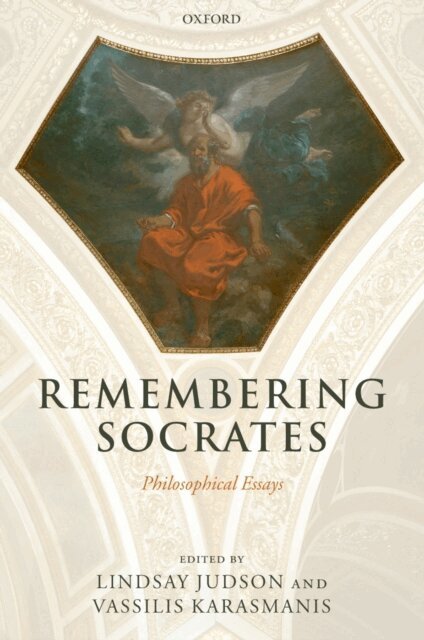
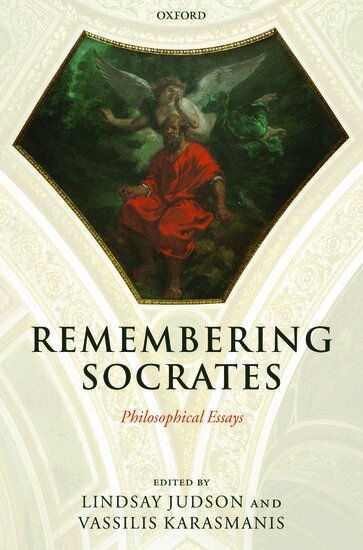
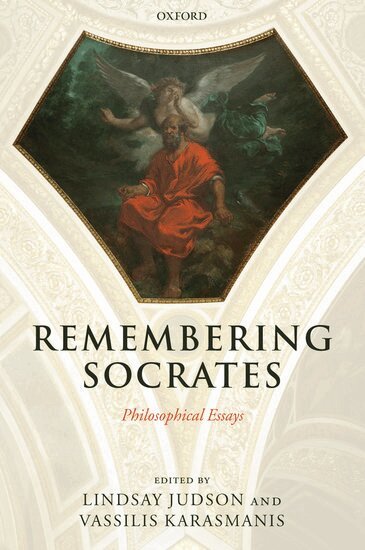
Lindsay Judson and Vassilis Karasmanis present a selection of philosophical papers by an outstanding international team of scholars, assessing the legacy and continuing relevance of Socrates' thought 2,400 years after his death. Socrates' life, philosophical activity, and death not only had a formative effect on his follower Plato, and thus indirectly on almost the whole course of Greek philosophy, but also represented a moral and philosophical ideal which has been the inspiration, or the despair, of many philosophers and other thinkers down to the present day. The topics of the papers include Socratic method as portrayed by Plato and by Xenophon; the notion of definition; Socrates' intellectualist conception of ethics; famous arguments in the Euthyphro and Crito, and a not-so famous argument in the Hippias Major; and aspects of the later portrayal and reception of Socrates as a philosophical and ethical exemplar - by Plato, the Sceptics, and in the early Christian era. The collection demonstrates the vitality as well as the diversity of Socratic studies, and will interest many ancient philosophers, historians of philosophy, and classicists.
625 kr
Skickas inom 5-8 vardagar
Lindsay Judson and Vassilis Karasmanis present a selection of philosophical papers by an outstanding international team of scholars, assessing the legacy and continuing relevance of Socrates' thought 2,400 years after his death. Socrates' life, philosophical activity, and death not only had a formative effect on his follower Plato, and thus indirectly on almost the whole course of Greek philosophy, but also represented a moral and philosophical ideal which has been the inspiration, or the despair, of many philosophers and other thinkers down to the present day. The topics of the papers include Socratic method as portrayed by Plato and by Xenophon; the notion of definition; Socrates' intellectualist conception of ethics; famous arguments in the Euthyphro and Crito, and a not-so famous argument in the Hippias Major; and aspects of the later portrayal and reception of Socrates as a philosophical and ethical exemplar - by Plato, the Sceptics, and in the early Christian era. The collection demonstrates the vitality as well as the diversity of Socratic studies, and will interest many ancient philosophers, historians of philosophy, and classicists.