Lindsay M. Chervinsky - Böcker
Visar alla böcker från författaren Lindsay M. Chervinsky. Handla med fri frakt och snabb leverans.
7 produkter
7 produkter
371 kr
Skickas inom 5-8 vardagar
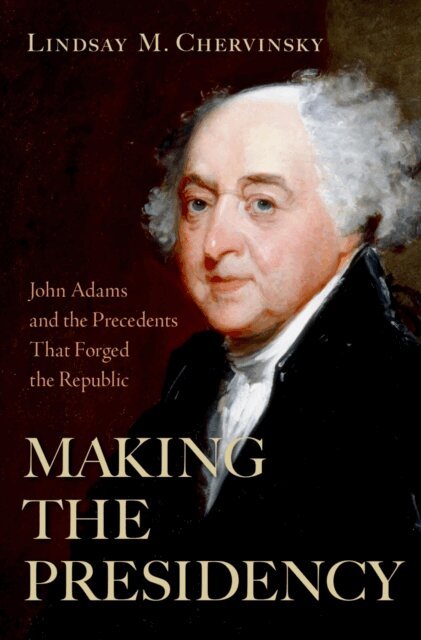
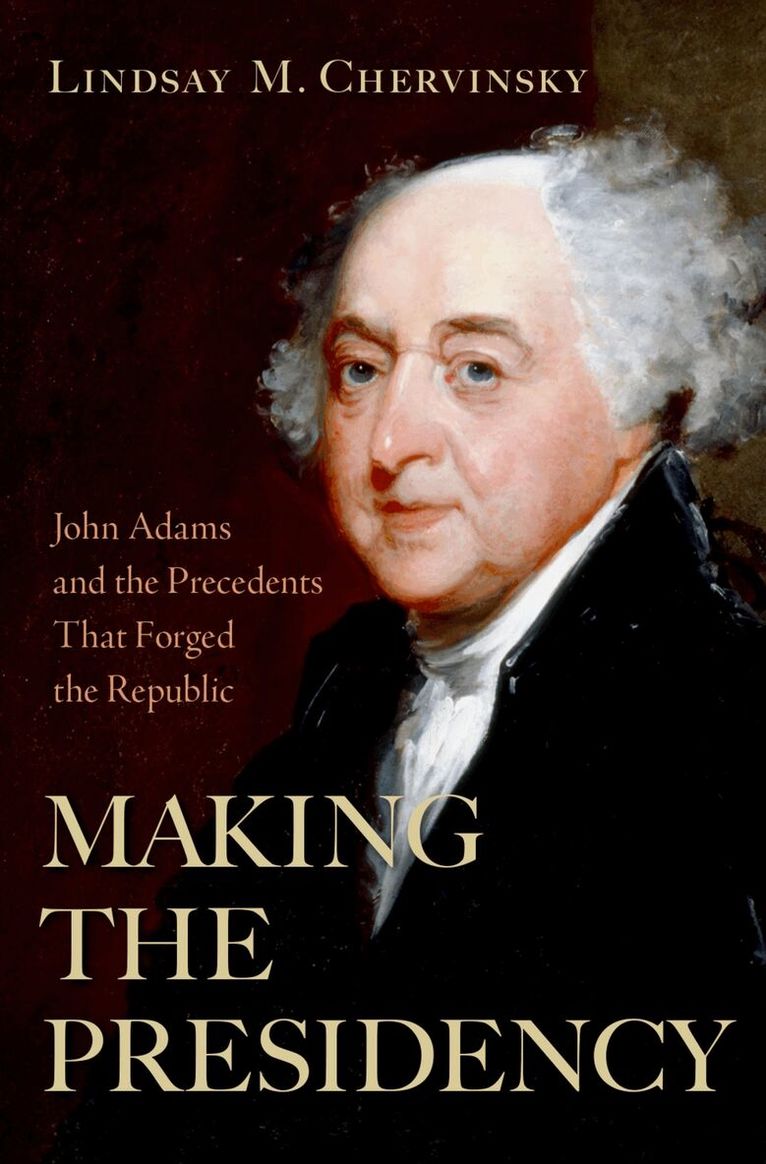
An authoritative account of the second president of the United States that shows how John Adams's leadership and legacy defined the office for those who followed and ensured the survival of the American republic.The United States of 1797 faced enormous challenges, provoked by enemies foreign and domestic. The father of the new nation, George Washington, left his vice president, John Adams, with relatively little guidance and impossible expectations to meet. Adams was confronted with intense partisan divides, debates over citizenship, fears of political violence, potential for foreign conflict with France and Britain, and a nation unsure that the presidency could even work without Washington at the helm.Making the Presidency is an authoritative exploration of the second US presidency, a period critical to the survival of the American republic. Through meticulous research and engaging prose, Lindsay Chervinsky illustrates the unique challenges faced by Adams and shows how he shaped the office for his successors. One of the most qualified presidents in American history, he had been a legislator, political theorist, diplomat, minister, and vice president--but he had never held an executive position. Instead, the quixotic and stubborn Adams would rely on his ideas about executive power, the Constitution, politics, and the state of the world to navigate the hurdles of the position. He defended the presidency from his own often obstructionist cabinet, protected the nation from foreign attacks, and forged trust and dedication to election integrity and the peaceful transfer of power between parties, even though it cost him his political future.Offering a portrait of one of the most fascinating and influential periods in US history, Making the Presidency is a must-read for anyone interested in the evolution of the presidency and the creation of political norms and customs at the heart of the American republic.
153 kr
Skickas inom 7-10 vardagar
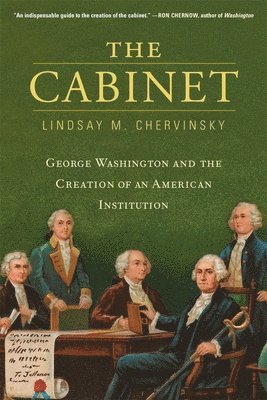
Winner of the Daughters of the American Revolution’s Excellence in American History Book AwardWinner of the Thomas J. Wilson Memorial Prize“Cogent, lucid, and concise…An indispensable guide to the creation of the cabinet…Groundbreaking…we can now have a much greater appreciation of this essential American institution, one of the major legacies of George Washington’s enlightened statecraft.” —Ron ChernowOn November 26, 1791, George Washington convened his department secretaries—Alexander Hamilton, Thomas Jefferson, Henry Knox, and Edmund Randolph—for the first cabinet meeting. Why did he wait two and a half years into his presidency to call his cabinet? Because the US Constitution did not create or provide for such a body. Faced with diplomatic crises, domestic insurrection, and constitutional challenges—and finding congressional help distinctly lacking—he decided he needed a group of advisors he could turn to for guidance. Authoritative and compulsively readable, The Cabinet reveals the far-reaching consequences of this decision. To Washington’s dismay, the tensions between Hamilton and Jefferson sharpened partisan divides, contributing to the development of the first party system. As he faced an increasingly recalcitrant Congress, he came to treat the cabinet as a private advisory body, greatly expanding the role of the executive branch and indelibly transforming the presidency.“Important and illuminating…an original angle of vision on the foundations and development of something we all take for granted.” —Jon Meacham“Fantastic…A compelling story.” —New Criterion“Helps us understand pivotal moments in the 1790s and the creation of an independent, effective executive.” —Wall Street Journal
250 kr
Skickas inom 7-10 vardagar
Winner of the DAR Excellence in American History Book AwardWinner of the Thomas J. Wilson Memorial Prize“Cogent, lucid, and concise…indispensable guide to the creation of the cabinet. With her groundbreaking study, we can now have a much greater appreciation of…one of the major legacies of George Washington’s enlightened statecraft.”—Ron Chernow, author of Washington: A LifeThe US Constitution never established a presidential cabinet—the delegates to the Constitutional Convention explicitly rejected the idea. So how did George Washington create one of the most powerful bodies in the federal government?On November 26, 1791, George Washington convened his department secretaries—Alexander Hamilton, Thomas Jefferson, Henry Knox, and Edmund Randolph—for the first cabinet meeting. Why did he wait two and a half years into his presidency to call his cabinet? Because the US Constitution did not create or provide for such a body. Washington was on his own.Faced with diplomatic crises, domestic insurrections, and constitutional challenges—and finding congressional help lacking—Washington decided he needed a group of advisors he could turn to. He modeled his new cabinet on the councils of war he had led as commander of the Continental Army. In the early days, the cabinet served at the president’s pleasure. Washington tinkered with its structure throughout his administration, at times calling regular meetings, at other times preferring written advice and individual discussions.Lindsay M. Chervinsky reveals the far-reaching consequences of Washington’s choice. The tensions in the cabinet between Hamilton and Jefferson heightened partisanship and contributed to the development of the first party system. And as Washington faced an increasingly recalcitrant Congress, he came to treat the cabinet as a private advisory body to summon as needed, greatly expanding the role of the president and the executive branch.
1 051 kr
Skickas inom 10-15 vardagar
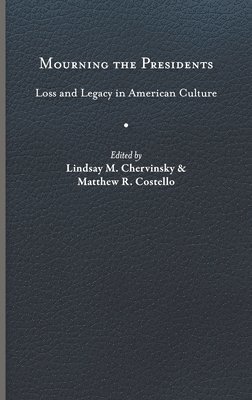
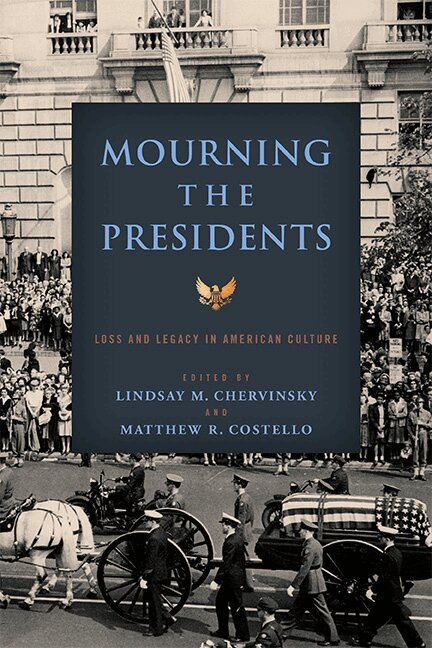
The death of a chief executive, regardless of the circumstances—sudden or expected, still in office or decades later—is always a moment of reckoning and reflection. Mourning the Presidents brings together renowned and emerging scholars to examine how different generations and communities of Americans have eulogized and remembered US presidents since George Washington’s death in 1799. Over twelve individually illuminating chapters, this volume offers a unique approach to understanding American culture and politics by uncovering parallels between different generations of mourners, highlighting distinct experiences, and examining what presidential deaths can tell us about societal fissures at various critical points in the nation’s history, right up to the present moment.
309 kr
Skickas inom 10-15 vardagar
The death of a chief executive, regardless of the circumstances—sudden or expected, still in office or decades later—is always a moment of reckoning and reflection. Mourning the Presidents brings together renowned and emerging scholars to examine how different generations and communities of Americans have eulogized and remembered US presidents since George Washington’s death in 1799. Over twelve individually illuminating chapters, this volume offers a unique approach to understanding American culture and politics by uncovering parallels between different generations of mourners, highlighting distinct experiences, and examining what presidential deaths can tell us about societal fissures at various critical points in the nation’s history, right up to the present moment.
359 kr
Skickas inom 7-10 vardagar
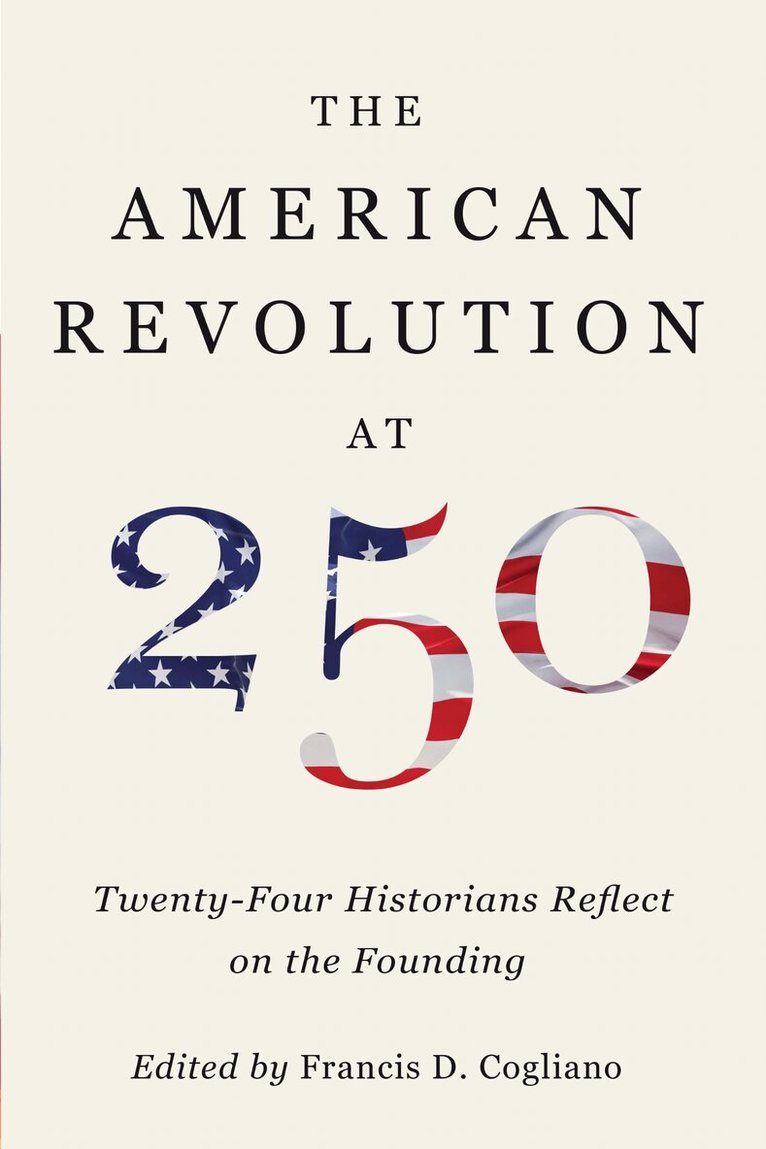
The preeminent historians of the founding era speak their mind on the anniversary of the United States' birthIn these powerful and personal essays, some of the most celebrated historians of the American Revolutionary era reflect on the meaning of 1776 to the nation in 2026, offering fresh insights and food for thought on every page. They tackle the most pressing topics that Americans debated in 1776 and continue to debate today: the meaning of democracy; the nature of information wars; immigration and the rights and obligations of citizenship; race and slavery; public health; the various and conflicting legacies of the founders; and the shifting nature of commemoration itself. Like the Revolutionary generation they know so well, on some issues these scholarly authorities find themselves largely in accord; on others they vehemently disagree. This is historical debate at its most urgent.Contributors: Allison Bigelow * T. H. Breen * Katherine Carté * Lindsay M. Chervinsky * Marlene L. Daut * Andrew M. Davenport * Christa Dierksheide * Lauren Duval * Joanne B. Freeman * Annette Gordon-Reed * Eliga H. Gould * Patrick Griffin * Nicholas Guyatt * Ricardo A. Herrera * Woody Holton * Brendan McConville * Michael A. McDonnell * Peter S. Onuf * Robert G. Parkinson * Teresa R. Pollak * John A. Ragosta * Bertrand Van Ruymbeke * Rosemarie Zagarri
174 kr
Skickas inom 5-8 vardagar