Lionel Carter - Böcker
Visar alla böcker från författaren Lionel Carter. Handla med fri frakt och snabb leverans.
4 produkter
4 produkter
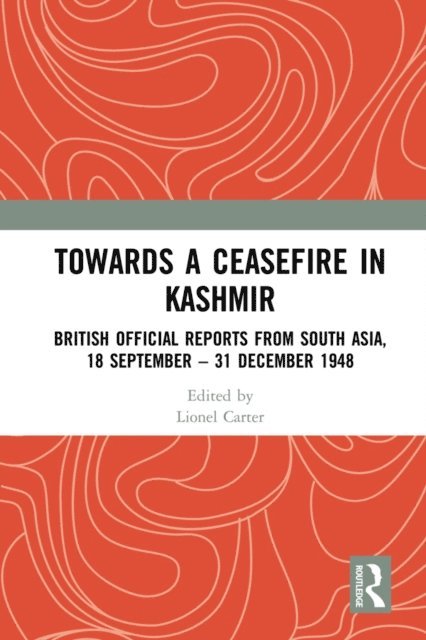
Towards a Ceasefire in Kashmir
British Official Reports from South Asia, 18 September – 31 December 1948
Häftad, Engelska, 2024
635 kr
Skickas inom 10-15 vardagar
The central theme of this volume is deteriorating India-Pakistan relations. It opens in the aftermath of the Indian takeover of Hyderabad. This had been accomplished so rapidly that there was a widespread feeling in Pakistan that their country would be next to attract the attention of the Indian Army. Matters were worsened by the exodus of more than a million disaffected Hindus from East Pakistan to India. Belligerent speeches were made by both sides and Nehru told the British High Commissioner, Archibald Nye, on 20 November 1948 that ‘the situation in East Bengal was causing him far more anxiety than that in Kashmir’. However it was Kashmir which remained the major cause of tension. After a period of relative stalemate there was movement from mid-November and a real possibility of the extension of the fighting into West Punjab. Fortunately wiser counsels were to prevail and the volume gives clues as to why a cease fire was agreed extremely rapidly at the end of December. This took effect at midnight on 1 January 1949. There were now grounds for hope that relations between the two Dominions would greatly improve although Nye felt that because of likely problems with a plebiscite ‘in many respects our Kashmir troubles were only about to start’. But he trusted that these would not be accompanied by bloodshed.The volume contains 376 documents (with Appendices) and includes extracts from the monthly appreciations on the general situation which both High Commissioners sent to London.Please note: Taylor & Francis does not sell or distribute the Hardback in India, Pakistan, Nepal, Bhutan, Bangladesh and Sri Lanka.
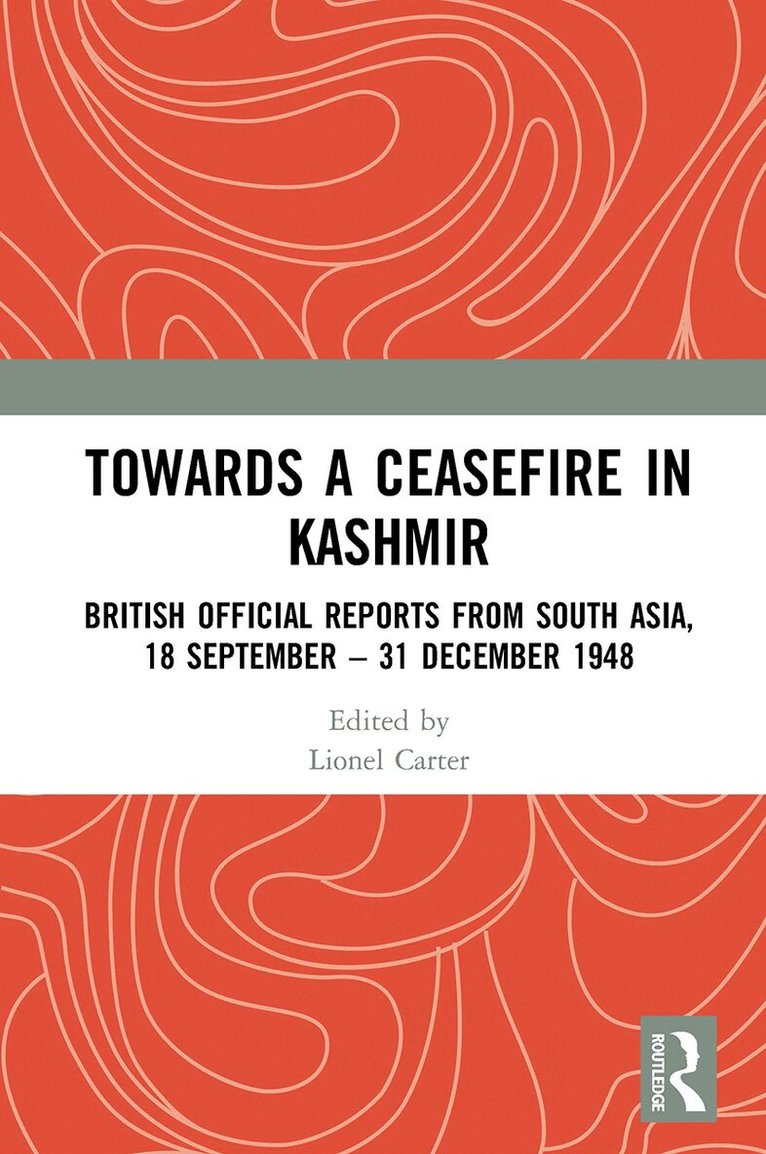
Towards a Ceasefire in Kashmir
British Official Reports from South Asia, 18 September – 31 December 1948
Inbunden, Engelska, 2018
2 150 kr
Skickas inom 10-15 vardagar
The central theme of this volume is deteriorating India-Pakistan relations. It opens in the aftermath of the Indian takeover of Hyderabad. This had been accomplished so rapidly that there was a widespread feeling in Pakistan that their country would be next to attract the attention of the Indian Army. Matters were worsened by the exodus of more than a million disaffected Hindus from East Pakistan to India. Belligerent speeches were made by both sides and Nehru told the British High Commissioner, Archibald Nye, on 20 November 1948 that ‘the situation in East Bengal was causing him far more anxiety than that in Kashmir’. However it was Kashmir which remained the major cause of tension. After a period of relative stalemate there was movement from mid-November and a real possibility of the extension of the fighting into West Punjab. Fortunately wiser counsels were to prevail and the volume gives clues as to why a cease fire was agreed extremely rapidly at the end of December. This took effect at midnight on 1 January 1949. There were now grounds for hope that relations between the two Dominions would greatly improve although Nye felt that because of likely problems with a plebiscite ‘in many respects our Kashmir troubles were only about to start’. But he trusted that these would not be accompanied by bloodshed.The volume contains 376 documents (with Appendices) and includes extracts from the monthly appreciations on the general situation which both High Commissioners sent to London.Please note: Taylor & Francis does not sell or distribute the Hardback in India, Pakistan, Nepal, Bhutan, Bangladesh and Sri Lanka.
1 036 kr
Skickas inom 7-10 vardagar
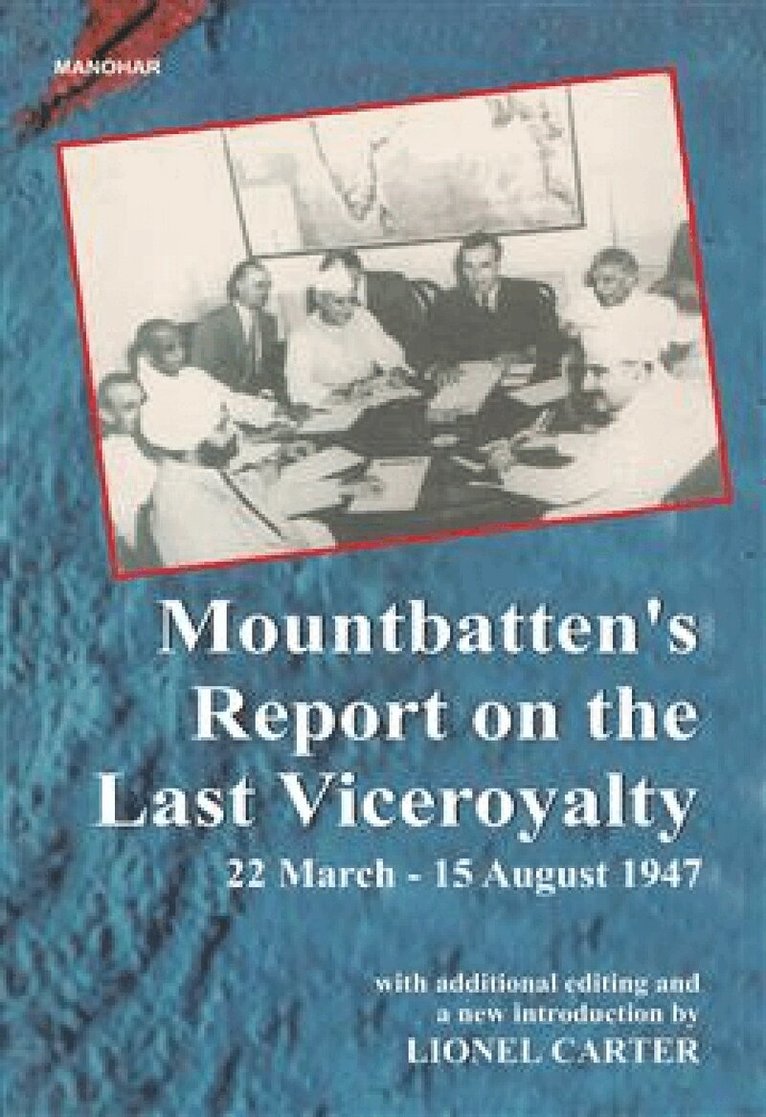
This volume reproduces in full Mountbatten's own account of the last five months of British rule in India based on reports he sent to London at the time. Written with disarming frankness, we witness the failure of Mountbatten's initial attempts to secure independence on the basis of a united India. He then turned to some form of agreed partition and his eventual success was achieved after considerable feats of diplomacy. The figures of Gandhi, Jinnah, Nehru, Vallabhbhai Patel and other key leaders loom large in this account. Mountbatten provides a valuable introductory historical survey and a chapter in which he draws up his conclusions. There are thirteen appendices providing the texts of key documents and an index of the persona involved in these momentous events. About the Author Before becoming the last Viceroy of India, Lord Mountbatten played a major part in the defeat of Japan in the second world war. He was Supreme Allied Commander, South-East Asia Command between 1943 and 1946. Here he was also responsible for preparing Burma for civilian rule.
International Submarine Cables and Biodiversity of Areas Beyond National Jurisdiction
The Cloud Beneath the Sea
Häftad, Engelska, 2017
1 085 kr
Skickas inom 5-8 vardagar
If one uses Facebook, Facetime, Skype, Netflix, or any application of the internet internationally, a submarine cable is involved. Fibre optic cables bind the world together and computer server farms, maintained by major telecom and content companies, allow vast amounts of data to be stored and retrieved from the cloud. Not often appreciated is the fact that these server locations worldwide are connected by submarine fibre optic cables. In this sense, the cloud is beneath the sea. While submarine communication cables have been in steady use since 1850, their preeminent place in the modern world has never been as dominant and personal as now. Recently, calls have mounted in the context of marine biodiversity beyond national jurisdiction (BBNJ) for centralized control of submarine cables and for express or de facto diminishment of the freedoms related to them via the United Nations Convention on Law of the Sea, that have served the world’s peoples for so long. In International Submarine Cables and Biodiversity of Areas Beyond National Jurisdiction, Douglas R. Burnett and Lionel Carter examine the time proven importance of the existing international treaties, the largely peer-reviewed science on the environmental interaction of submarine cables with high seas environments, and the current submarine cable issues in the context of the BBNJ debates.