Lis Lange - Böcker
Visar alla böcker från författaren Lis Lange. Handla med fri frakt och snabb leverans.
3 produkter
3 produkter
493 kr
Skickas inom 10-15 vardagar
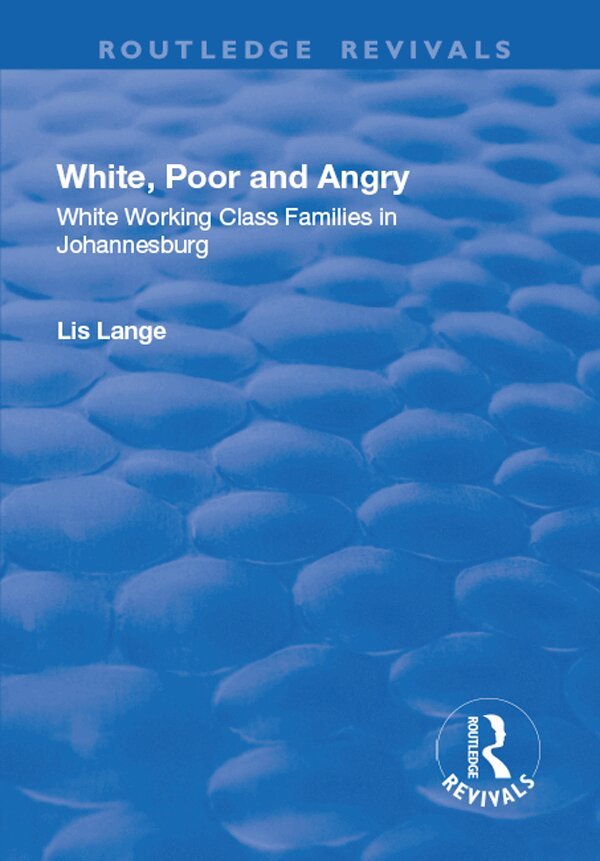
This title was first published in 2003. A fascinating insight into the economic, social and political processes that shaped the lives of white workers in Johannesburg between the beginning of deep level mining (c. 1890) and the 1922 Rand Revolt miners' strike. The book examines four related topics: the formation of working class families, working class accommodation, the constitution of social networks in the working class neighbourhoods and the political and ideological aspects of white workers' unemployment. The main argument presented here is that the class experience of white workers in Johannesburg had a very important role in fostering a sense of community between English and Afrikaner workers and their families. It is this sense of community that plays an important part in understanding the solidarity that emerged between English and Afrikaner workers during the 1922 Rand Revolt.
1 036 kr
Skickas inom 10-15 vardagar
This title was first published in 2003. A fascinating insight into the economic, social and political processes that shaped the lives of white workers in Johannesburg between the beginning of deep level mining (c. 1890) and the 1922 Rand Revolt miners' strike. The book examines four related topics: the formation of working class families, working class accommodation, the constitution of social networks in the working class neighbourhoods and the political and ideological aspects of white workers' unemployment. The main argument presented here is that the class experience of white workers in Johannesburg had a very important role in fostering a sense of community between English and Afrikaner workers and their families. It is this sense of community that plays an important part in understanding the solidarity that emerged between English and Afrikaner workers during the 1922 Rand Revolt.
350 kr
Skickas inom 7-10 vardagar
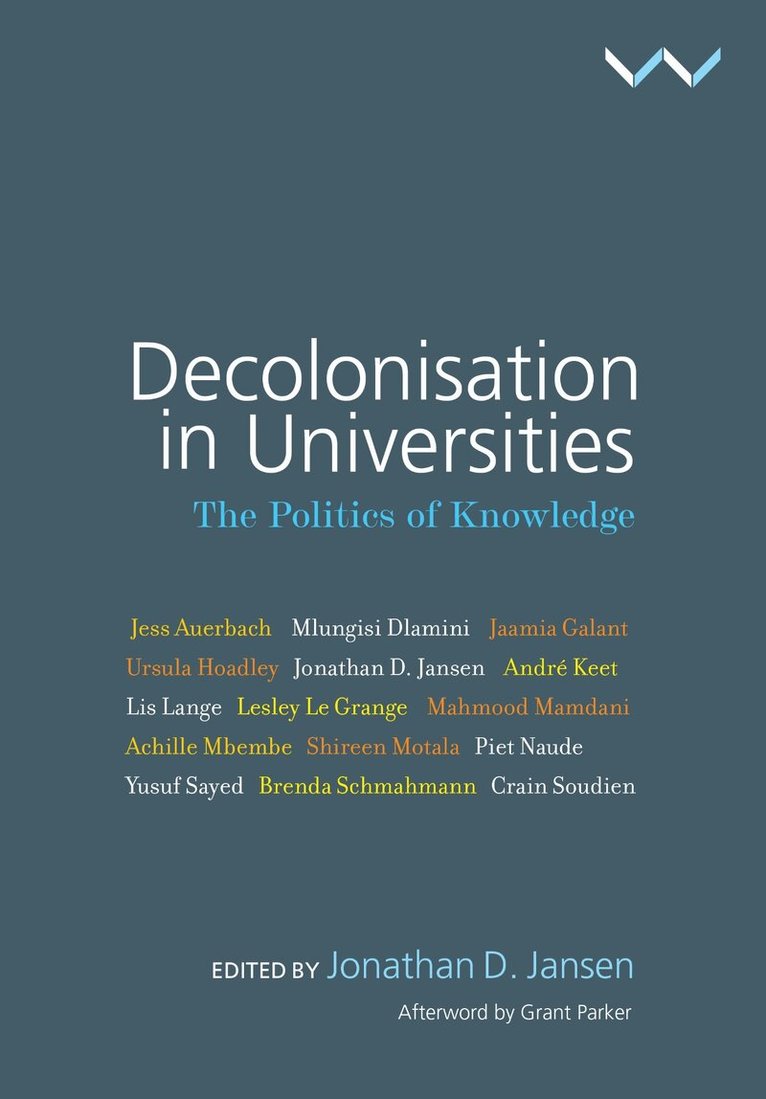
In this collection of case studies and stories from the field, South African scholars come together to trade stories on how to decolonise the universityShortly after the giant bronze statue of Cecil John Rhodes came down at the University of Cape Town, student protestors called for the decolonisation of universities. It was a word hardly heard in South Africa's struggle lexicon and many asked: What exactly is decolonisation? This edited volume brings together the best minds in curriculum theory to address this important question. In the process, several critical questions are raised: Is decolonisation simply a slogan for addressing other pressing concerns on campuses and in society? What is the colonial legacy with respect to curriculum and can it be undone? How is the project of curriculum decolonisation similar to or different from the quest for postcolonial knowledge, indigenous knowledge or a critical theory of knowledge? What does decolonisation mean in a digital age where relationships between knowledge and power are shifting?The book combines strong conceptual analyses with novel case studies of attempts to 'do decolonisation' in settings as diverse as South Africa, Uganda, Tanzania and Mauritius. Such a comparative perspective enables reasonable judgements to be made about the prospects for institutional take-up within the curriculum of century-old universities.