Lisa Brooks - Böcker
Visar alla böcker från författaren Lisa Brooks. Handla med fri frakt och snabb leverans.
2 produkter
2 produkter
210 kr
Skickas inom 7-10 vardagar
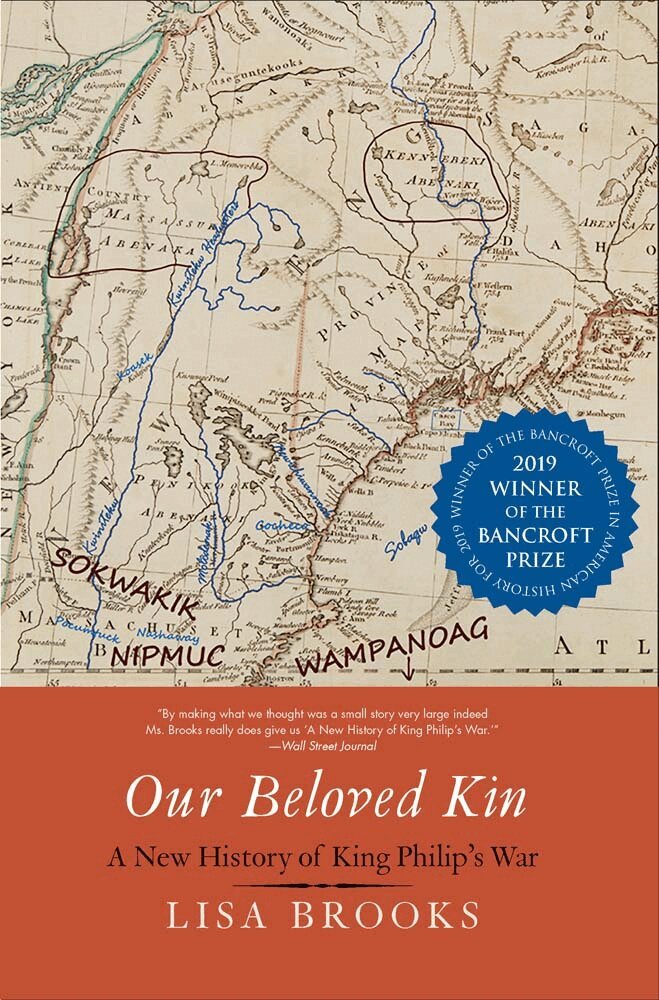
Winner of the 2019 Bancroft Prize: A compelling and original recovery of Native American resistance and adaptation to colonial America“By making what we thought was a small story very large indeed—Ms. Brooks really does give us ‘A New History of King Philip’s War.’”—The Wall Street Journal“Provides a wealth of information for both scholars and lay readers interested in Native American history.”—Publishers WeeklyWith rigorous original scholarship and creative narration, Lisa Brooks recovers a complex picture of war, captivity, and Native resistance during the “First Indian War” (later named King Philip’s War) by relaying the stories of Weetamoo, a female Wampanoag leader, and James Printer, a Nipmuc scholar, whose stories converge in the captivity of Mary Rowlandson. Through both a narrow focus on Weetamoo, Printer, and their network of relations, and a far broader scope that includes vast Indigenous geographies, Brooks leads us to a new understanding of the history of colonial New England and of American origins. Brooks’s pathbreaking scholarship is grounded not just in extensive archival research but also in the land and communities of Native New England, reading the actions of actors during the seventeenth century alongside an analysis of the landscape and interpretations informed by tribal history.
262 kr
Skickas inom 10-15 vardagar
Illuminates the significance of writing to colonial-era Native American resistanceLiterary critics frequently portray early Native American writers either as individuals caught between two worlds or as subjects who, even as they defied the colonial world, struggled to exist within it. In striking counterpoint to these analyses, Lisa Brooks demonstrates the ways in which Native leaders-including Samson Occom, Joseph Brant, Hendrick Aupaumut, and William Apess-adopted writing as a tool to reclaim rights and land in the Native networks of what is now the northeastern United States.“The Common Pot,” a metaphor that appears in Native writings during the eighteenth and nineteenth centuries, embodies land, community, and the shared space of sustenance among relations. Far from being corrupted by forms of writing introduced by European colonizers, Brooks contends, Native people frequently rejected the roles intended for them by their missionary teachers and used the skills they acquired to compose petitions, political tracts, and speeches; to record community councils and histories; and most important, to imagine collectively the routes through which the Common Pot could survive.Reframing the historical landscape of the region, Brooks constructs a provocative new picture of Native space before and after colonization. By recovering and reexamining Algonquian and Iroquoian texts, she shows that writing was not a foreign technology but rather a crucial weapon in the Native Americans’ arsenal as they resisted-and today continue to oppose-colonial domination.