Lisa Buse - Böcker
Visar alla böcker från författaren Lisa Buse. Handla med fri frakt och snabb leverans.
3 produkter
3 produkter
1 584 kr
Skickas inom 10-15 vardagar
Forested landscapes have provided many important testing grounds for the devel- ment and application of landscape ecological principles and methods in North America. This central role of forests in landscape ecology emerged for several reasons. Forest cover is prominent in many regions of North America, from the temperate deciduous forests of the east to the coniferous forests of the north and west. Changes in forest spatial patterns are readily apparent to the human eye—natural disturbances and timber harvests alter the arrangement of forest age classes across the landscape and this, in turn, influences many species and ecosystem processes; land-use changes have produced profound fluctuations in forest cover over several centuries; increasing re- dential development in rural areas is often concentrated within forests; and public lands include many forested landscapes. Management actions, such as varying the amount, size, and location of harvests, also represent landscape-scale “experiments” that provide valuable opportunities for study. Finally, forest patterns are readily detectable from remote imagery, and are thus amenable to study at broad scales. For these reasons, forests have provided motivation and many opportunities for studying the complex relationships between patterns and processes in many areas. The importance of landscape-level considerations in the management and c- servation of forested landscapes has become increasingly important, and a variety of stakeholders are involved.
1 409 kr
Skickas inom 5-8 vardagar
Forested landscapes have provided many important testing grounds for the devel- ment and application of landscape ecological principles and methods in North America. This central role of forests in landscape ecology emerged for several reasons. Forest cover is prominent in many regions of North America, from the temperate deciduous forests of the east to the coniferous forests of the north and west. Changes in forest spatial patterns are readily apparent to the human eye—natural disturbances and timber harvests alter the arrangement of forest age classes across the landscape and this, in turn, influences many species and ecosystem processes; land-use changes have produced profound fluctuations in forest cover over several centuries; increasing re- dential development in rural areas is often concentrated within forests; and public lands include many forested landscapes. Management actions, such as varying the amount, size, and location of harvests, also represent landscape-scale “experiments” that provide valuable opportunities for study. Finally, forest patterns are readily detectable from remote imagery, and are thus amenable to study at broad scales. For these reasons, forests have provided motivation and many opportunities for studying the complex relationships between patterns and processes in many areas. The importance of landscape-level considerations in the management and c- servation of forested landscapes has become increasingly important, and a variety of stakeholders are involved.
1 145 kr
Skickas inom 11-20 vardagar
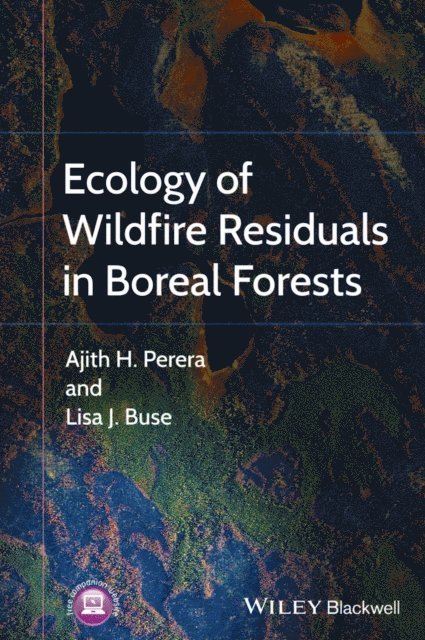
Large and intense wildfires are integral to the globally important boreal forest biome. While much is known about boreal wildfires, the focus on forest remnants that either escape or survive these intense fires is a recent phenomenon: academics now study ecological processes of wildfire residuals, forest policymakers use their patterns to design harvest strategies, forest managers consider their economic value, and conservationists recognize their intrinsic ecological importance. Ecology of Wildfire Residuals in Boreal Forests is the first book to explore ecological patterns and processes of what does not burn within boreal wildfires. Following a brief introduction to the boreal forest biome, it discusses the processes that form wildfire residuals; how they are studied, with various approaches and methods; the types, extent, and ecological functions of wildfire residuals; and their role in forest management applications, all in the context of ecological scale. This book is a reference for researchers and graduate students studying boreal forest ecology, as well as for policymakers and forest managers. It adopts a non-reductionist perspective that will be of interest to scientists from conservation science, forest ecology, forest management, and timber production. Brings together fire behaviour, ecological scale, vegetation ecology, and conservation biology to provide a cross disciplinary, multi-scale, and an integrative discussion of forest fire residuals Captures the state of knowledge with a meta-analysis of research trends during the past few decades, with a comprehensive review of the literature, a compilation of key references, and a list of key topics relevant to the study of boreal wildfire residuals Identifies the major gaps and uncertainties in the present body of knowledge, including a critique of study techniques and reporting practices to date, and proposes a set of terms and definitions and a list of research questions and priorities Includes the authors’ observations and research experience from boreal Canada, and information extracted from interactions with North American and European ecologists, forest managers, and conservationists