Lisa Diedrich - Böcker
Visar alla böcker från författaren Lisa Diedrich. Handla med fri frakt och snabb leverans.
6 produkter
6 produkter
1 867 kr
Skickas inom 5-8 vardagar
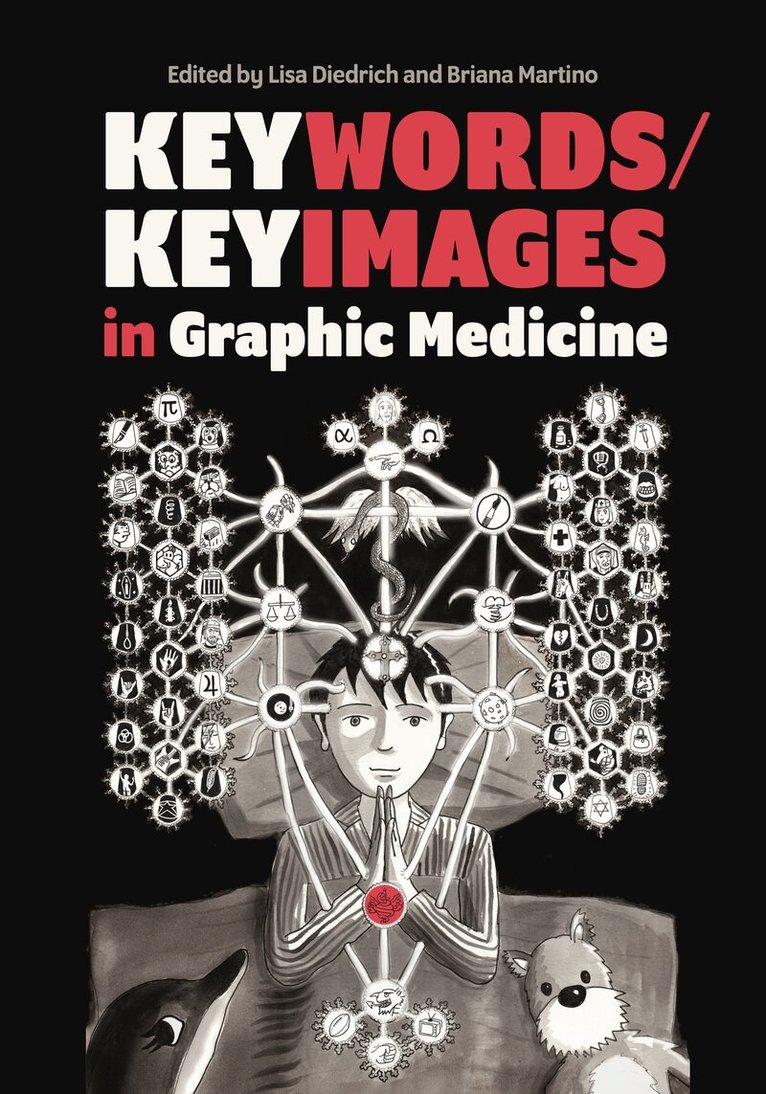
This book invites readers to explore the field of graphic medicine through a new concept: “keywords/keyimages.” Coined by the editors to reflect the unique combination of words and images in comics, this term offers a fresh way to understand how graphic narratives communicate experiences of health and illness. Rather than defining the field, the book aims to demonstrate its range and complexity, offering a visual and verbal resource that reveals the methods, concepts, and politics shaping graphic medicine today.The collection brings together thirty-six contributions from comics artists, scholars, healthcare professionals, and patients, each focused on a single keyword/keyimage. Organized into five thematic sections—practice, pedagogy, process, personal/autobiographical, and politics—the book guides readers through the formal elements of comics, teaching strategies, creative processes, personal storytelling, and the broader health politics at work in the field. With visual examples alongside critical analysis, the volume encourages a “both/and” approach to reading: seeing words and images as interdependent, working simultaneously and sequentially to convey meaning.Designed as a resource for classroom teaching and independent study, Keywords/Keyimages in Graphic Medicine offers students, scholars, and practitioners a dynamic introduction to the study of health narratives in comics. It invites interdisciplinary exploration while providing practical tools for analyzing, teaching, and creating graphic medicine texts, making it a valuable contribution to courses in comics studies, visual culture, health humanities, and beyond.
387 kr
Skickas inom 7-10 vardagar
This book invites readers to explore the field of graphic medicine through a new concept: “keywords/keyimages.” Coined by the editors to reflect the unique combination of words and images in comics, this term offers a fresh way to understand how graphic narratives communicate experiences of health and illness. Rather than defining the field, the book aims to demonstrate its range and complexity, offering a visual and verbal resource that reveals the methods, concepts, and politics shaping graphic medicine today.The collection brings together thirty-six contributions from comics artists, scholars, healthcare professionals, and patients, each focused on a single keyword/keyimage. Organized into five thematic sections—practice, pedagogy, process, personal/autobiographical, and politics—the book guides readers through the formal elements of comics, teaching strategies, creative processes, personal storytelling, and the broader health politics at work in the field. With visual examples alongside critical analysis, the volume encourages a “both/and” approach to reading: seeing words and images as interdependent, working simultaneously and sequentially to convey meaning.Designed as a resource for classroom teaching and independent study, Keywords/Keyimages in Graphic Medicine offers students, scholars, and practitioners a dynamic introduction to the study of health narratives in comics. It invites interdisciplinary exploration while providing practical tools for analyzing, teaching, and creating graphic medicine texts, making it a valuable contribution to courses in comics studies, visual culture, health humanities, and beyond.
291 kr
Skickas inom 7-10 vardagar
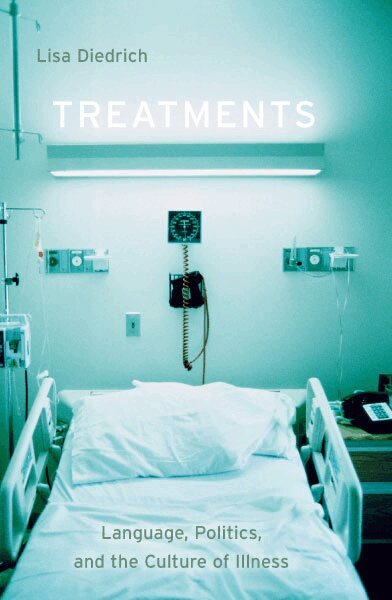
Creative expression inspired by disease has been criticized as a celebration of victimhood, unmediated personal experience, or just simply bad art. Despite debate, however, memoirs written about illness-particularly AIDS or cancer-have proliferated since the late twentieth century and occupy a highly influential place on the cultural landscape today. In Treatments, Lisa Diedrich considers illness narratives, demonstrating that these texts not only recount and interpret symptoms but also describe illness as an event that reflects wider cultural contexts, including race, gender, class, and sexuality. Diedrich begins this theoretically rigorous analysis by offering examples of midcentury memoirs of tuberculosis. She then looks at Susan Sontag’s Illness As Metaphor, Audre Lorde’s The Cancer Journals, and Eve Kosofsky Sedgwick’s “White Glasses,” showing how these breast cancer survivors draw on feminist health practices of the 1970s and also anticipate the figure that would appear in the wake of the AIDS crisis in the 1980s-the “politicized patient.” She further reveals how narratives written by doctors Abraham Verghese and Rafael Campo about treating people with AIDS can disrupt the doctor–patient hierarchy, and she explores practices of witnessing that emerge in writing by Paul Monette and John Bayley. Through these records of intensely personal yet universal experience, Diedrich demonstrates how language both captures and fails to capture these “scenes of loss” and how illness narratives affect the literary, medical, and cultural contexts from which they arise. Finally, by examining the ways in which the sick speak and are spoken for, she argues for an ethics of failure-the revaluation of loss as creating new possibilities for how we live and die. Lisa Diedrich is assistant professor of women’s studies at Stony Brook University.
Indirect Action
Schizophrenia, Epilepsy, AIDS, and the Course of Health Activism
Inbunden, Engelska, 2016
1 077 kr
Skickas inom 7-10 vardagar
The experience of illness (both mental and physical) figures prominently in the critical thought and activism of the 1960s and 1970s, though it is largely overshadowed by practices of sexuality. Lisa Diedrich explores how and why illness was indeed so significant to the social, political, and institutional transformation beginning in the 1960s through the emergence of AIDS in the United States. A rich intervention-both theoretical and methodological, political and therapeutic-Indirect Action illuminates the intersection of illness, thought, and politics. Not merely a revision of the history of this time period, Indirect Action expands the historiographical boundaries through which illness and health activism in the United States have been viewed. Diedrich explores the multiplicity illness thought politics through an array of subjects: queering the origin story of AIDS activism by recalling its feminist history; exploring health activism and the medical experience; analyzing psychiatry and self-help movements; thinking ecologically about counterpractices of generalism in science and medicine; and considering the experience and event of epilepsy and the witnessing of schizophrenia. Indirect Action places illness in the leading role in the production of thought during the emergence of AIDS, ultimately showing the critical interconnectedness of illness and political and critical thought.
Indirect Action
Schizophrenia, Epilepsy, AIDS, and the Course of Health Activism
Häftad, Engelska, 2016
291 kr
Skickas inom 7-10 vardagar
The experience of illness (both mental and physical) figures prominently in the critical thought and activism of the 1960s and 1970s, though it is largely overshadowed by practices of sexuality. Lisa Diedrich explores how and why illness was indeed so significant to the social, political, and institutional transformation beginning in the 1960s through the emergence of AIDS in the United States. A rich intervention-both theoretical and methodological, political and therapeutic-Indirect Action illuminates the intersection of illness, thought, and politics. Not merely a revision of the history of this time period, Indirect Action expands the historiographical boundaries through which illness and health activism in the United States have been viewed. Diedrich explores the multiplicity illness thought politics through an array of subjects: queering the origin story of AIDS activism by recalling its feminist history; exploring health activism and the medical experience; analyzing psychiatry and self-help movements; thinking ecologically about counterpractices of generalism in science and medicine; and considering the experience and event of epilepsy and the witnessing of schizophrenia. Indirect Action places illness in the leading role in the production of thought during the emergence of AIDS, ultimately showing the critical interconnectedness of illness and political and critical thought.
125 kr
Skickas inom 7-10 vardagar
How illness on social media reveals the struggle for care and access against ableism and stigmaIllness Politics and Hashtag Activism explores illness and disability in action on social media, analyzing several popular hashtags as examples of how illness figures in recent U.S. politics. Lisa Diedrich shows how illness- and disability-oriented hashtags serve as portals into how and why illness and disability are sites of political struggle and how illness politics is informed by, intersects with, and sometimes stands in for sexual, racial, and class politics. She argues that illness politics is central-and profoundly important-to both mainstream and radical politics, and she investigates the dynamic intersection of media and health and health-activist practices to show the ways their confluence affects our perception and understanding of illness.