Ljiljana Saric – författare
Visar alla böcker från författaren Ljiljana Saric. Handla med fri frakt och snabb leverans.
3 produkter
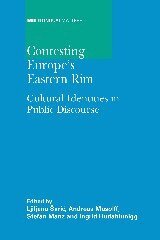
Contesting Europe's Eastern Rim
Cultural Identities in Public Discourse
Av Ljiljana Saric, Andreas Musolff m. fl.
Inbunden, 2010
1725 kr
Lägg i varukorg
Since 1989, Europe’s eastern rim has been in constant flux. This collection focuses on how political and economic transformations have triggered redefinitions of cultural identity. Using discursive modes of identity construction (deconstruction, reconstruction, reformulation, and invention) the …
Voices of Supporters
Populist parties, social media and the 2019 European elections
Av Veronika Koller, Natalia Borza m. fl.
Inbunden, 2023
1489 kr
Lägg i varukorg
This book addresses an under-researched area within populism studies: the discourse of supporters of populist parties. Taking the 2019 European elections as their case study, the authors analyse how supporters in eleven different countries construct identities and voting motivations on social …
Evaluative Discourse Metaphor in Online Communities
Av Mateusz-Milan Stanojević, Ljiljana Šarić
Inbunden, 2025
1722 kr
Lägg i varukorg
This monograph introduces the Evaluative Discourse Metaphor model, which argues that participants in public and semi-public online discourse (re)use evaluative metaphors to construct and maintain communities. We explore how such metaphors trigger others with similar forms, though not necessarily …