
Lloyd Pratt – författare
Visar alla böcker från författaren Lloyd Pratt. Handla med fri frakt och snabb leverans.
3 produkter
3 produkter
Häftad, Engelska, 2016
366 kr
Skickas inom 10-15 vardagar
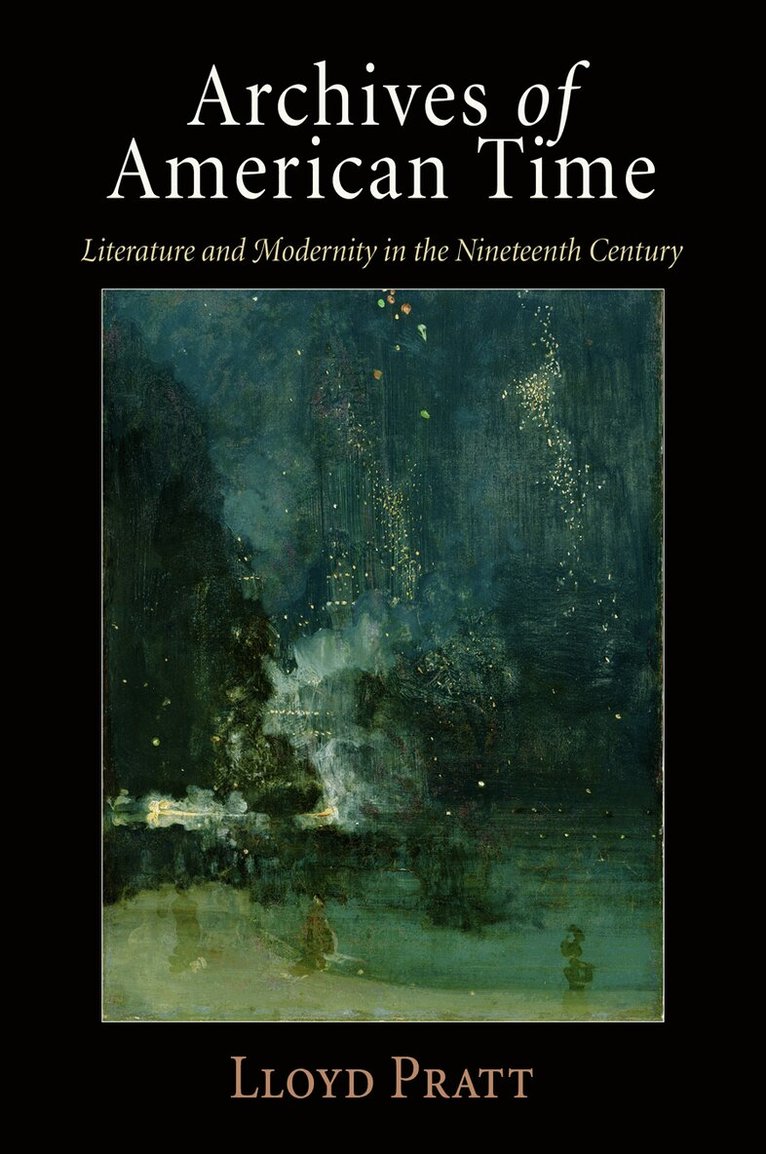
American historians have typically argued that a shared experience of time worked to bind the antebellum nation together. Trains, technology, and expanding market forces catapulted the United States into the future on a straight line of progressive time. The nation's exceedingly diverse population could cluster around this common temporality as one forward-looking people.In a bold revision of this narrative, Archives of American Time examines American literature's figures and forms to disclose the competing temporalities that in fact defined the antebellum period. Through discussions that link literature's essential qualities to social theories of modernity, Lloyd Pratt asserts that the competition between these varied temporalities forestalled the consolidation of national and racial identity. Paying close attention to the relationship between literary genre and theories of nationalism, race, and regionalism, Archives of American Time shows how the fine details of literary genres tell against the notion that they helped to create national, racial, or regional communities. Its chapters focus on images of invasive forms of print culture, the American historical romance, African American life writing, and Southwestern humor. Each in turn revises our sense of how these images and genres work in such a way as to reconnect them to a broad literary and social history of modernity. At precisely the moment when American authors began self-consciously to quest after a future in which national and racial identity would reign triumphant over all, their writing turned out to restructure time in a way that began foreclosing on that particular future.
Häftad, Engelska, 2021
366 kr
Skickas inom 10-15 vardagar
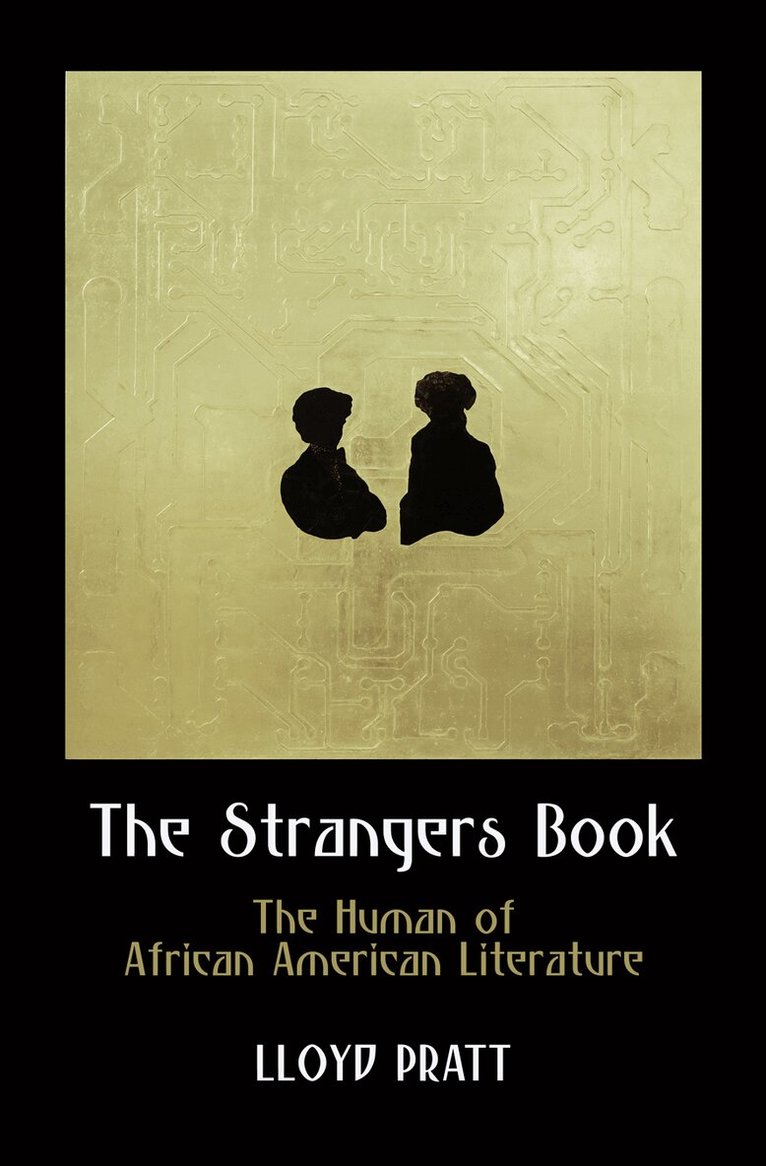
The Strangers Book explores how various nineteenth-century African American writers radically reframed the terms of humanism by redefining what it meant to be a stranger. Rejecting the idea that humans have easy access to a common reserve of experiences and emotions, they countered the notion that a person can use a supposed knowledge of human nature to claim full understanding of any other person's life. Instead they posited that being a stranger, unknown and unknowable, was an essential part of the human condition. Affirming the unknown and unknowable differences between people, as individuals and in groups, laid the groundwork for an ethical and democratic society in which all persons could find a place. If everyone is a stranger, then no individual or class can lay claim to the characteristics that define who gets to be a human in political and public arenas.Lloyd Pratt focuses on nineteenth-century African American writing and publishing venues and practices such as the Colored National Convention movement and literary societies in Nantucket and New Orleans. Examining the writing of Frederick Douglass in tandem with that of the francophone free men of color who published the first anthology of African American poetry in 1845, he contends these authors were never interested in petitioning whites for sympathy or for recognition of their humanity. Instead, they presented a moral imperative to develop practices of stranger humanism in order to forge personal and political connections based on mutually acknowledged and always evolving differences.
Inbunden, Engelska, 2015
1 235 kr
Skickas inom 5-8 vardagar
The Strangers Book explores how various nineteenth-century African American writers radically reframed the terms of humanism by redefining what it meant to be a stranger. Rejecting the idea that humans have easy access to a common reserve of experiences and emotions, they countered the notion that a person can use a supposed knowledge of human nature to claim full understanding of any other person's life. Instead they posited that being a stranger, unknown and unknowable, was an essential part of the human condition. Affirming the unknown and unknowable differences between people, as individuals and in groups, laid the groundwork for an ethical and democratic society in which all persons could find a place. If everyone is a stranger, then no individual or class can lay claim to the characteristics that define who gets to be a human in political and public arenas.Lloyd Pratt focuses on nineteenth-century African American writing and publishing venues and practices such as the Colored National Convention movement and literary societies in Nantucket and New Orleans. Examining the writing of Frederick Douglass in tandem with that of the francophone free men of color who published the first anthology of African American poetry in 1845, he contends these authors were never interested in petitioning whites for sympathy or for recognition of their humanity. Instead, they presented a moral imperative to develop practices of stranger humanism in order to forge personal and political connections based on mutually acknowledged and always evolving differences.