Lone Lindholt - Böcker
Visar alla böcker från författaren Lone Lindholt. Handla med fri frakt och snabb leverans.
4 produkter
4 produkter
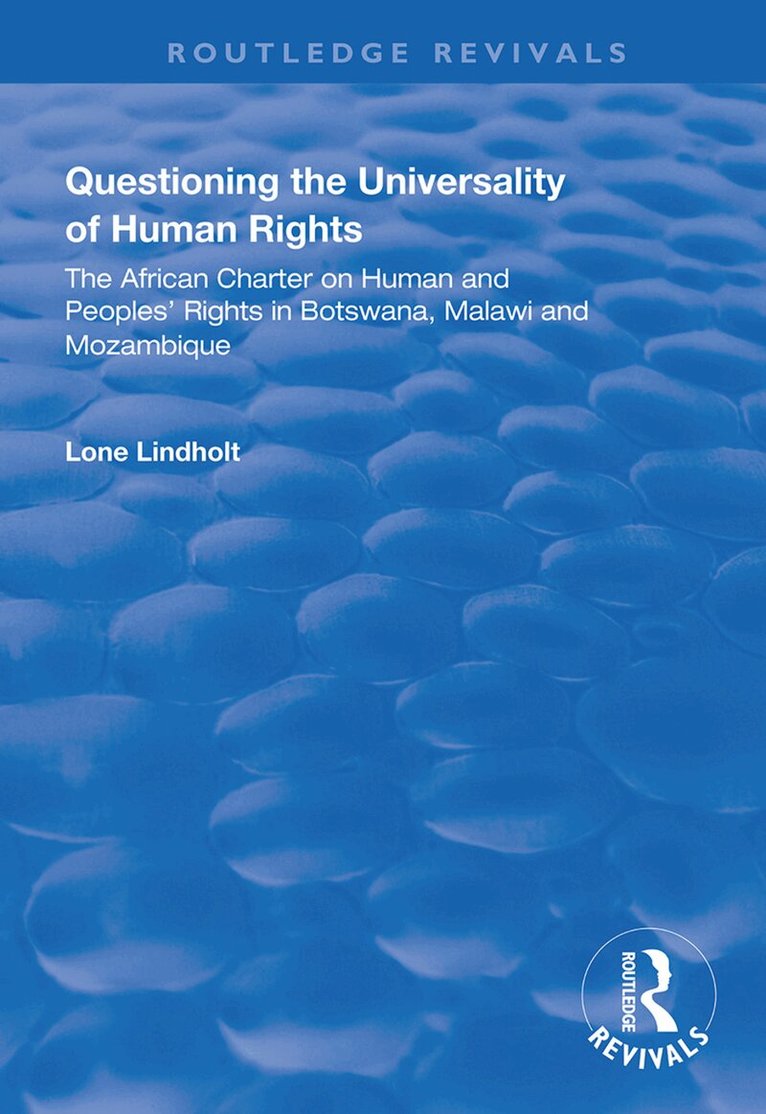
Questioning the Universality of Human Rights
African Charter on Human and People's Rights in Botswana, Malawi and Mozambique
Inbunden, Engelska, 2019
1 887 kr
Skickas inom 10-15 vardagar
First published in 1997, this volume analyses the material provisions of the African charter on Human and Peoples’ Rights from 1981, discussing the issues this raises both with respect to the theoretical aspects of human rights law, and in relation to its implementation in various African member states. Illustrating the first aspect, in particular the question of universality of human rights is discussed; with respect to the national implementation the Southern African states are the main focal points, in particular Botswana, Malawi and Mozambique.
Questioning the Universality of Human Rights
African Charter on Human and People's Rights in Botswana, Malawi and Mozambique
Häftad, Engelska, 2020
509 kr
Skickas inom 10-15 vardagar
First published in 1997, this volume analyses the material provisions of the African charter on Human and Peoples’ Rights from 1981, discussing the issues this raises both with respect to the theoretical aspects of human rights law, and in relation to its implementation in various African member states. Illustrating the first aspect, in particular the question of universality of human rights is discussed; with respect to the national implementation the Southern African states are the main focal points, in particular Botswana, Malawi and Mozambique.
Del 9 - Human Rights in Development
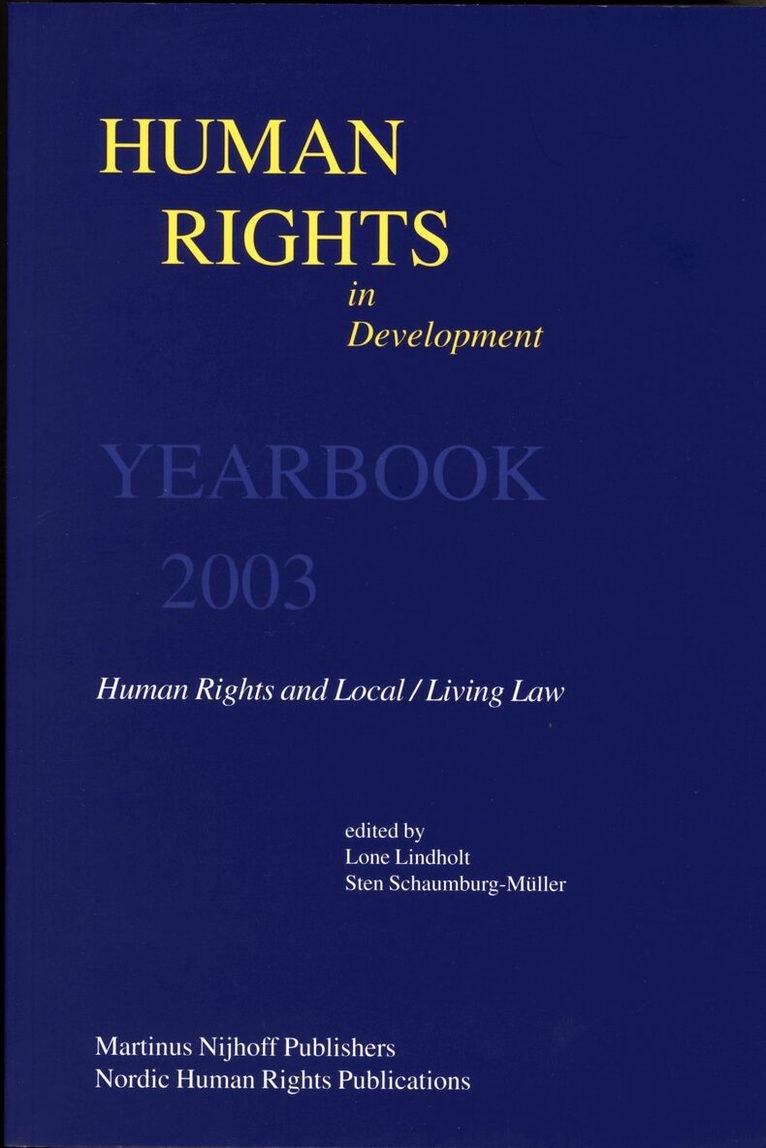
Human Rights in Development, Volume 9
Yearbook 2003
Häftad, Engelska, 2005
1 473 kr
Skickas inom 5-8 vardagar
The current edition is the fifteenth in the series. Over the years the structure of the yearbook has shifted from that of a journal to a thematic anthology. The main editorship as well as the thematic expertise for this volume has been the responsibility of the Danish Institute for Human Rights. As the title of this volume, “Human Rights and Local/Living Law”, indicates, its focus is on the various forms of local, informal and/or customary law and their interaction with human rights. The Human Rights in Development series takes its starting point in a development perspective and aims to be topical, comprehensive, and multi-disciplinary, exemplifying the “cross-fertilization” of theoretical and practical approaches. Contributions are sought from researchers and practitioners in both donor and recipient countries. To ensure an increased focus on Southern perspectives, participation in the editorial work and inclusion of authors from a broad geographical scope has been, and is continuously, sought.The volumes published in the Human Rights in Development series, which for historical reasons still carry the word Yearbook in their title, are the result of a long-term collaboration between human rights research institutes and centres. Currently, the partners in the project include the Christian Michelsen Institute, Bergen; the Danish Institute for Human Rights, Copenhagen; the Icelandic Human Rights Centre, Reykjavik; the Ludwig Boltzman Institute of Human Rights, Vienna; the Netherlands Institute of Human Rights, Utrecht; the Norwegian Centre for Human Rights, Oslo; the Raoul Wallenberg Institute of Human Rights and Humanitarian Law, Lund; and the Åbo Akademi University Institute for Human Rights, Turku/Åbo.As in previous years, the publication is aimed at a broad audience, including government agencies, donor agencies, embassies, the press, non-governmental organisations, and the academic community.
1 313 kr
Skickas inom 5-8 vardagar
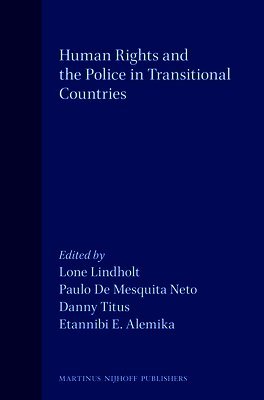
The volume, intended to function as an academic debate-book, began as a workshop on Human Rights and the Police in Transitional Countries held in March 2001 in Hillerød, Denmark. The workshop, which was funded by the Danish Ministry of Foreign Affairs, brought together practitioners and academics from Europe, Asia, Africa and Latin America to discuss common experience from the context of transition, which characterises all of them. These discussions take place along four themes, i.e. the transitional context, governance and rule of law; police and civil society; education and training; and the police organisation and reform, international intervention and aid. In addition to a number of key papers on general and theoretical aspects, each section contains a number of illustrative examples of how these issues express themselves in a large number of countries. Finally, the book sums up a catalogue of findings and recommendations in relation to the promotion of human rights in transitional countries and the role of the police in this work.