Lorenzo Sacconi – författare
Visar alla böcker från författaren Lorenzo Sacconi. Handla med fri frakt och snabb leverans.
5 produkter
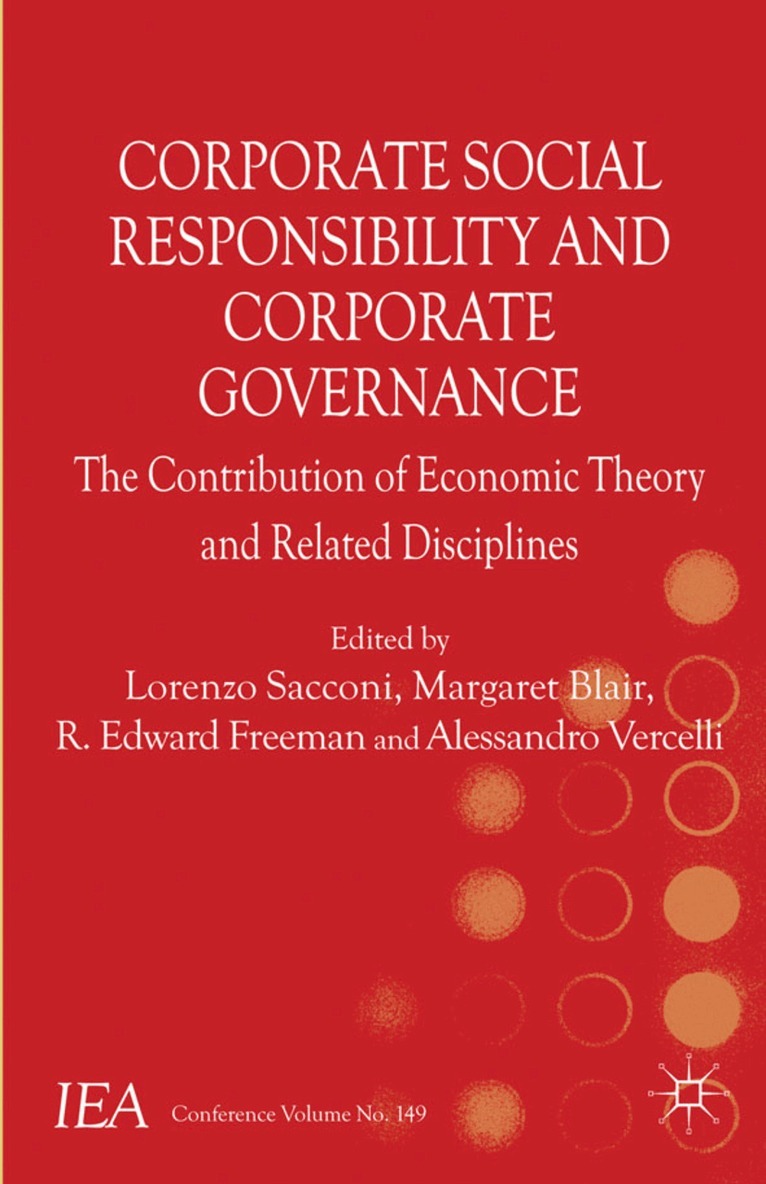
Corporate Social Responsibility and Corporate Governance
The Contribution of Economic Theory and Related Disciplines
Av Lorenzo Sacconi, Margaret Blair m. fl.
Inbunden, 2010
1126 kr
Lägg i varukorg
Corporate social responsibility is examined in this book as multi-stakeholder approach to corporate governance. This volume outlines neo-institutional and stakeholder theories of the firm, new rational choice and social contract normative models, self regulatory and soft law models, and the …
Corporate Social Responsibility and Corporate Governance
The Contribution of Economic Theory and Related Disciplines
Av R. Edward Freeman, Margaret Blair m. fl.
E-bok, 2010
1550 kr
Lägg i varukorg
Corporate social responsibility is examined in this book as multi-stakeholder approach to corporate governance. This volume outlines neo-institutional and stakeholder theories of the firm, new rational choice and social contract normative models, self regulatory and soft law models, and the …
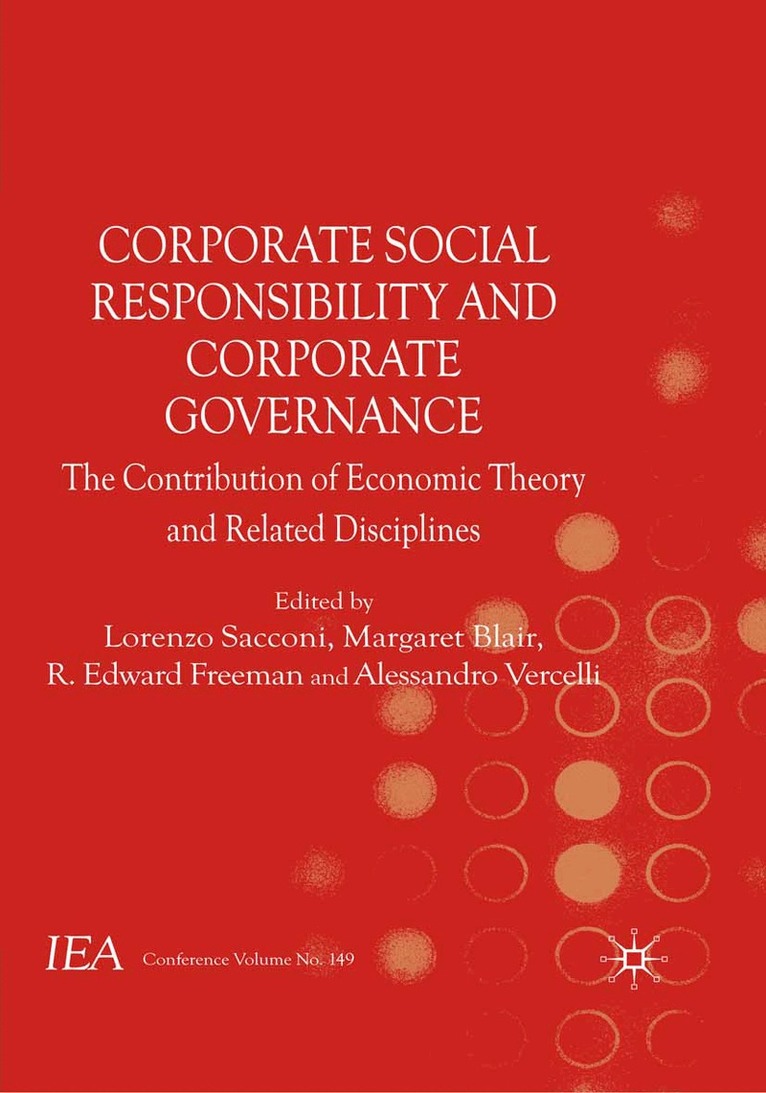
Corporate Social Responsibility and Corporate Governance
The Contribution of Economic Theory and Related Disciplines
Av Lorenzo Sacconi, Margaret Blair m. fl.
Häftad, 2011
1089 kr
Lägg i varukorg
Corporate social responsibility is examined in this book as multi-stakeholder approach to corporate governance. This volume outlines neo-institutional and stakeholder theories of the firm, new rational choice and social contract normative models, self regulatory and soft law models, and the …
Social Contract of the Firm
Economics, Ethics and Organisation
E-bok, 2012
718 kr
Lägg i varukorg
In order to survive as a social institution a firm needs a constitutional social contract, even though implicit, among its stakeholders. This social contract must exist if an institution is to be justified. The book focuses on two main issues: To find out the terms of the hypothetical agreement …
Social Contract of the Firm
Economics, Ethics and Organisation
Häftad, 2012
550 kr
Lägg i varukorg
In order to survive as a social institution a firm needs a constitutional social contract, even though implicit, among its stakeholders. This social contract must exist if an institution is to be justified. The book focuses on two main issues: To find out the terms of the hypothetical agreement …