Lori R. Walsh – författare
Visar alla böcker från författaren Lori R. Walsh. Handla med fri frakt och snabb leverans.
3 produkter
3 produkter
1 637 kr
Skickas inom 10-15 vardagar
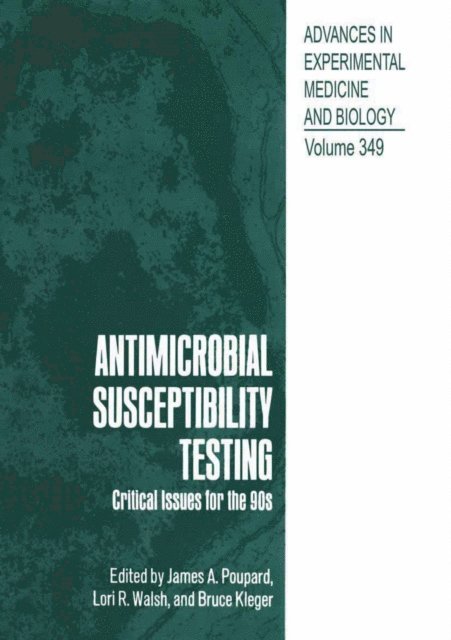
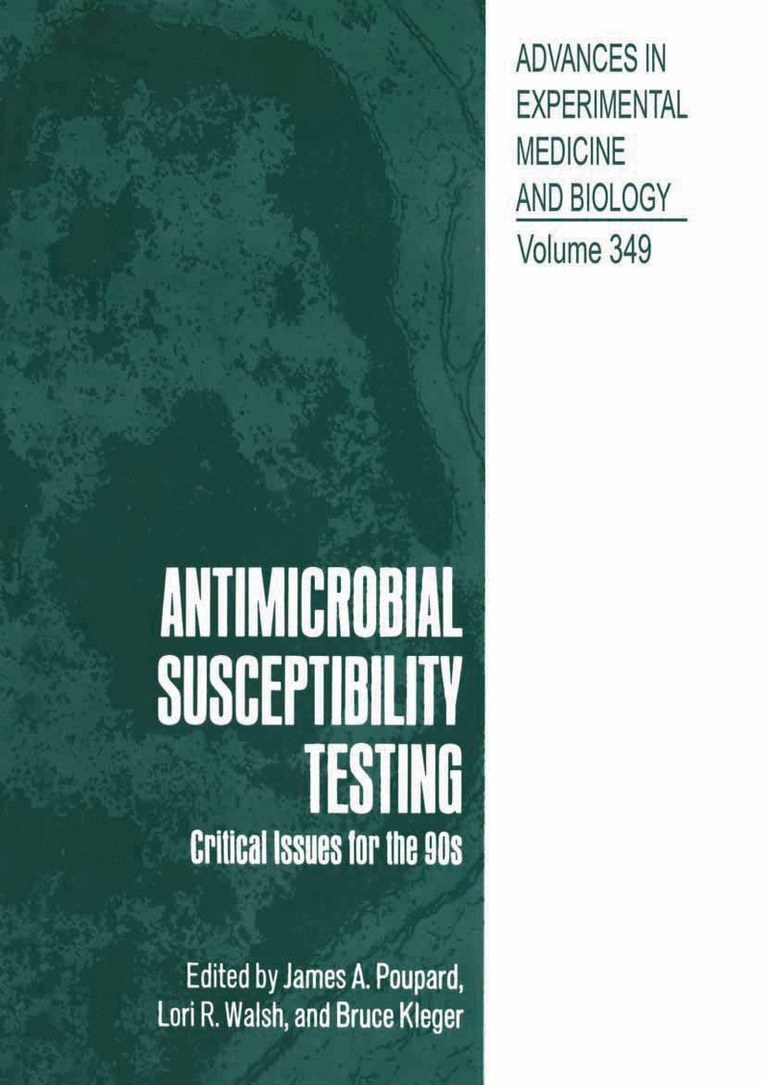
The papers assembled in this collection comprise a majority of the oral presentations as well as several poster presentations given at the 22nd Annual Symposium arranged by the Bastern Pennsylvania Branch of the American Society for MicrobioloS)'. The symposium would not be possible without the generous support of the many sponsors (see sponsor list) or without the concerted effort of a11 the Committee members. This Symposium series has evolved into an annual Bastern Pennsylvania Branch ASM event that attracts participants from a wide geographie area. It should be noted that one of the hallmarks of these symposia involves interaction between the presenters and those in attendance. Several authors have altered their by the participants. Therefore, the manuscript that manuscripts based on comments fo11ows should be viewed as a group effort of both the participants and presenters. J ames Poupard Lori Walsh Bruee Kleger ix CONTENTS 1 Introduction 1: CURRENT METHODS The Evolution of Antimicrobial Susceptibility Testing Methods . . . . . . . . . . . . . . . 3 James A. Poupard, Stephen F. Rittenhouse, and Lori R. Walsh Antimicrobial Susceptibility Tests: Testing Methods and Interpretive Problems. . . . . . . . . . . . . . . . . . . . . . . . . . . . . . . 15 Patrick R. Murray Clinician Utilization of Rapid Antibiotic Susceptibility Data: A Prospective Study . . . . . . . . . . . . . . . . . . . . . . . . . . . . . . . . . . 27 Franklin P. Koontz SESSION 2: CONTEMPORARY ISSUES IN SUSCEPTIBILITY TESTING When We Should Be Testing, How Often and What to Report . . . . . . . . . . . . . . . 35 Raymond C. Bartlett Areas of Recent Emphasis of the National Committee for Clinical Laboratory Standards Subcommittee on Antimicrobial Susceptibility Testing . . . . . . . . . . . . . . . . .. . . . . . 61 James H. Jorgensen Non-Traditional Approaches for Quality Control of Antimicrobial Susceptibility Tests . . . . . . . . . . . . . . . . . . . . . . . . .
550 kr
Skickas inom 10-15 vardagar
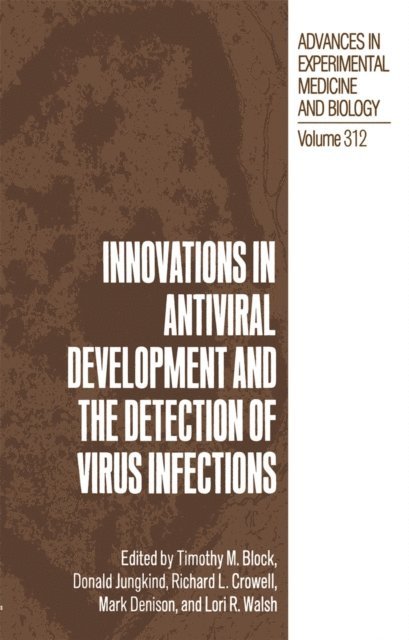
THE ERA OF ANTIVIRALS Introduction Although there are more than one hundred medically useful antibiotics and fungicides, there are only seven compounds licensed for use as antiviral agents, in the USA. Some of these (acyclovir and ganciclovir) are actually derivatives of each other, making the number of new discoveries even smaller. Moreover, most of these agents are of only limited therapeutic value and have substantial toxicity. It has been more than 100 years ago since Pasteur studied rabies virus (2) and Rous (4) showed that a small filterable agent (not bacteria) caused disease (sarcoma) in chickens. It was nearly 100 years ago that yellow fever virus, the first recognized human pathogenic virus, was unambiguously associated with disease (3). Enteroviruses were cultured for the first time nearly 50 years ago (1). Why then has effective chemotherapy against viruses lagged behind that of other microorganisms? Viruses are often difficult to grow and image. However, with the dynamic advances in molecular biology and increased sophistication in tissue culture, the field of virology has blossomed and resulted in improved methods for detection of virus infection. The use of viruses as models of gene regulation and replication has also resulted in a massive accumulation of information.
1 637 kr
Skickas inom 10-15 vardagar
The papers assembled in this collection comprise a majority of the oral presentations as well as several poster presentations given at the 22nd Annual Symposium arranged by the Bastern Pennsylvania Branch of the American Society for MicrobioloS)'. The symposium would not be possible without the generous support of the many sponsors (see sponsor list) or without the concerted effort of a11 the Committee members. This Symposium series has evolved into an annual Bastern Pennsylvania Branch ASM event that attracts participants from a wide geographie area. It should be noted that one of the hallmarks of these symposia involves interaction between the presenters and those in attendance. Several authors have altered their by the participants. Therefore, the manuscript that manuscripts based on comments fo11ows should be viewed as a group effort of both the participants and presenters. J ames Poupard Lori Walsh Bruee Kleger ix CONTENTS 1 Introduction 1: CURRENT METHODS The Evolution of Antimicrobial Susceptibility Testing Methods . . . . . . . . . . . . . . . 3 James A. Poupard, Stephen F. Rittenhouse, and Lori R. Walsh Antimicrobial Susceptibility Tests: Testing Methods and Interpretive Problems. . . . . . . . . . . . . . . . . . . . . . . . . . . . . . . 15 Patrick R. Murray Clinician Utilization of Rapid Antibiotic Susceptibility Data: A Prospective Study . . . . . . . . . . . . . . . . . . . . . . . . . . . . . . . . . . 27 Franklin P. Koontz SESSION 2: CONTEMPORARY ISSUES IN SUSCEPTIBILITY TESTING When We Should Be Testing, How Often and What to Report . . . . . . . . . . . . . . . 35 Raymond C. Bartlett Areas of Recent Emphasis of the National Committee for Clinical Laboratory Standards Subcommittee on Antimicrobial Susceptibility Testing . . . . . . . . . . . . . . . . .. . . . . . 61 James H. Jorgensen Non-Traditional Approaches for Quality Control of Antimicrobial Susceptibility Tests . . . . . . . . . . . . . . . . . . . . . . . . .