Louise Mycock – författare
Visar alla böcker från författaren Louise Mycock. Handla med fri frakt och snabb leverans.
2 produkter
2 produkter
2 258 kr
Skickas inom 5-8 vardagar
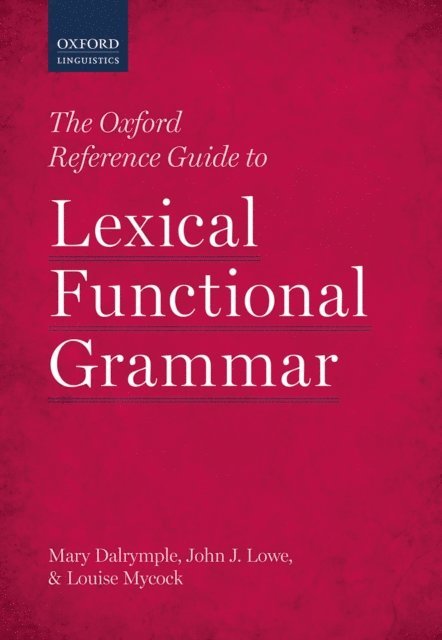
This volume is the most comprehensive reference work to date on Lexical Functional Grammar. The authors provide detailed and extensive coverage of the analysis of syntax, semantics, morphology, prosody, and information structure, and how these aspects of linguistic structure interact in the nontransformational framework of LFG. The book is divided into three parts. The first part examines the syntactic theory and formal architecture of LFG, with detailed explanations and comprehensive illustration, providing an unparalleled introduction to the fundamentals of the theory. Part two explores non-syntactic levels of linguistic structure, including the syntax-semantics interface and semantic representation, argument structure, information structure, prosodic structure, and morphological structure, and how these are related in the projection architecture of LFG. Chapters in the third part illustrate the theory more explicitly by presenting explorations of the syntax and semantics of a range of representative linguistic phenomena: modification, anaphora, control, coordination, and long-distance dependencies. The final chapter discusses LFG-based work not covered elsewhere in the book, as well as new developments in the theory.The volume will be an invaluable reference for graduate and advanced undergraduate students and researchers in a wide range of linguistic sub-fields, including syntax, morphology, semantics, information structure, and prosody, as well as those working in language documentation and description.
1 524 kr
Kommande
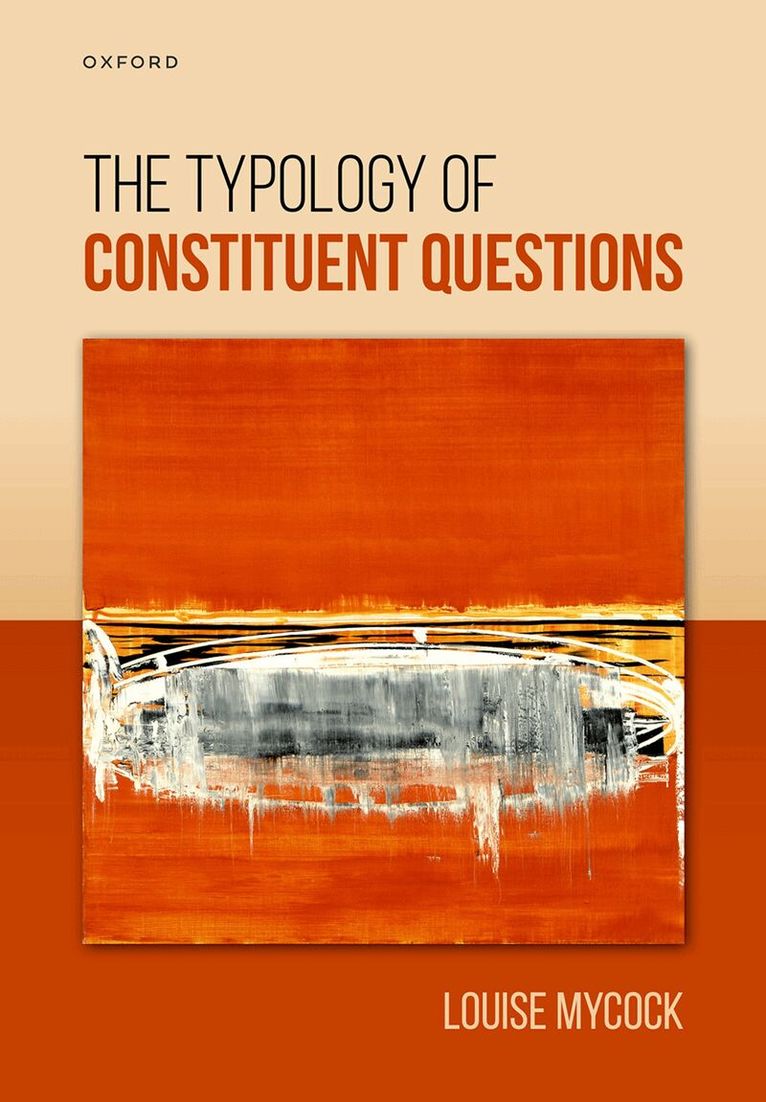
This book explores and analyses the typology of constituent ('wh') questions within the non-derivational framework of Lexical-Functional Grammar (LFG). Part I examines fundamental features of constituent questions, focusing on syntax, semantics, information structure, and prosody. The chapters examine the roles of syntax and prosody in encoding information structure status and delimiting interrogative scope, and consider how these aspects of linguistic structure and their interfaces are modelled in LFG. Part II turns to the syntax and prosody of constituent questions in three case-study languages, each exemplifying a distinct constituent question formation strategy: in situ (Japanese), ex situ (Hungarian), and combined ex situ and in situ (English). One chapter also considers a further possibility for constituent question formation, namely scope marking constructions, exemplified by the Q-marking construction (partial 'wh' movement) in Hungarian and the bare Q-scope construction (bare scope marking) in Malay. Along with clausal pied-piping, these constructions are analysed as constituent questions that include a question clause rather than some other type of question expression. Drawing on data from a variety of languages, Part III explores wider issues relating to the typology of constituent questions: variation within and across languages in terms of the formation strategies available, optionality, and constraints. What emerges is a view of the typological space that is built on the acknowledgement of the roles that syntactic and non-syntactic aspects of linguistic structure can play in constituent question formation, which in turn provides a more complete understanding of constituent questions cross-linguistically.