L.S. Pinchuk – författare
Visar alla böcker från författaren L.S. Pinchuk. Handla med fri frakt och snabb leverans.
5 produkter
Plastics for Corrosion Inhibition
Av V.A. Goldade, L.S. Pinchuk m. fl.
Inbunden, 2005
2183 kr
Lägg i varukorg
One of the key problems of failure-free operation of machinery is prevention of corrosion. The global scale of modern production makes this problem even more critical. At the beginning of the 21st century industrial contami- tion and the corrosion-active nature of the environment reached a level …
Plastics for Corrosion Inhibition
Av V.N. Kestelman, A.V. Makarevich m. fl.
E-bok, 2006
2862 kr
Lägg i varukorg
One of the key problems of failure-free operation of machinery is prevention of corrosion. The global scale of modern production makes this problem even more critical. At the beginning of the 21st century industrial contami- tion and the corrosion-active nature of the environment reached a level …
Plastics for Corrosion Inhibition
Av V.A. Goldade, L.S. Pinchuk m. fl.
Häftad, 2010
2133 kr
Lägg i varukorg
One of the key problems of failure-free operation of machinery is prevention of corrosion. The global scale of modern production makes this problem even more critical. At the beginning of the 21st century industrial contami- tion and the corrosion-active nature of the environment reached a level …
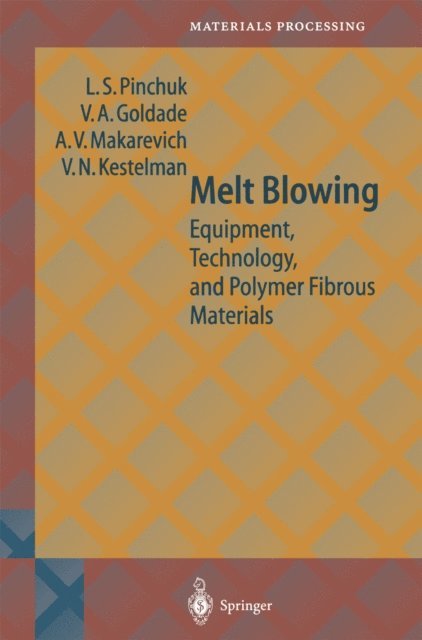
Melt Blowing
Equipment, Technology, and Polymer Fibrous Materials
Av V.N. Kestelman, A.V. Makarevich m. fl.
E-bok, 2012
712 kr
Lägg i varukorg
One of the recently emerging techniques of fibrous materials production, melt blowing, consists of forming fibers from substances heated above their melting (crystalline) or glass transition (glass-like) point with further blowing by gas flow. The sprayed fibrous mass is then cooled to …
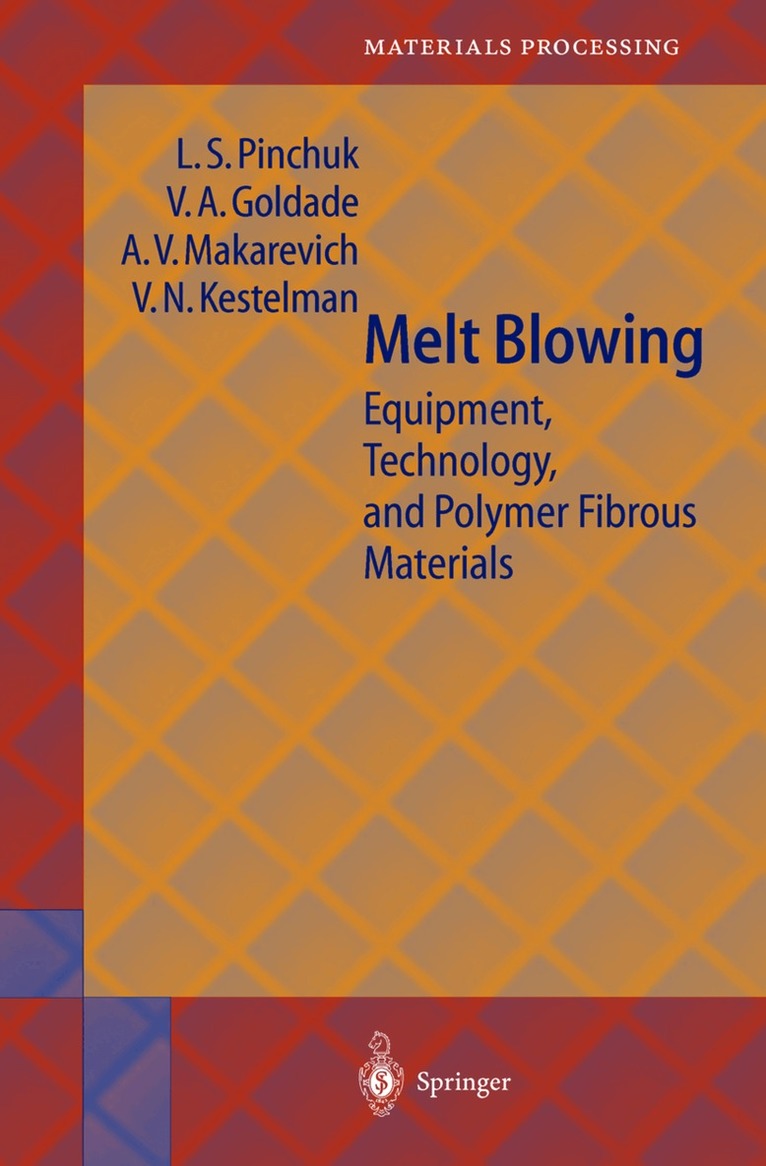
Melt Blowing
Equipment, Technology, and Polymer Fibrous Materials
Av L.S. Pinchuk, Vi.A. Goldade m. fl.
Häftad, 2012
551 kr
Lägg i varukorg
One of the recently emerging techniques of fibrous materials production, melt blowing, consists of forming fibers from substances heated above their melting (crystalline) or glass transition (glass-like) point with further blowing by gas flow. The sprayed fibrous mass is then cooled to …