V.A. Goldade – författare
Visar alla böcker från författaren V.A. Goldade. Handla med fri frakt och snabb leverans.
4 produkter
4 produkter
Inbunden, Engelska, 2005
2 156 kr
Skickas inom 10-15 vardagar
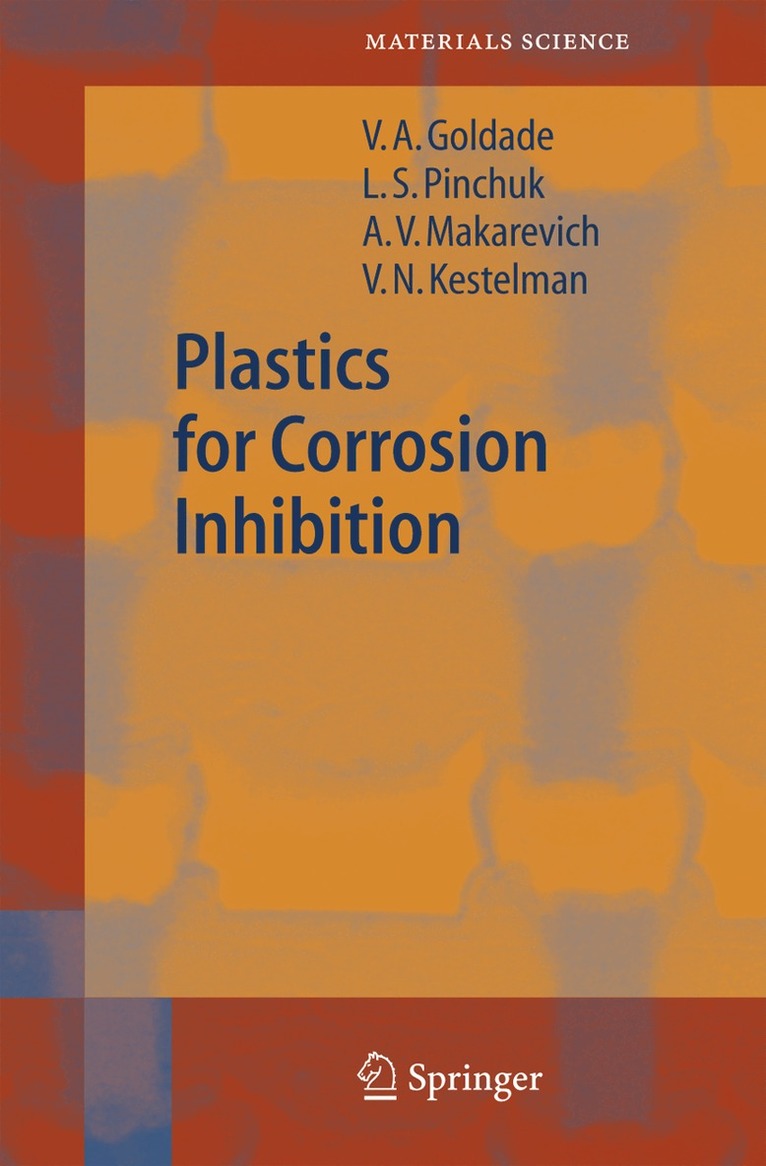
The development of polymer composites containing inhibitors of metal corrosion is an important endeavor in modern materials science and technology. Corrosion inhibitors can be located in a polymer matrix in the solid, liquid, or gaseous phase. This book details the thermodynamic principles for selecting these components, their compatibility, and their effectiveness. The various mechanisms of metal protection - barrier, inhibiting and electromechanical - are considered, as are the conflicting requirements placed on the structure of the combined material. Two main classes of inhibited materials (structural and films/coatings) are described in detail. Examples are given of structural plastics used in friction units subjected to mechano-chemical wear and of polymer films/coatings for protecting metal objects against corrosion.
E-bok
PDF, Engelska, 20062 741 kr
Läs direkt efter köp
One of the key problems of failure-free operation of machinery is prevention of corrosion. The global scale of modern production makes this problem even more critical. At the beginning of the 21st century industrial contami- tion and the corrosion-active nature of the environment reached a level such that corrosive damage of materials became commensurate with their prod- tion volume and expenditure on anticorrosion protection of machines became comparable with investments in basic production. Anticorrosion techniques changed from being an auxiliary service to industrial enterprises into a dev- oping, scienti?cally intensive and generously ?nanced branch of production. Polymers occupy a very speci?c place amongst anticorrosion techniques. Polymers combine good chemical resistance with impermeability to di?- ent media and unusual deformation characteristics. The main principle of their application as anticorrosion means is the creation of a tight barrier that insulates metal machine parts or constructions from corrosion agents. The advantages of polymers allow the creation of such a barrier at minimal cost,providingprotectionoftheworkingmachinesfromcorrosion,combining their manufacture with preservation and decreasing the cost of anticorrosion. This is one of the main reasons why world production of polymer materials increased by almost 50% in the past decade.
Inbunden, Engelska, 2002
921 kr
Skickas inom 10-15 vardagar
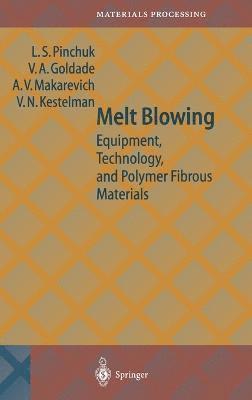
This book is devoted to a nontraditional class of materials which are manufactured by the melt-blowing process - i.e. by extrusion of polymer melt followed by fiber stretching with a gas stream. For the first time extensive data on classical and modern modifications of this technology are generalized and a review is given of extrusion head dies and subsidiary equipment. The text examines the structure and main properties of melt-blown materials as conditioned by peculiarities of overheated polymer melt spraying in an oxidizing medium. Information is given about filtering mechanisms and the main types of polymer fibrous filtering materials: electret, magnetic, adsorptional, bactericidic, and about carriers of microorganisms in biofilters. Social and ecological aspects of the application of melt-blown materials are analyzed.
Häftad, Engelska, 2010
1 999 kr
Skickas inom 5-8 vardagar
The development of polymer composites containing inhibitors of metal corrosion is an important endeavor in modern materials science and technology. Corrosion inhibitors can be located in a polymer matrix in the solid, liquid, or gaseous phase. This book details the thermodynamic principles for selecting these components, their compatibility, and their effectiveness. The various mechanisms of metal protection -- barrier, inhibiting and electromechanical -- are considered, as are the conflicting requirements placed on the structure of the combined material. Two main classes of inhibited materials (structural and films/coatings) are described in detail. Examples are given of structural plastics used in friction units subjected to mechano-chemical wear and of polymer films/coatings for protecting metal objects against corrosion.