LuA-s de Sousa – författare
824 kr
Läs direkt efter köp
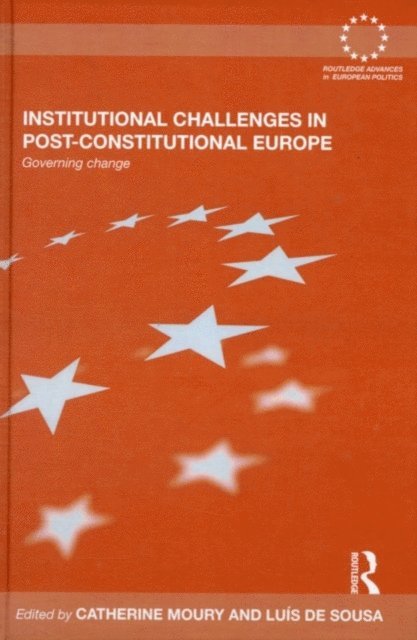
This book discusses the future of the European Union following the failure of the Constitutional and reform treaties, examining the transformations, dynamics and major issues facing present-day Europe.
Discussing key questions relating to the future of the European project, this book brings together leading academics and practitioners, including: Adrienne Héritier, Jan Zielonka, Yves Mény, Maurizio Cotta, Philippe Schmitter, ECJ Advocate General Miguel Maduro and former President of the European Parliament, Pat Cox. These contributors provide provocative and innovative accounts of developments within the European Union, contrasting theoretical reflections with a more professional perspective based on first-hand experience in running European affairs. The contributions focus on three key challenges: enlargement, the end of the permissive consensus and the need for democratization of the European Union, considering questions such as:
What does Europe represent to neighbouring countries and how is it addressing their expectations?
How could a larger Union be governed efficiently?
Are European citizens willing to delegate responsibility to their leaders to tackle European integration?
Is it accurate to accuse the European Union of a "democratic deficit"?
Institutional Challenges in Post-Constitutional Europe will be of interest to students and scholars of European politics, especially those with an interest in European integration/enlargement, constitutionalism, and democratization.
824 kr
Läs direkt efter köp
This book discusses the future of the European Union following the failure of the Constitutional and reform treaties, examining the transformations, dynamics and major issues facing present-day Europe.
Discussing key questions relating to the future of the European project, this book brings together leading academics and practitioners, including: Adrienne Héritier, Jan Zielonka, Yves Mény, Maurizio Cotta, Philippe Schmitter, ECJ Advocate General Miguel Maduro and former President of the European Parliament, Pat Cox. These contributors provide provocative and innovative accounts of developments within the European Union, contrasting theoretical reflections with a more professional perspective based on first-hand experience in running European affairs. The contributions focus on three key challenges: enlargement, the end of the permissive consensus and the need for democratization of the European Union, considering questions such as:
What does Europe represent to neighbouring countries and how is it addressing their expectations?
How could a larger Union be governed efficiently?
Are European citizens willing to delegate responsibility to their leaders to tackle European integration?
Is it accurate to accuse the European Union of a "democratic deficit"?
Institutional Challenges in Post-Constitutional Europe will be of interest to students and scholars of European politics, especially those with an interest in European integration/enlargement, constitutionalism, and democratization.
913 kr
Läs direkt efter köp
The purpose of this book is to understand the rise, future and implications of two important new kinds of "integrity warriors" - official anti-corruption agencies (ACAs) and anti-corruption NGOs – and to locate them in a wider context and history of anti-corruption activity.
Key issues of corruption and anti-corruption are discussed in an integrated and innovative way; through a number of country studies including Taiwan and South Korea, South East Europe, Fiji, Russia and the Baltic States. Some of the questions, used to examine the development of new anti-corruption actors, include:
In what context were these born?
How do they operate in pursuing their mission and mandate?
How successful have they been in relation to expected results?
To what extent are governmental and non governmental actors aware of each other and how far do they cooperate towards the common goal of fighting corruption?
What explains the shift in emphasis after the end of the cold war, from national to international action?
Governments, NGOs and Anti-Corruption will be of interest to students and scholars of corruption, public policy, political science, developmental studies and law.
Luís de Sousa is an Associate Researcher at CIES-ISCTE, Portugal and Calouste Gulbenkian Fellow at the European University Institute, Italy.
Barry Hindess is Emeritus Professor of Political Science at the Australian National University, Australia.
Peter Larmour is a Reader in Public Policy and Governance at the Crawford School of Economics and Government, Australian National University, Australia.
913 kr
Läs direkt efter köp
The purpose of this book is to understand the rise, future and implications of two important new kinds of "integrity warriors" - official anti-corruption agencies (ACAs) and anti-corruption NGOs – and to locate them in a wider context and history of anti-corruption activity.
Key issues of corruption and anti-corruption are discussed in an integrated and innovative way; through a number of country studies including Taiwan and South Korea, South East Europe, Fiji, Russia and the Baltic States. Some of the questions, used to examine the development of new anti-corruption actors, include:
In what context were these born?
How do they operate in pursuing their mission and mandate?
How successful have they been in relation to expected results?
To what extent are governmental and non governmental actors aware of each other and how far do they cooperate towards the common goal of fighting corruption?
What explains the shift in emphasis after the end of the cold war, from national to international action?
Governments, NGOs and Anti-Corruption will be of interest to students and scholars of corruption, public policy, political science, developmental studies and law.
Luís de Sousa is an Associate Researcher at CIES-ISCTE, Portugal and Calouste Gulbenkian Fellow at the European University Institute, Italy.
Barry Hindess is Emeritus Professor of Political Science at the Australian National University, Australia.
Peter Larmour is a Reader in Public Policy and Governance at the Crawford School of Economics and Government, Australian National University, Australia.