Luca Giuggioli – författare
Visar alla böcker från författaren Luca Giuggioli. Handla med fri frakt och snabb leverans.
5 produkter
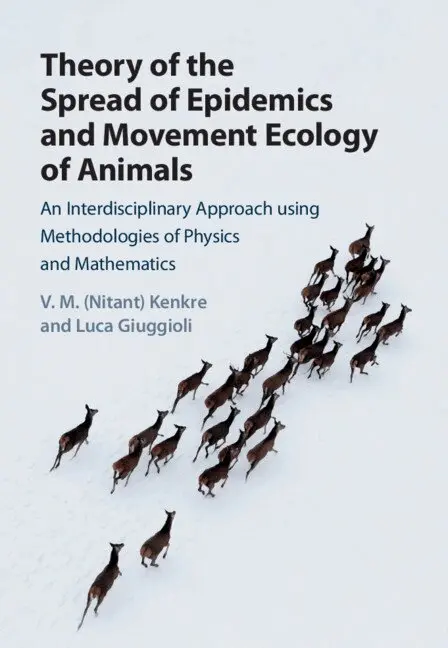
Theory of the Spread of Epidemics and Movement Ecology of Animals
An Interdisciplinary Approach using Methodologies of Physics and Mathematics
Av V. M. (Nitant) Kenkre, Luca Giuggioli
Inbunden, 2021
2410 kr
Lägg i varukorg
Exploiting powerful techniques from physics and mathematics, this book studies animal movement in ecology, with a focus on epidemic spread. Pulmonary syndrome is not only feared in epidemics of recent times, such as COVID-19, but is also characteristic of epidemics studied earlier such as …
Theory of the Spread of Epidemics and Movement Ecology of Animals
An Interdisciplinary Approach using Methodologies of Physics and Mathematics
Av Luca Giuggioli, V. M. (Nitant) Kenkre
E-bok, 2021
2396 kr
Lägg i varukorg
Exploiting powerful techniques from physics and mathematics, this book studies animal movement in ecology, with a focus on epidemic spread. Pulmonary syndrome is not only feared in epidemics of recent times, such as COVID-19, but is also characteristic of epidemics studied earlier such as …
Theory of the Spread of Epidemics and Movement Ecology of Animals
An Interdisciplinary Approach using Methodologies of Physics and Mathematics
Av Luca Giuggioli, V. M. (Nitant) Kenkre
E-bok, 2021
2344 kr
Lägg i varukorg
Exploiting powerful techniques from physics and mathematics, this book studies animal movement in ecology, with a focus on epidemic spread. Pulmonary syndrome is not only feared in epidemics of recent times, such as COVID-19, but is also characteristic of epidemics studied earlier such as …
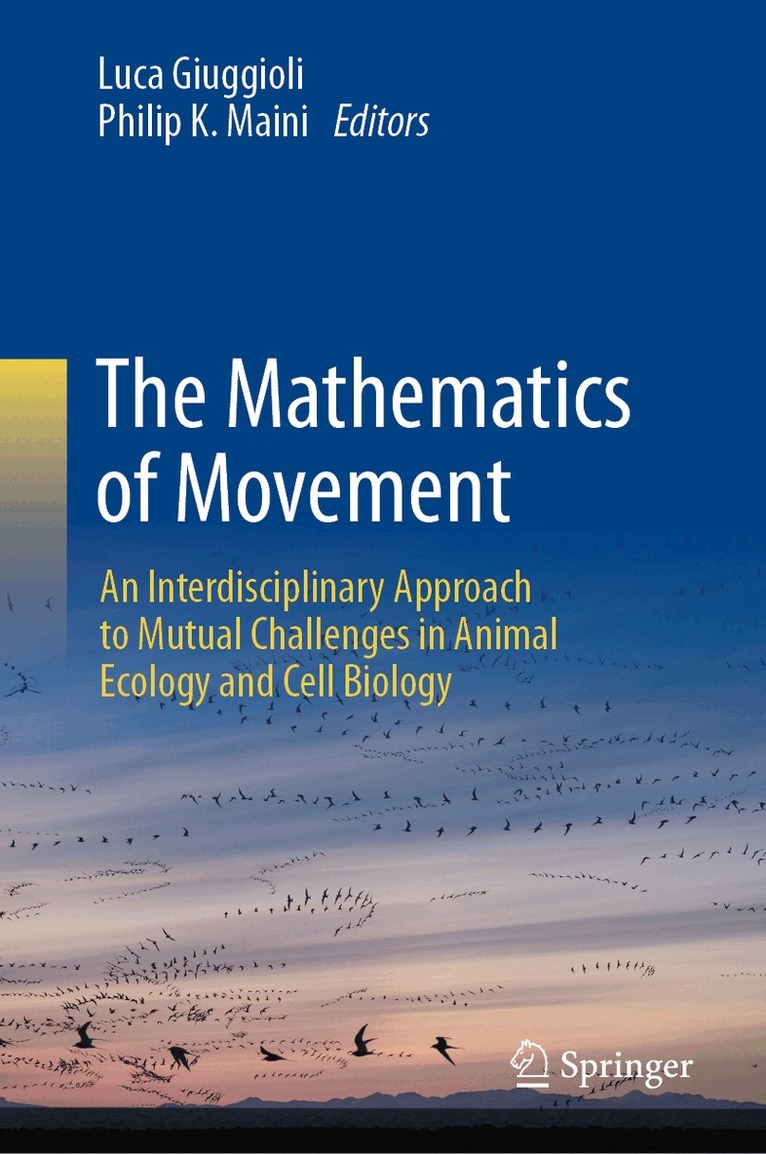
Mathematics of Movement
An Interdisciplinary Approach to Mutual Challenges in Animal Ecology and Cell Biology
Av Luca Giuggioli, Philip K. Maini
Inbunden, 2026
1521 kr
Lägg i varukorg
This volume presents insights into the mathematics of movement with a focus on applications to animal ecology and cell biology. With the advances over the past decades in sensor technologies, from Global Positioning Systems (GPS) and radio-telemetry for the observation of moving animals to imaging …
Mathematics of Movement
An Interdisciplinary Approach to Mutual Challenges in Animal Ecology and Cell Biology
Av Philip K. Maini, Luca Giuggioli
E-bok, 2026
1906 kr
Lägg i varukorg
This volume presents insights into the mathematics of movement with a focus on applications to animal ecology and cell biology. With the advances over the past decades in sensor technologies, from Global Positioning Systems (GPS) and radio-telemetry for the observation of moving animals to imaging …