Luca Mora – författare
1 185 kr
Skickas inom 10-15 vardagar
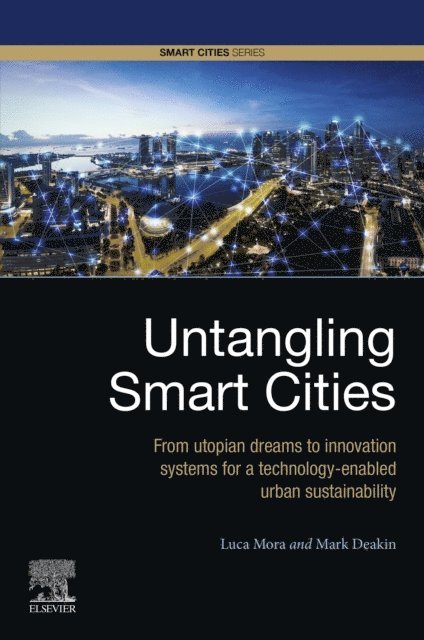
Untangling Smart Cities: From Utopian Dreams to Innovation Systems for a Technology-Enabled Urban Sustainability helps all key stakeholders understand the complex and often conflicting nature of smart city research, offering valuable insights for designing and implementing strategies to improve the smart city decision-making processes. The book drives the reader to a better theoretical and practical comprehension of smart city development, beginning with a thorough and systematic analysis of the research literature published to date. It addition, it provides an in-depth understanding of the entire smart city knowledge domain, revealing a deeply rooted division in its cognitive-epistemological structure as identified by bibliometric insights.
Users will find a book that fills the knowledge gap between theory and practice using case study research and empirical evidence drawn from cities considered leaders in innovative smart city practices.
Provides clarity on smart city concepts and strategies Presents a systematic literature analysis on the state-of-the-art of smart cities' research using bibliometrics combined with practical applications Offers a comprehensive and systematic analysis of smart cities research produced during its first three decades Generates a strong connection between theory and practice by providing the scientific knowledge necessary to approach the complex nature of smart cities Documents five main development pathways for smart cities development, serving the needs of city managers and policymakers with concrete advice and guidance1 708 kr
Läs direkt efter köp
1 649 kr
Läs direkt efter köp
1 306 kr
Skickas inom 10-15 vardagar
730 kr
Läs direkt efter köp
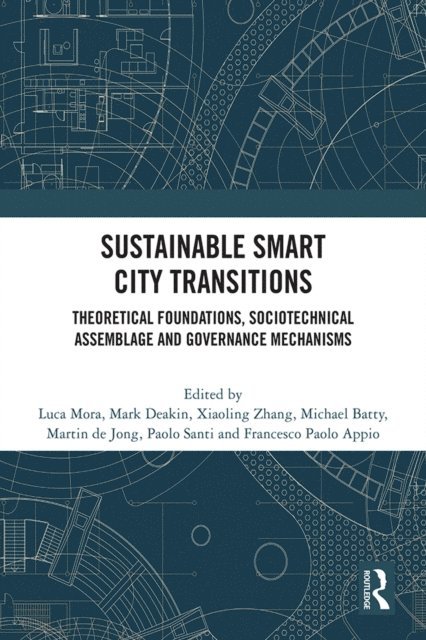
This book enhances the reader’s understanding of the theoretical foundations, sociotechnical assemblage, and governance mechanisms of sustainable smart city transitions.
Drawing on empirical evidence stemming from existing smart city research, the book begins by advancing a theory of sustainable smart city transitions, which forms bridges between smart city development studies and some of the key assumptions underpinning transition management and system innovation research, human geography, spatial planning, and critical urban scholarship. This interdisciplinary theoretical formulation details how smart city transitions unfold and how they should be conceptualized and enacted in order to be assembled as sustainable developments. The proposed theory of sustainable smart city transitions is then enriched by the findings of investigations into the planning and implementation of smart city transition strategies and projects.
Focusing on different empirical settings, change dimensions, and analytical elements, the attention moves from the sociotechnical requirements of citywide transition pathways to the development of sector-specific smart city projects and technological innovations, in particular in the fields of urban mobility and urban governance.
This book represents a relevant reference work for academic and practitioner audiences, policy makers, and representative of smart city industries.
The chapters in this book were originally published as a special issue of the Journal of Urban Technology.
730 kr
Läs direkt efter köp
This book enhances the reader’s understanding of the theoretical foundations, sociotechnical assemblage, and governance mechanisms of sustainable smart city transitions.
Drawing on empirical evidence stemming from existing smart city research, the book begins by advancing a theory of sustainable smart city transitions, which forms bridges between smart city development studies and some of the key assumptions underpinning transition management and system innovation research, human geography, spatial planning, and critical urban scholarship. This interdisciplinary theoretical formulation details how smart city transitions unfold and how they should be conceptualized and enacted in order to be assembled as sustainable developments. The proposed theory of sustainable smart city transitions is then enriched by the findings of investigations into the planning and implementation of smart city transition strategies and projects.
Focusing on different empirical settings, change dimensions, and analytical elements, the attention moves from the sociotechnical requirements of citywide transition pathways to the development of sector-specific smart city projects and technological innovations, in particular in the fields of urban mobility and urban governance.
This book represents a relevant reference work for academic and practitioner audiences, policy makers, and representative of smart city industries.
The chapters in this book were originally published as a special issue of the Journal of Urban Technology.
2 193 kr
Skickas inom 10-15 vardagar
642 kr
Skickas inom 10-15 vardagar