Paolo Santi – författare
Visar alla böcker från författaren Paolo Santi. Handla med fri frakt och snabb leverans.
10 produkter
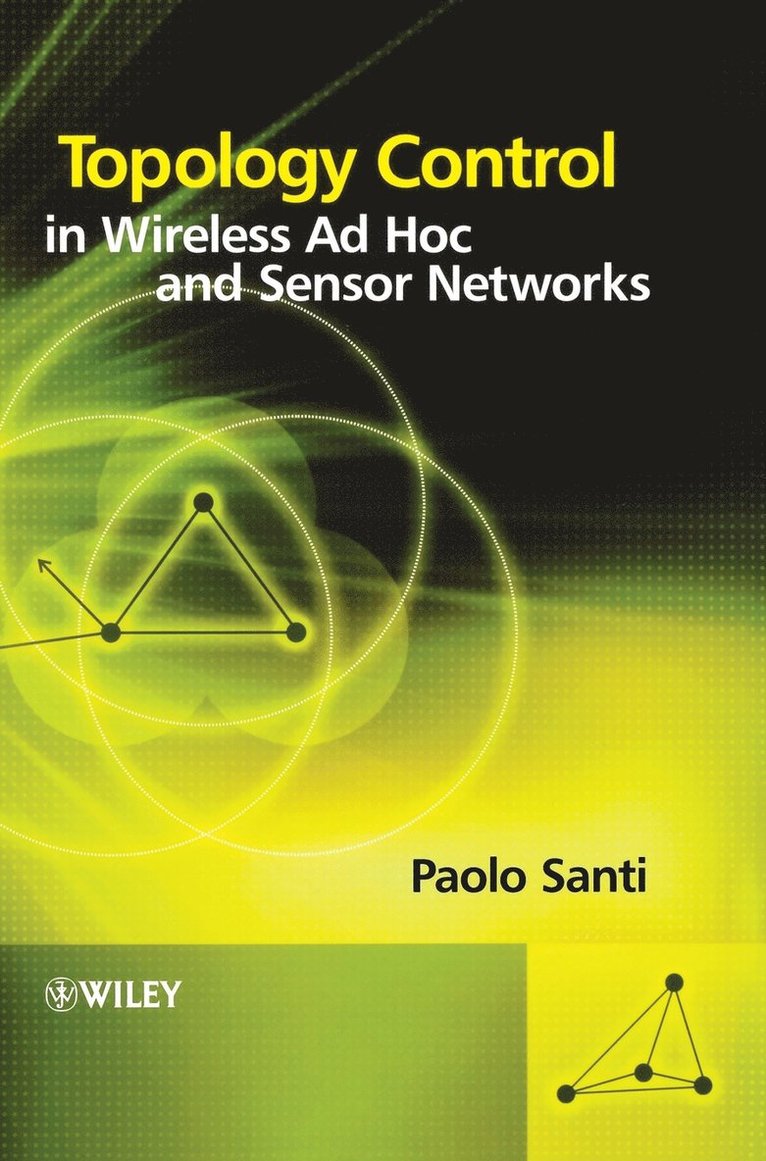
Topology Control in Wireless Ad Hoc and Sensor Networks
Av Paolo Santi
Inbunden, 2005
1411 kr
Lägg i varukorg
Topology control is fundamental to solving scalability and capacity problems in large-scale wireless ad hoc and sensor networks. Forthcoming wireless multi-hop networks such as ad hoc and sensor networks will allow network nodes to control the communication topology by choosing their transmitting …
Topology Control in Wireless Ad Hoc and Sensor Networks
Av Paolo Santi
E-bok, 2005
1645 kr
Lägg i varukorg
Topology control is fundamental to solving scalability and capacity problems in large-scale wireless ad hoc and sensor networks. Forthcoming wireless multi-hop networks such as ad hoc and sensor networks will allow network nodes to control the communication topology by choosing their transmitting …
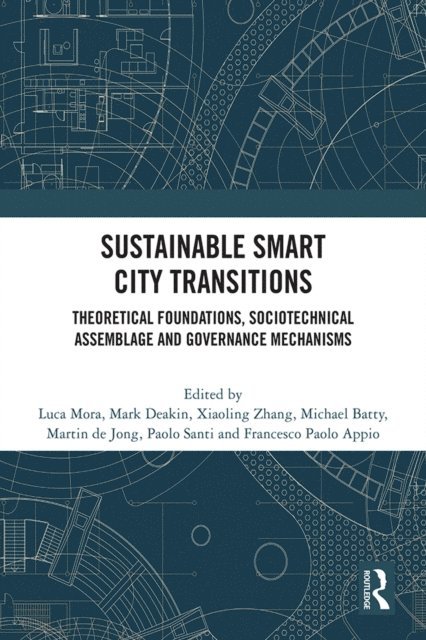
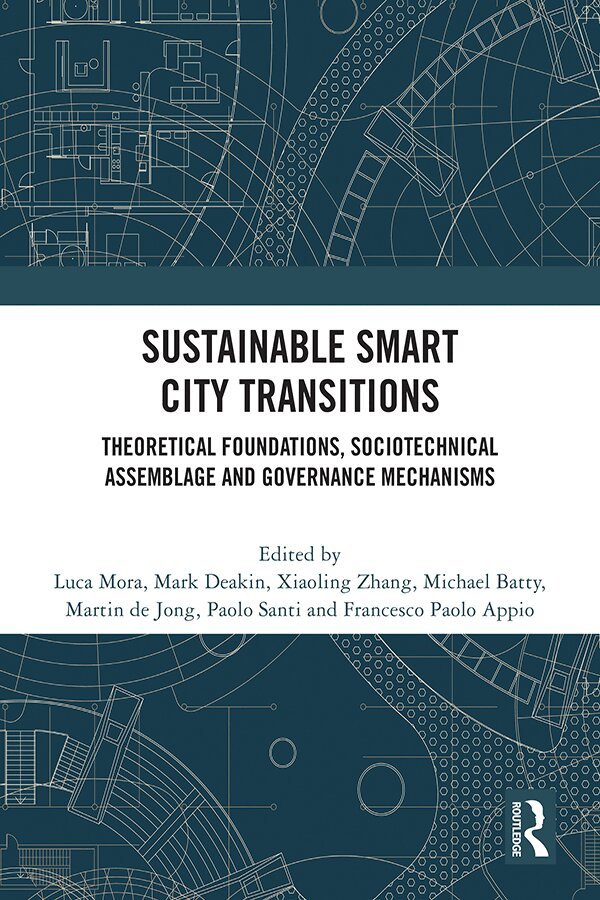
Sustainable Smart City Transitions
Theoretical Foundations, Sociotechnical Assemblage and Governance Mechanisms
Av Francesco Paolo Appio, Paolo Santi m. fl.
E-bok, 2022
814 kr
Lägg i varukorg
This book enhances the reader’s understanding of the theoretical foundations, sociotechnical assemblage, and governance mechanisms of sustainable smart city transitions. Drawing on empirical evidence stemming from existing smart city research, the book begins by advancing a theory of sustainable …
Sustainable Smart City Transitions
Theoretical Foundations, Sociotechnical Assemblage and Governance Mechanisms
Av Francesco Paolo Appio, Paolo Santi m. fl.
E-bok, 2022
814 kr
Lägg i varukorg
This book enhances the reader’s understanding of the theoretical foundations, sociotechnical assemblage, and governance mechanisms of sustainable smart city transitions. Drawing on empirical evidence stemming from existing smart city research, the book begins by advancing a theory of sustainable …
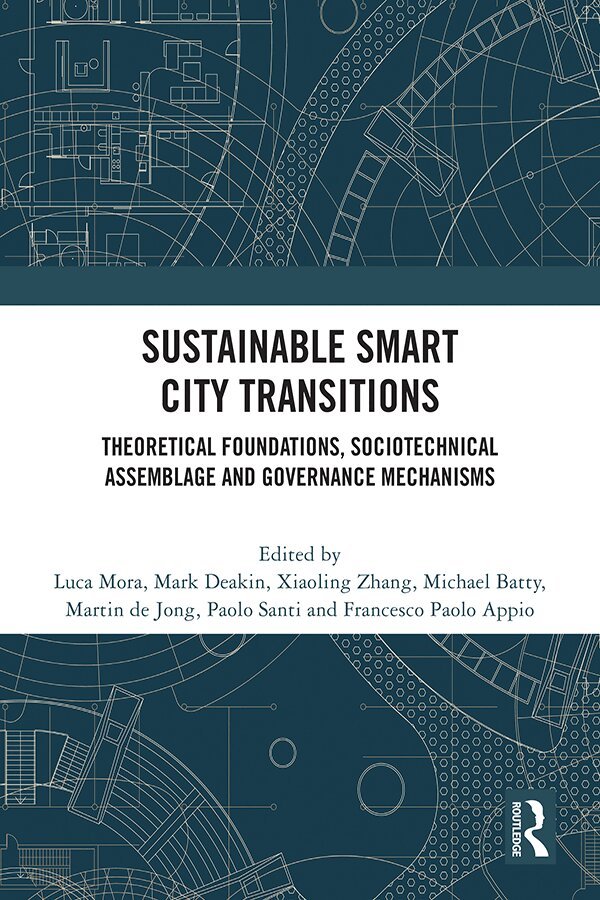
Sustainable Smart City Transitions
Theoretical Foundations, Sociotechnical Assemblage and Governance Mechanisms
Av Luca Mora, Mark Deakin m. fl.
Inbunden, 2022
2513 kr
Lägg i varukorg
This book enhances the reader’s understanding of the theoretical foundations, sociotechnical assemblage, and governance mechanisms of sustainable smart city transitions. Drawing on empirical evidence stemming from existing smart city research, the book begins by advancing a theory of sustainable …
Sustainable Smart City Transitions
Theoretical Foundations, Sociotechnical Assemblage and Governance Mechanisms
Av Luca Mora, Mark Deakin m. fl.
Häftad, 2024
692 kr
Lägg i varukorg
This book enhances the reader’s understanding of the theoretical foundations, sociotechnical assemblage, and governance mechanisms of sustainable smart city transitions. Drawing on empirical evidence stemming from existing smart city research, the book begins by advancing a theory of sustainable …
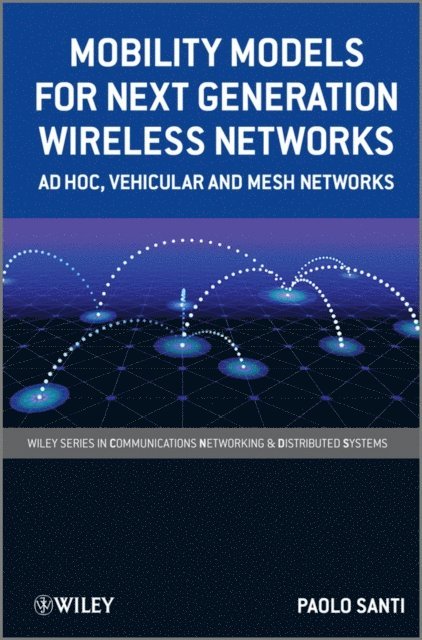
Mobility Models for Next Generation Wireless Networks
Ad Hoc, Vehicular and Mesh Networks
Av Paolo Santi
E-bok, 2012
1580 kr
Lägg i varukorg
Mobility Models for Next Generation Wireless Networks: Ad Hoc, Vehicular and Mesh Networks provides the reader with an overview of mobility modelling, encompassing both theoretical and practical aspects related to the challenging mobility modelling task. It also: Provides up-to-date coverage of …
Mobility Models for Next Generation Wireless Networks
Ad Hoc, Vehicular and Mesh Networks
Av Paolo Santi
E-bok, 2012
1580 kr
Lägg i varukorg
Mobility Models for Next Generation Wireless Networks: Ad Hoc, Vehicular and Mesh Networks provides the reader with an overview of mobility modelling, encompassing both theoretical and practical aspects related to the challenging mobility modelling task. It also: Provides up-to-date coverage of …
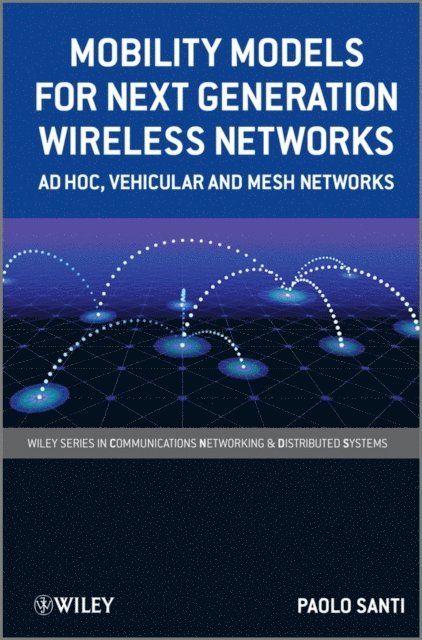
Mobility Models for Next Generation Wireless Networks
Ad Hoc, Vehicular and Mesh Networks
Av Paolo Santi
Inbunden, 2012
1389 kr
Lägg i varukorg
Mobility Models for Next Generation Wireless Networks: Ad Hoc, Vehicular and Mesh Networks provides the reader with an overview of mobility modelling, encompassing both theoretical and practical aspects related to the challenging mobility modelling task. It also: Provides up-to-date coverage of …
Mobility Models for Next Generation Wireless Networks – Ad Hoc, Vehicular and Mesh Networks
Av Paolo Santi
2012
1279 kr
Tillfälligt slut
Mobility Models for Next Generation Wireless Networks: Ad Hoc, Vehicular and Mesh Networks provides the reader with an overview of mobility modelling, encompassing both theoretical and practical aspects related to the challenging mobility modelling task. It also: * Provides up-to-date coverage of …