Luigi Russi – författare
Visar alla böcker från författaren Luigi Russi. Handla med fri frakt och snabb leverans.
4 produkter
4 produkter
Häftad, Engelska, 2026
298 kr
Kommande
Catholic Cosmotechnics for the AI Age resurrects Marshall McLuhan’s prophetic insight that “the medium is the message” and baptizes it in the sacramental imagination and liturgical wisdom of the Church. The result is a principled framework for technological creativity in the AI age that draws equally on Thomistic semiotics, media ecology, and human-computer interface design. Where Silicon Valley sees users to capture, the authors see participants in a cosmic leitourgia—a common work of returning creation to its source.Written by a diverse team of scholars and practitioners including designers, educators, radio hosts, and theologians, this profoundly interdisciplinary work bridges liturgy and technics, devotion and design, papal teaching and new media scholarship. The authors demonstrate how liturgical signs—from stained glass to sacred architecture to the gestures of the Mass—embody the paradoxical qualities of epiphany and asceticism, standing in stark contrast to the addictive, “frictionless” interfaces dominating our lives. Ranging from the semiotic structure of human-computer interaction to practical examples in community gardens and Catholic education, this book charts a path beyond the design mantras and attention economies that dominate the technocene.It is a summons to rediscover technology as poiesis—creative making in service of the Kingdom—and interface design as a site of liturgical participation. In an era of doomscrolling and algorithmic manipulation, Catholic Cosmotechnics for the AI Age reclaims the option of tending to the human face through a practice of interface design rejuvenated by the liturgy.
Häftad, Engelska, 2026
208 kr
Skickas inom 5-8 vardagar
Inbunden, Engelska, 2026
286 kr
Skickas inom 5-8 vardagar
Häftad, Engelska, 2013
280 kr
Skickas inom 3-6 vardagar
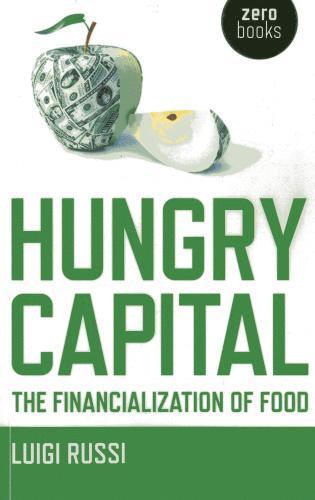
Over the past thirty years, the ability of global finance to affect aspects of everyday life has been increasing at an unprecedented rate. The world of food bears vivid testimony to this tendency, through the scars opened by the 2008 world food price crisis, the iron fist of retailing giants that occupy the supply chain and the unsustainable ecological footprint left behind by global production networks. Hungry Capital offers a rigorous analysis of the influence that financial imperatives exert on the food economy at different levels: from the direct use of edible commodities as an object of speculation to the complex food chains set up by manufacturers and supermarkets. It argues that the circular compulsion to build profits upon profits that global finance injects into the world of food restructures the basic nurturing relationship between man and nature into a streamlined process from which value has to be mined. The end result is a monstrous Leviathan that holds together while - at every step - risks to crumble.