Luiz Fernando de Paula – författare
Visar alla böcker från författaren Luiz Fernando de Paula. Handla med fri frakt och snabb leverans.
10 produkter
Financial Liberalization and Economic Performance
Brazil at the Crossroads
Inbunden, 2010
788 kr
Lägg i varukorg
Since the beginning of the 1990s, Brazil has followed a pattern of economic development inspired by Washington Consensus. This framework includes a set of liberalising and market friendly policies such as privatisation, trade liberalization, stimulus to foreign direct investment, tax reform, and …
Financial Liberalization and Economic Performance
Brazil at the Crossroads
Häftad, 2013
398 kr
Lägg i varukorg
Since the beginning of the 1990s, Brazil has followed a pattern of economic development inspired by Washington Consensus. This framework includes a set of liberalising and market friendly policies such as privatisation, trade liberalization, stimulus to foreign direct investment, tax reform, and …
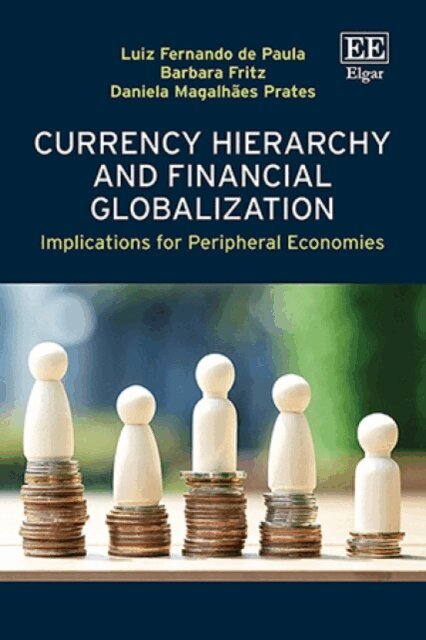
Currency Hierarchy and Financial Globalisation
Implications for Peripheral Economies
Av Luiz Fernando de Paula, Barbara Fritz m. fl.
Inbunden, 2026
1517 kr
Lägg i varukorg
This insightful book investigates how financial globalisation shapes the hierarchical order of currencies in the international monetary system, evaluating the implications for peripheral countries.Authors Luiz Fernando de Paula, Barbara Fritz and Daniela Magalhães Prates explore currency hierarchy …
Currency Hierarchy and Financial Globalisation
Implications for Peripheral Economies
Av Daniela Magalhaes Prates, Barbara Fritz m. fl.
E-bok, 2026
462 kr
Lägg i varukorg
This insightful book investigates how financial globalisation shapes the hierarchical order of currencies in the international monetary system, evaluating the implications for peripheral countries.Authors Luiz Fernando de Paula, Barbara Fritz and Daniela Magalhaes Prates explore currency hierarchy …
Currency Hierarchy and Financial Globalisation
Implications for Peripheral Economies
Av Daniela Magalhaes Prates, Barbara Fritz m. fl.
E-bok, 2026
472 kr
Lägg i varukorg
This insightful book investigates how financial globalisation shapes the hierarchical order of currencies in the international monetary system, evaluating the implications for peripheral countries.Authors Luiz Fernando de Paula, Barbara Fritz and Daniela Magalhaes Prates explore currency hierarchy …
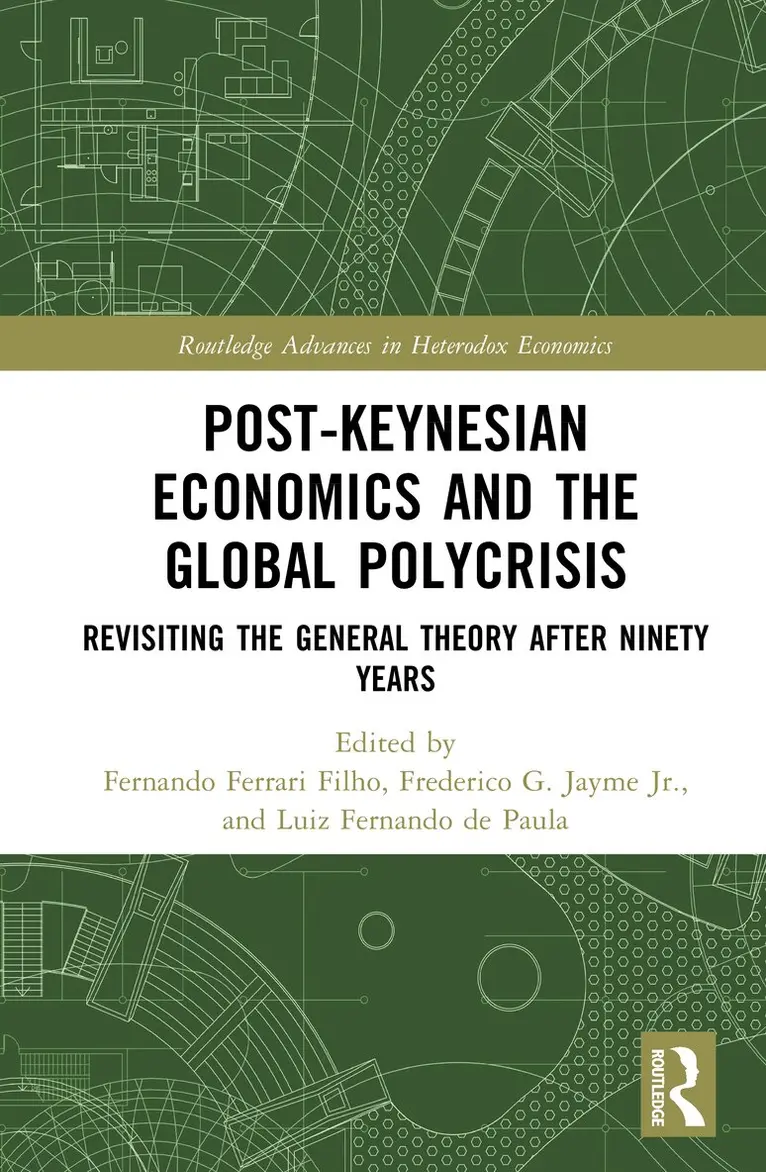
Post-Keynesian Economics and the Global Polycrisis
Revisiting the General Theory after Ninety Years
Av Fernando Ferrari Filho, Frederico G. Jayme Jr. m. fl.
Inbunden, 2026
2554 kr
Kommande
The ninetieth anniversary of the publication of John Maynard Keynes’ The General Theory of Employment, Interest and Money marks an ideal opportunity to revisit one of the most important books of the 20th Century.In this edited collection, an international cast list of contributors provide a …
Financial Liberalization and Economic Performance
Brazil at the Crossroads
E-bok, 2012
464 kr
Lägg i varukorg
Since the beginning of the 1990s, Brazil has followed a pattern of economic development inspired by Washington Consensus. This framework includes a set of liberalising and market friendly policies such as privatisation, trade liberalization, stimulus to foreign direct investment, tax reform, and …
Financial Liberalization and Economic Performance
Brazil at the Crossroads
E-bok, 2012
464 kr
Lägg i varukorg
Since the beginning of the 1990s, Brazil has followed a pattern of economic development inspired by Washington Consensus. This framework includes a set of liberalising and market friendly policies such as privatisation, trade liberalization, stimulus to foreign direct investment, tax reform, and …
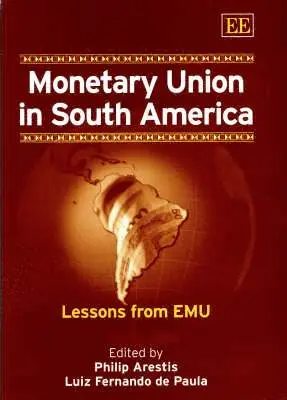
Monetary Union in South America
Lessons from EMU
Av Luiz Fernando de Paula, Philip Arestis
E-bok, 2003
462 kr
Lägg i varukorg
The integration process of 'The Common Market of the South' (MERCOSUR) has been characterized by serious economic turbulence, including the devaluation of the Brazilian currency and the severe Argentinean monetary crisis. As a response to these difficulties, the adoption of monetary union has …
Monetary Union in South America
Lessons from EMU
Av Philip Arestis, Luiz Fernando de Paula
Inbunden, 2003
1795 kr
Lägg i varukorg
The integration process of 'The Common Market of the South' (MERCOSUR) has been characterized by serious economic turbulence, including the devaluation of the Brazilian currency and the severe Argentinean monetary crisis. As a response to these difficulties, the adoption of monetary union has …