Daniela Magalhães Prates – författare
Visar alla böcker från författaren Daniela Magalhães Prates. Handla med fri frakt och snabb leverans.
6 produkter
6 produkter
Inbunden, Engelska, 2026
1 472 kr
Skickas inom 5-8 vardagar
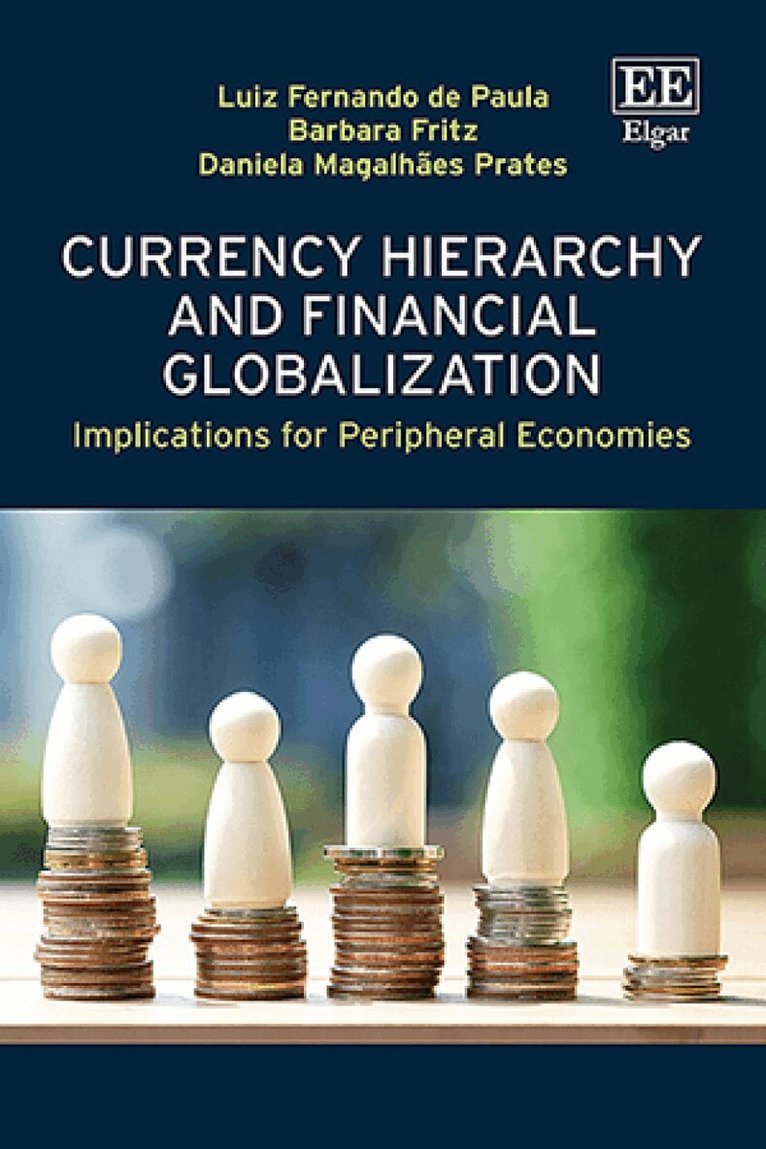
This insightful book investigates how financial globalisation shapes the hierarchical order of currencies in the international monetary system, evaluating the implications for peripheral countries.Authors Luiz Fernando de Paula, Barbara Fritz and Daniela Magalhães Prates explore currency hierarchy through a new Keynesian-Structuralist perspective, highlighting how peripheral economies are subject to greater macroeconomic and financial volatility. They outline how the current hierarchy fosters global and national inequalities, limiting peripheral countries’ capacity to implement social and redistributive policies, and preventing them from achieving income parity. The book traces the historical evolution of the global monetary order, examines a new channel of external vulnerability, and illustrates the asymmetries between the two groups of peripheral countries, namely emerging market economies and frontier market economies. Adopting a forward-thinking approach, this book assesses potential policy shifts and their effectiveness in fostering growth, sustainability and equity.Currency Hierarchy and Financial Globalisation is a valuable resource for scholars and students in the fields of financial and international economics. The financial analysis and empirical research presented in this book will also be of great benefit to policy makers and practitioners.
E-bok
PDF, Engelska, 2026443 kr
Läs direkt efter köp
This insightful book investigates how financial globalisation shapes the hierarchical order of currencies in the international monetary system, evaluating the implications for peripheral countries.Authors Luiz Fernando de Paula, Barbara Fritz and Daniela Magalhaes Prates explore currency hierarchy through a new Keynesian-Structuralist perspective, highlighting how peripheral economies are subject to greater macroeconomic and financial volatility. They outline how the current hierarchy fosters global and national inequalities, limiting peripheral countries' capacity to implement social and redistributive policies, and preventing them from achieving income parity. The book traces the historical evolution of the global monetary order, examines a new channel of external vulnerability, and illustrates the asymmetries between the two groups of peripheral countries, namely emerging market economies and frontier market economies. Adopting a forward-thinking approach, this book assesses potential policy shifts and their effectiveness in fostering growth, sustainability and equity.Currency Hierarchy and Financial Globalisation is a valuable resource for scholars and students in the fields of financial and international economics. The financial analysis and empirical research presented in this book will also be of great benefit to policy makers and practitioners.
E-bok
Engelska, 2026443 kr
Läs direkt efter köp
This insightful book investigates how financial globalisation shapes the hierarchical order of currencies in the international monetary system, evaluating the implications for peripheral countries.Authors Luiz Fernando de Paula, Barbara Fritz and Daniela Magalhaes Prates explore currency hierarchy through a new Keynesian-Structuralist perspective, highlighting how peripheral economies are subject to greater macroeconomic and financial volatility. They outline how the current hierarchy fosters global and national inequalities, limiting peripheral countries' capacity to implement social and redistributive policies, and preventing them from achieving income parity. The book traces the historical evolution of the global monetary order, examines a new channel of external vulnerability, and illustrates the asymmetries between the two groups of peripheral countries, namely emerging market economies and frontier market economies. Adopting a forward-thinking approach, this book assesses potential policy shifts and their effectiveness in fostering growth, sustainability and equity.Currency Hierarchy and Financial Globalisation is a valuable resource for scholars and students in the fields of financial and international economics. The financial analysis and empirical research presented in this book will also be of great benefit to policy makers and practitioners.
Inbunden, Engelska, 2017
1 122 kr
Skickas inom 10-15 vardagar
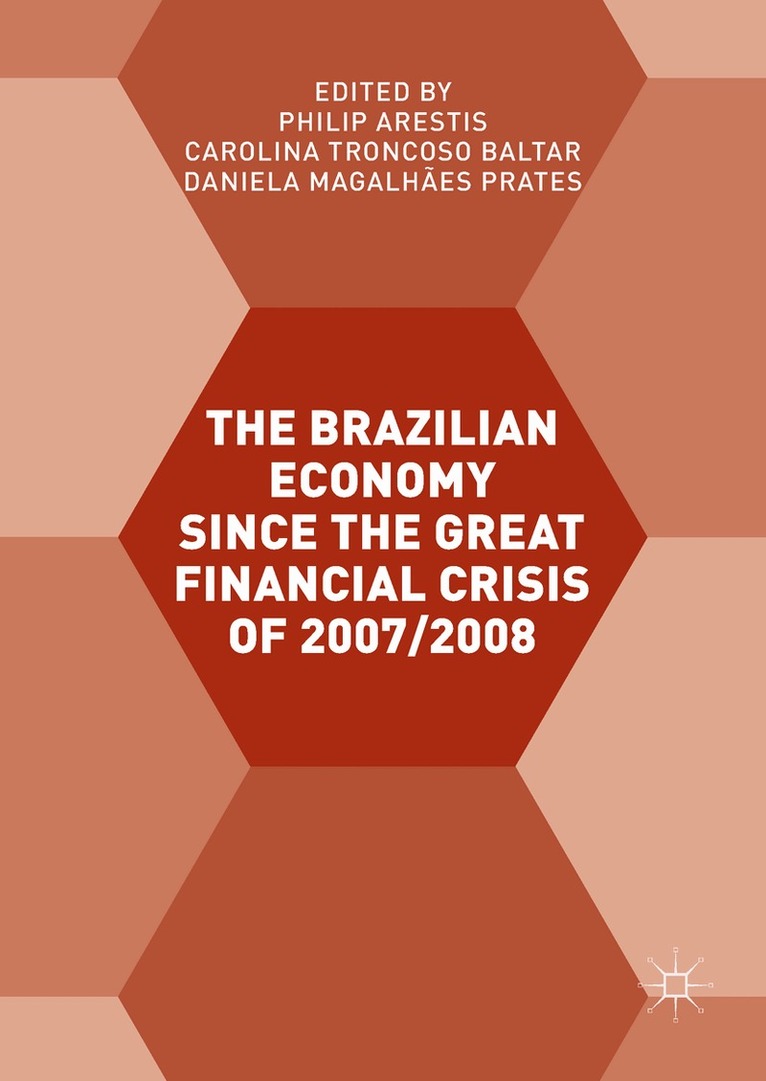
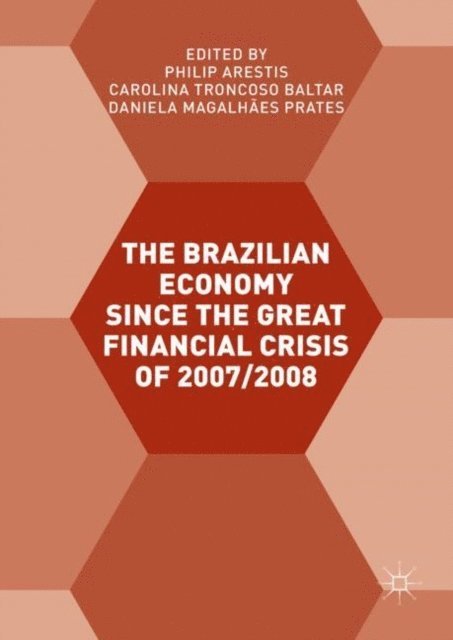
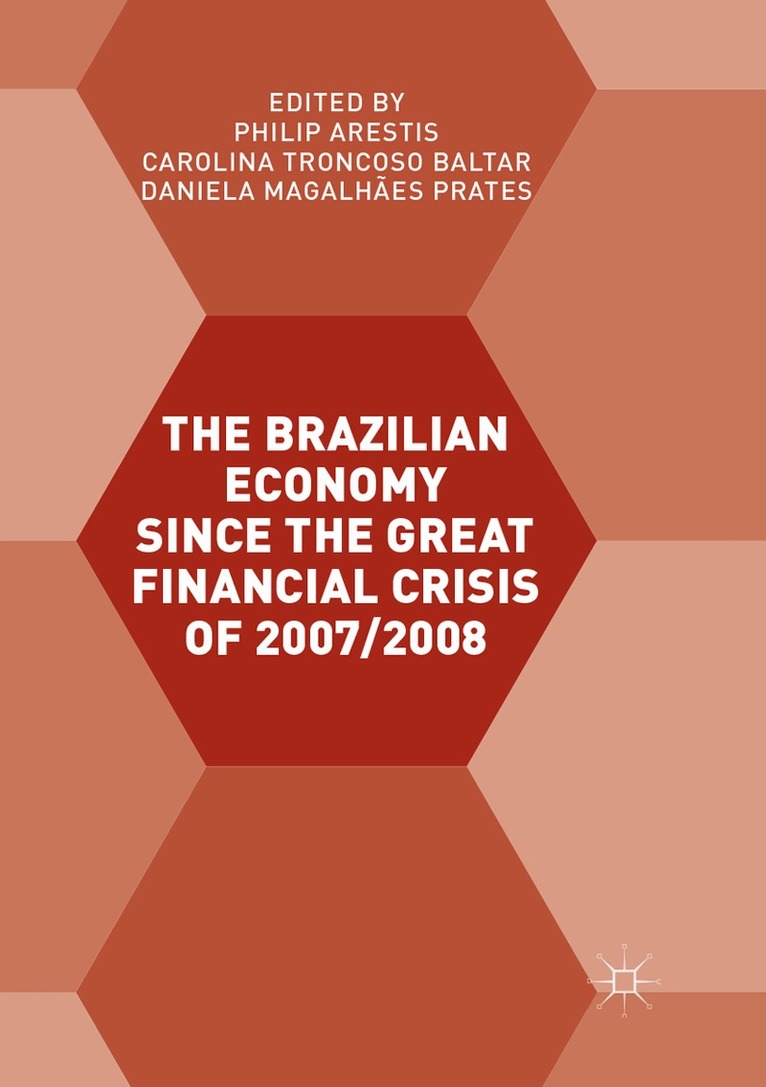
This book examines the performance of the Brazilian economy since the Great Financial Crisis of 2007/2008 with focus on both the productive and financial dimensions, along with distributional and social issues. The book will bring to light the causes of the fast recovery over 2009-2010 as well as of the slowdown after 2011. The chapters use econometric approaches and traditional Keynesian and post-Keynesian theories to empirically analyse the macro scenario. They explore monetary policy, fiscal policy, alongside discussion of investments and the exchange rate market, and an analysis of social policy and its impact on the economy.
E-bok
Engelska, 20171 420 kr
Läs direkt efter köp
This book examines the performance of the Brazilian economy since the Great Financial Crisis of 2007/2008 with focus on both the productive and financial dimensions, along with distributional and social issues. The book will bring to light the causes of the fast recovery over 2009-2010 as well as of the slowdown after 2011. The chapters use econometric approaches and traditional Keynesian and post-Keynesian theories to empirically analyse the macro scenario. They explore monetary policy, fiscal policy, alongside discussion of investments and the exchange rate market, and an analysis of social policy and its impact on the economy.
Häftad, Engelska, 2018
1 122 kr
Skickas inom 10-15 vardagar
This book examines the performance of the Brazilian economy since the Great Financial Crisis of 2007/2008 with focus on both the productive and financial dimensions, along with distributional and social issues. The book will bring to light the causes of the fast recovery over 2009-2010 as well as of the slowdown after 2011. The chapters use econometric approaches and traditional Keynesian and post-Keynesian theories to empirically analyse the macro scenario. They explore monetary policy, fiscal policy, alongside discussion of investments and the exchange rate market, and an analysis of social policy and its impact on the economy.