Lyn M. Van Swol – författare
Visar alla böcker från författaren Lyn M. Van Swol. Handla med fri frakt och snabb leverans.
5 produkter
5 produkter
E-bok
PDF, Engelska, 20181 503 kr
Läs direkt efter köp
Advice, defined as a recommendation for action in response to a problem, is a common form of interpersonal support and influence. Indeed, the advice we give and receive from others can be highly consequential, not only affecting us as recipients and advisors, but shaping outcomes for relationships, groups, and organizations. Some of those consequences are positive, as when advice promotes individual problem-solving, or enhances workgroup productivity. Yet advice can also hide ulterior motives, threaten identity, damage relationships, and promote inappropriate action. The Oxford Handbook of Advice provides a broad perspective on how advice succeeds and fails, systematically reviewing and synthesizing theory and research on advice from multiple disciplines, such as communication, psychology, applied linguistics, business, law, and medicine. Several chapters explore advice at different levels of analysis, focusing on advisor and recipient roles, advising interactions and relationships, and advice as a resource and connection in groups and networks. Other chapters address advice in particular types of personal relationships (romantic, family) and professional contexts (workplace, health, education, therapy). Contributing authors also consider cultural differences, advice online, and the ethics of advising. For scholars concerned with supportive communication, interpersonal influence, decision-making, social networks, and related communication processes at work, at home, and in society at large, this Handbook offers historical perspective, contemporary theoretical framing, methodological recommendations, and directions for future research. It also emphasizes practical application, offering clear, concise, and relevant "advice for advising" based on theory and research.
E-bok
Engelska, 20181 503 kr
Läs direkt efter köp
Advice, defined as a recommendation for action in response to a problem, is a common form of interpersonal support and influence. Indeed, the advice we give and receive from others can be highly consequential, not only affecting us as recipients and advisors, but shaping outcomes for relationships, groups, and organizations. Some of those consequences are positive, as when advice promotes individual problem-solving, or enhances workgroup productivity. Yet advice can also hide ulterior motives, threaten identity, damage relationships, and promote inappropriate action. The Oxford Handbook of Advice provides a broad perspective on how advice succeeds and fails, systematically reviewing and synthesizing theory and research on advice from multiple disciplines, such as communication, psychology, applied linguistics, business, law, and medicine. Several chapters explore advice at different levels of analysis, focusing on advisor and recipient roles, advising interactions and relationships, and advice as a resource and connection in groups and networks. Other chapters address advice in particular types of personal relationships (romantic, family) and professional contexts (workplace, health, education, therapy). Contributing authors also consider cultural differences, advice online, and the ethics of advising. For scholars concerned with supportive communication, interpersonal influence, decision-making, social networks, and related communication processes at work, at home, and in society at large, this Handbook offers historical perspective, contemporary theoretical framing, methodological recommendations, and directions for future research. It also emphasizes practical application, offering clear, concise, and relevant "advice for advising" based on theory and research.
Inbunden, Engelska, 2026
3 574 kr
Skickas inom 10-15 vardagar
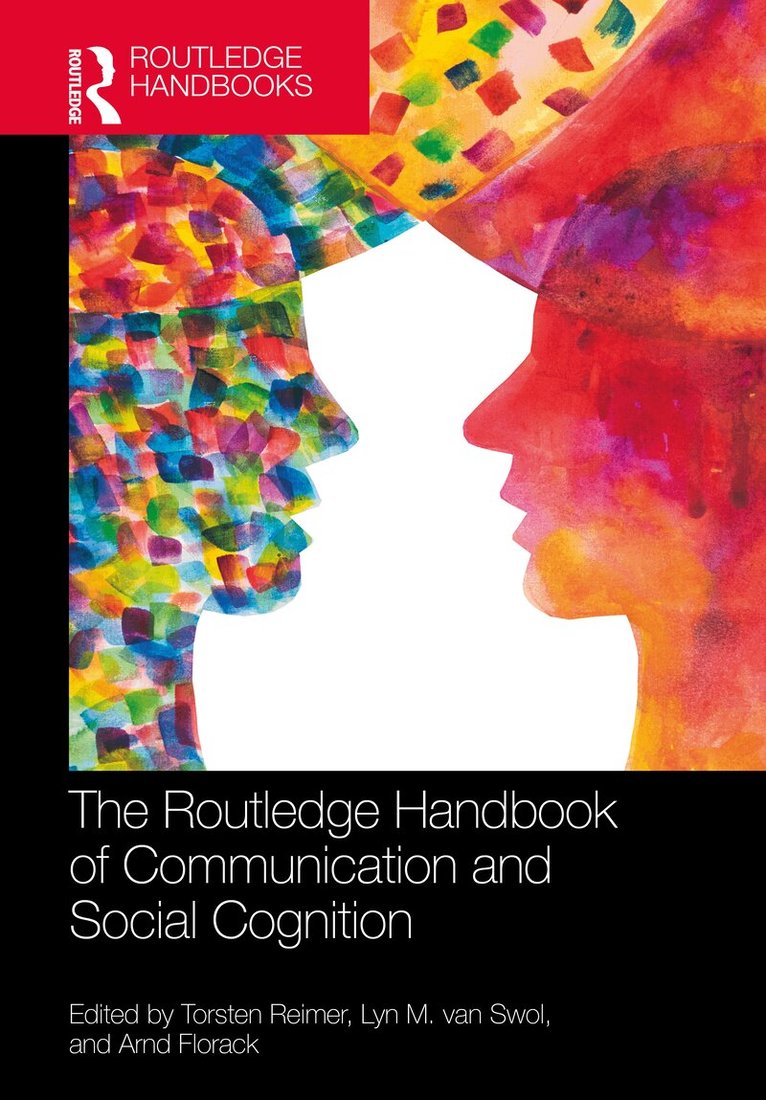
This handbook provides a comprehensive understanding of theory, research, and applications of research in communication and social cognition.Written by leading figures across an array of disciplines, chapters in this handbook explicate the interplay of communication and social cognition to form a vantage point for the study of concepts such as framing, stereotypes, social perceptions, mood and affect, intergroup conflict, media effects, decision-making, and language and thought that are widely used in the social, cognitive, and behavioral sciences. The book is divided into seven sections: the first two sections reflect basic discussions about how processes of thought and communication are related and how social realities are influenced by aspects of communication; Sections 3–6 address specified fields including interpersonal communication, communication between groups, digital communication, and communication in applied fields of marketing, media, and health; and the final section describes innovative methods to pursue the study of communication and social cognition.This handbook integrates advances in theory and research that are rooted in and will be of interest to the fields of communication, psychology, cognitive science, media studies, linguistics, marketing, public health, management, and organizational studies.
E-bok
PDF, Engelska, 20264 166 kr
Läs direkt efter köp
This handbook provides a comprehensive understanding of theory, research, and applications of research in communication and social cognition.Written by leading figures across an array of disciplines, chapters in this handbook explicate the interplay of communication and social cognition to form a vantage point for the study of concepts such as framing, stereotypes, social perceptions, mood and affect, intergroup conflict, media effects, decision-making, and language and thought that are widely used in the social, cognitive, and behavioral sciences. The book is divided into seven sections: the first two sections reflect basic discussions about how processes of thought and communication are related and how social realities are influenced by aspects of communication; Sections 3-6 address specified fields including interpersonal communication, communication between groups, digital communication, and communication in applied fields of marketing, media, and health; and the final section describes innovative methods to pursue the study of communication and social cognition.This handbook integrates advances in theory and research that are rooted in and will be of interest to the fields of communication, psychology, cognitive science, media studies, linguistics, marketing, public health, management, and organizational studies.
E-bok
Engelska, 20264 166 kr
Läs direkt efter köp
This handbook provides a comprehensive understanding of theory, research, and applications of research in communication and social cognition.Written by leading figures across an array of disciplines, chapters in this handbook explicate the interplay of communication and social cognition to form a vantage point for the study of concepts such as framing, stereotypes, social perceptions, mood and affect, intergroup conflict, media effects, decision-making, and language and thought that are widely used in the social, cognitive, and behavioral sciences. The book is divided into seven sections: the first two sections reflect basic discussions about how processes of thought and communication are related and how social realities are influenced by aspects of communication; Sections 3-6 address specified fields including interpersonal communication, communication between groups, digital communication, and communication in applied fields of marketing, media, and health; and the final section describes innovative methods to pursue the study of communication and social cognition.This handbook integrates advances in theory and research that are rooted in and will be of interest to the fields of communication, psychology, cognitive science, media studies, linguistics, marketing, public health, management, and organizational studies.