M. Kathryn Brown - Böcker
Visar alla böcker från författaren M. Kathryn Brown. Handla med fri frakt och snabb leverans.
3 produkter
3 produkter
1 106 kr
Skickas inom 10-15 vardagar
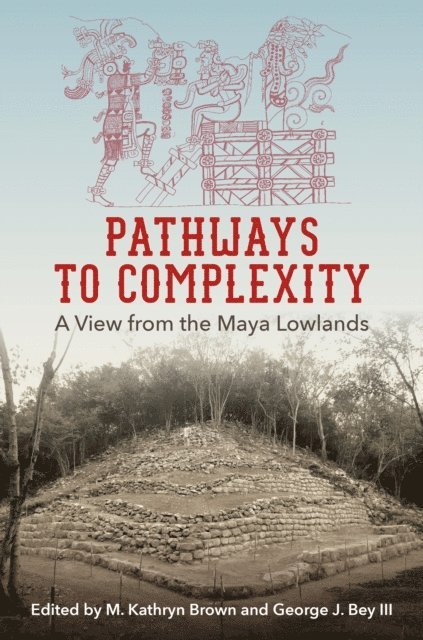
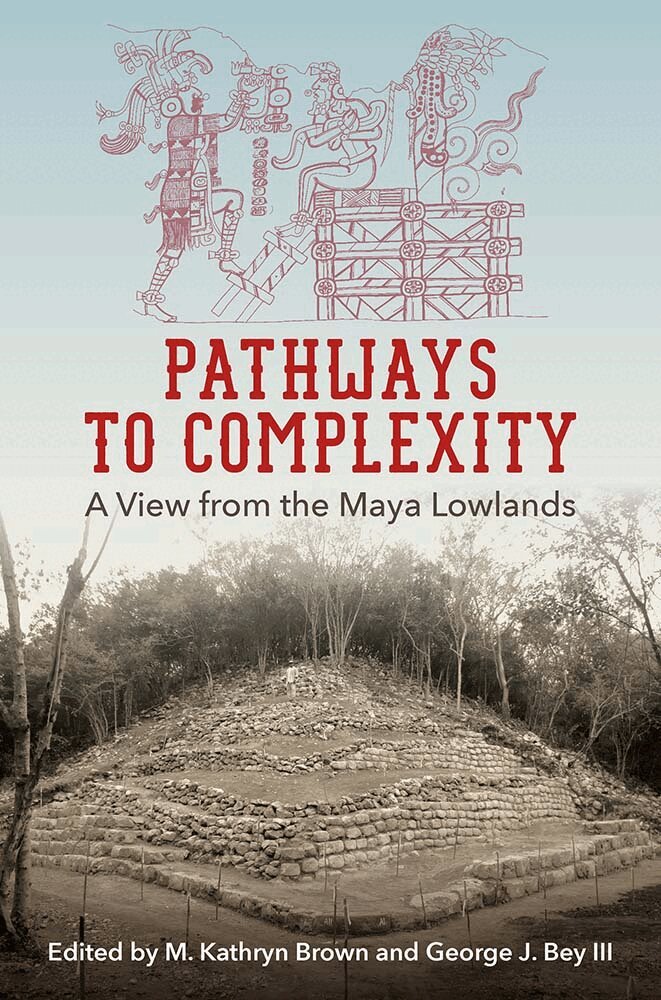
Pathways to Complexity synthesizes a wealth of new archaeological data to illuminate the origins of Maya civilization and the rise of Classic Maya culture. In this volume, prominent Maya scholars argue that the development of social, religious, and economic complexity began during the Middle Preclassic period (1000-300 BC), hundreds of years earlier than previously thought.Contributors reveal that villages were present in parts of the lowlands by 1000 BC. Combining recent discoveries from the northern lowlands--an area often neglected in other volumes-and the southern lowlands, the collection then traces the emergence of sociopolitical inequality and complexity in all parts of the Yucatán Peninsula over the course of the Middle Preclassic period. They show that communities evolved in different ways due to influences such as geographical location, ceramic exchange, shell ornament production, agricultural strategy, religious ritual, ideology, and social rankings. These varied pathways to complexity developed over half a millennium and culminated in the institution of kingship by the Late Preclassic period.Presenting exciting work on a dynamic and misunderstood time period, Pathways to Complexity demonstrates the importance of a broad, comparative approach to understanding Preclassic Maya civilization and will serve as a foundation for future research and interpretation.
433 kr
Skickas inom 10-15 vardagar
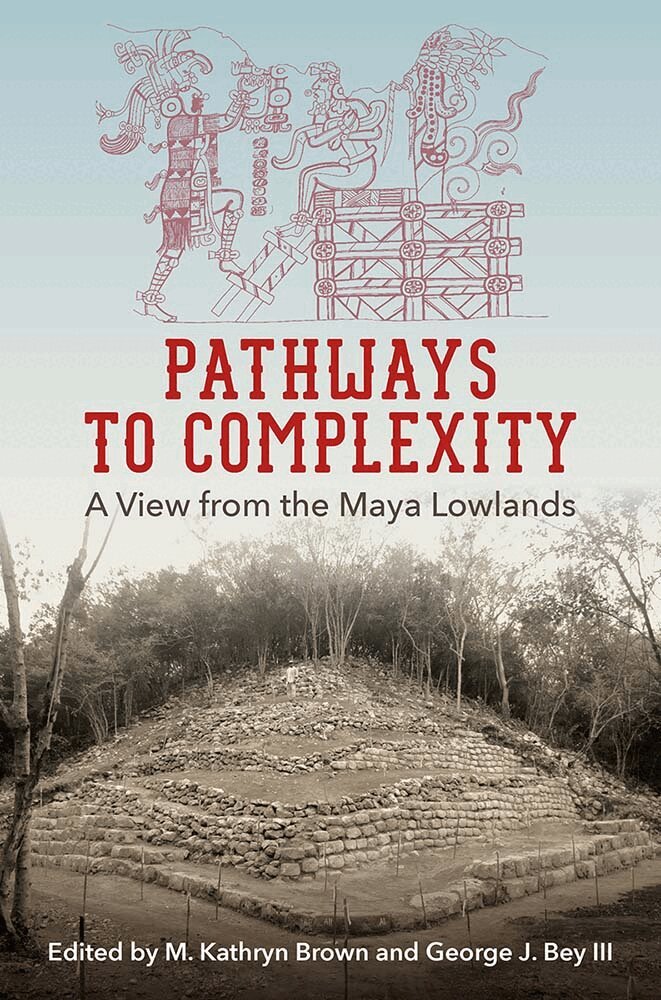
Pathways to Complexity synthesizes a wealth of new archaeological data to illuminate the origins of Maya civilization and the rise of Classic Maya culture. In this volume, prominent Maya scholars argue that the development of social, religious, and economic complexity began during the Middle Preclassic period (1000–300 B.C.), hundreds of years earlier than previously thought.Contributors reveal that villages were present in parts of the lowlands by 1000 B.C., challenging the prevailing models estimating when civilization took root in the area. Combining recent discoveries from the northern lowlands—an area often neglected in other volumes—and the southern lowlands, the collection then traces the emergence of sociopolitical inequality and complexity in all parts of the Yucatan peninsula over the course of the Middle Preclassic period. They show that communities evolved in different ways due to influences such as geographical location, ceramic exchange, shell ornament production, agricultural strategy, religious ritual, ideology, and social rankings. These varied pathways to complexity developed over half a millennium and culminated in the institution of kingship by the Late Preclassic period.Presenting exciting work on a dynamic and poorly understood time period, Pathways to Complexity demonstrates the importance of a broad, comparative approach to understanding Preclassic Maya civilization and will serve as a foundation for future research and interpretation. Contributors: M. Kathryn Brown | George Bey III | Tara Bond-Freeman | Fernando Robles Castellanos | Tomas Gallareta Negron | E. Wyllys Andrews V | Anthony Andrews | David S. Anderson | Lauren Sullivan | Jaime J. Awe | James F. Garber | Mary Jane Acuña | William Saturno | Bobbi Hohmann | Terry Powis | Paul Healy | Richard Hansen | Donald W. Forsyth | David Freidel | Barbara Arroyo | Richard E. W. Adams
541 kr
Skickas inom 5-8 vardagar
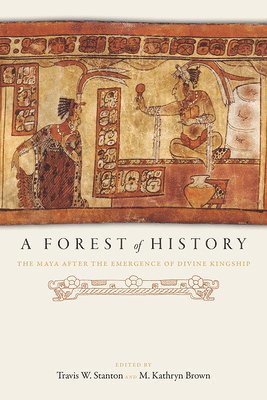
David Freidel and Linda Schele’s monumental work A Forest of Kings: The Untold Story of the Ancient Maya (1990) offered an innovative, rigorous, and controversial approach to studying the ancient Maya, unifying archaeological, iconographic, and epigraphic data in a form accessible to both scholars and laypeople. Travis Stanton and Kathryn Brown’s A Forest of History: The Maya after the Emergence of Divine Kingship presents a collection of essays that critically engage with and build upon the lasting contributions A Forest of Kings made to Maya epigraphy, iconography, material culture, and history. These original papers present new, cutting-edge research focusing on the social changes leading up to the spread of divine kingship across the lowlands in the first part of the Early Classic. The contributors continue avenues of inquiry such as the timing of the Classic Maya collapse across the southern lowlands, the nature of Maya warfare, the notion of usurpation and “stranger-kings” in the Classic period, the social relationships between the ruler and elite of the Classic period Yaxchilán polity, and struggles for sociopolitical dominance among the later Classic period polities of Chichén Itzá, Cobá, and the Puuc kingdoms. Many of the interpretations and approaches in A Forest of Kings have withstood the test of time, while others have not; a complete understanding of the Classic Maya world is still developing. In A Forest of History recent discoveries are considered in the context of prior scholarship, illustrating both the progress the field has made in the past quarter century and the myriad questions that remain. The volume will be a significant contribution to the literature for students, scholars, and general readers interested in Mesoamerican and Maya archaeology. Contributors:Wendy Ashmore, Arlen F. Chase, Diane Z. Chase, Wilberth Cruz Alvarado, Arthur A. Demarest, Keith Eppich, David A. Freidel, Charles W. Golden, Stanley P. Guenter, Annabeth Headrick, Aline Magnoni, Joyce Marcus, Marilyn A. Masson, Damaris Menéndez, Susan Milbrath, Olivia C. Navarro-Farr, José Osorio León, Carlos Peraza Lope, Juan Carlos Pérez Calderón, Griselda Pérez Robles, Francisco Pérez Ruíz, Michelle Rich, Jeremy A. Sabloff, Andrew K. Scherer, Karl A. Taube