Mack D. Burke - Böcker
Visar alla böcker från författaren Mack D. Burke. Handla med fri frakt och snabb leverans.
2 produkter
2 produkter
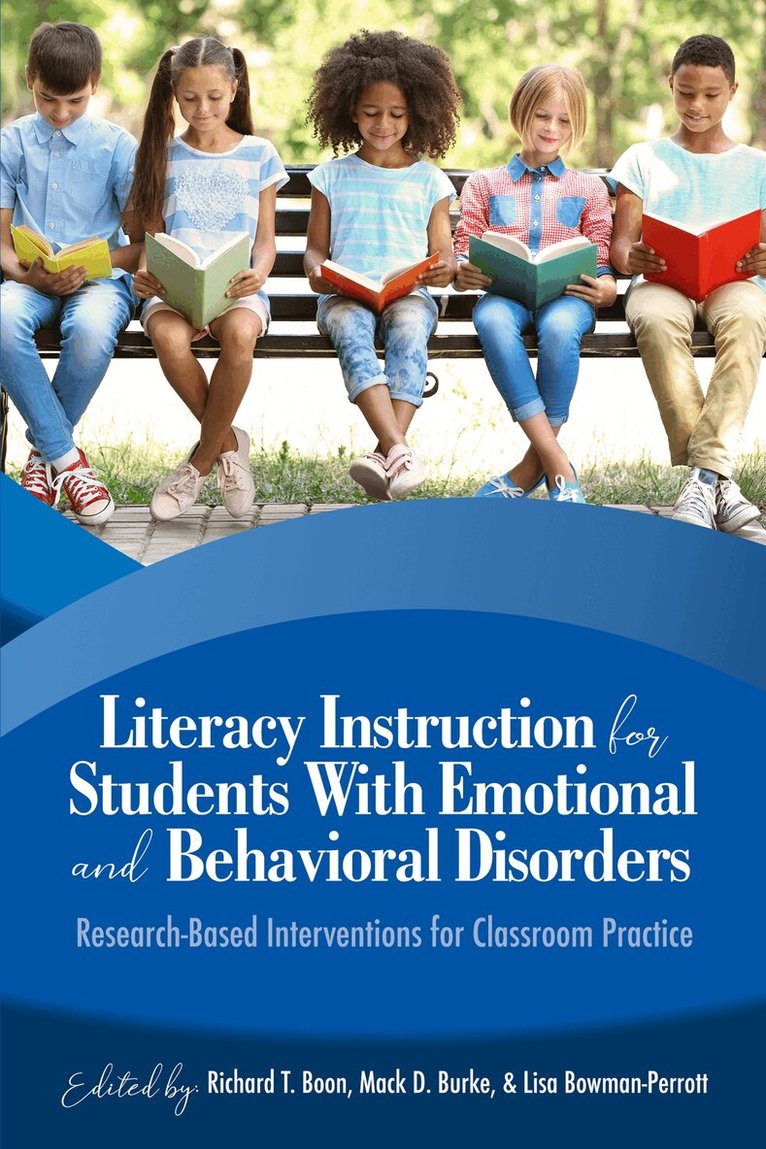
Literacy Instruction for Students with Emotional and Behavioral Disorders
Research-Based Interventions for Classroom Practice
Häftad, Engelska, 2020
581 kr
Skickas inom 7-10 vardagar
The purpose of Literacy Instruction for Students with Emotional and Behavioral Disorders: Research-Based Interventions for Classroom Practice is to provide educators with effective, research-based interventions to improve the literacy skills of students with emotional and behavioral disorders (EBD) in K-12 classrooms. This book identifies, defines, and describes a number of research-based literacy interventions, and discusses their effectiveness as supports for students with EBD. Also included are examples of and guidance for how educators can implement the interventions in the classroom. Topics on integrating the use of technology-based instruction, culturally and linguistically diverse learners, and considerations for working with students with EBD in alternative educational settings are discussed as well.
Literacy Instruction for Students with Emotional and Behavioral Disorders
Research-Based Interventions for Classroom Practice
Inbunden, Engelska, 2020
1 027 kr
Skickas inom 7-10 vardagar
The purpose of Literacy Instruction for Students with Emotional and Behavioral Disorders: Research-Based Interventions for Classroom Practice is to provide educators with effective, research-based interventions to improve the literacy skills of students with emotional and behavioral disorders (EBD) in K-12 classrooms. This book identifies, defines, and describes a number of research-based literacy interventions, and discusses their effectiveness as supports for students with EBD. Also included are examples of and guidance for how educators can implement the interventions in the classroom. Topics on integrating the use of technology-based instruction, culturally and linguistically diverse learners, and considerations for working with students with EBD in alternative educational settings are discussed as well.